Stellenbosch's new inclusionary zoning policy: A blueprint for affordable housing in South Africa


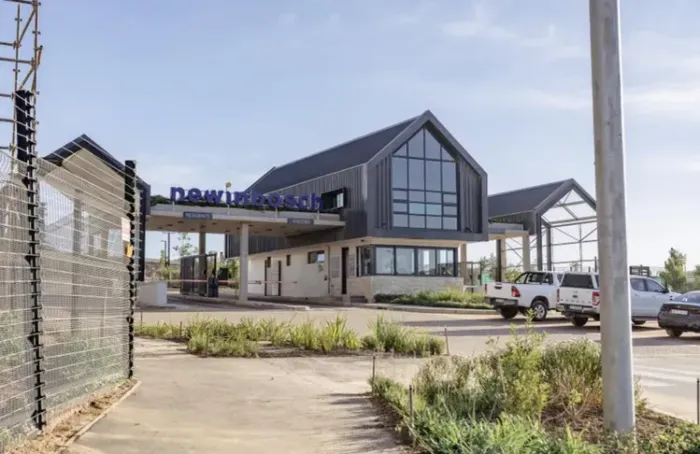
To date 144 units have been built - all in the the Newinbosch Neighbourhood Estate development - taking "a significant step" toward redressing spatial inequality.
Image: Sebastian Machill (2025)
A new and exclusive estate development in Stellenbosch has 144 affordable units built in as part of the municipality's inclusionary zoning policy.
"Stellenbosch's policy isn’t just a local breakthrough; it’s a blueprint for the Western Cape and the country," said Helen Rourke, programme director at Development Action Group.
"In a country where spatial and income divides still define daily life, this is how real spatial transformation takes shape."
The policy requires private developers that are planning to build a new residential or mixed-use development of 20 units or more in Stellenbosch, Klapmuts or Franschhoek to include 20% inclusionary housing.
In the catalytic area of the Adam Tas Corridor, a spatial overlay zone provides for developers to unlock development rights if they contribute 30% inclusionary housing.
Stellenbosch Municipality is only the second municipality in South Africa to adopt an Inclusionary Zoning Policy and, since its inception June 2023, over 900 new inclusionary housing unit applications have been approved.
There have been discussions about inclusionary housing policies for almost 20 years, since the early 2000s, and these discussions have often been shut down by resistance from property developers and owners, said Associate Professor Ivan Turok (University of Free State).
"This makes Stellenbosch’s policy development and initial implementation all the more significant - as this is only the second municipality in the country to adopt an inclusionary housing policy."
Rourke explained that the overarching goal of inclusionary zoning is to ensure social inclusion and counteract the legacy of spatial segregation that continues to define South African cities.
For many South Africans, home is still on the outskirts and far from major economic opportunities - designed that way during apartheid South Africa.
“Stellenbosch has stepped up where it matters most, showing that bold municipal leadership and political support for innovative land policy tools can help tackle South Africa’s deep inequalities head-on," says Rourke.
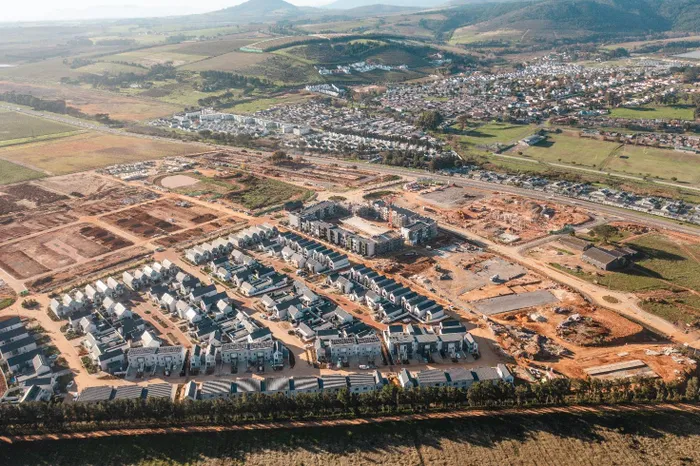
Construction of the Newinbosch Neighbourhood Estate development in 2025 where 144 inclusionary housing units (11% of the entire development) were developed.
Image: Sebastian Machill (2025)
There are currently additional applications under review.
Stellenbosch mayor, Jeremy Fasser, said through the policy, "we are attempting to rewrite the narrative on affordable and dignified housing".
"We want to show that access to housing can be integrated and future-focused and that local government can lead the way in creating replicable models for other communities across South Africa.
"This is about transforming policy into action and then action into impact.
"Our Inclusionary Zoning Policy is already yielding results. Since its adoption in 2023, more than 900 new inclusionary housing units have been approved, with many more in the pipeline.”
The policy at present stipulates that beneficiaries should be employed households with a stable income (excluding students), with preference for Stellenbosch residents, key workers, vulnerable groups, first-time homeowners, and female-headed households.
Beneficiaries should have a monthly household income of between R3 500 – R22 000 (2022 FSC rates updated annually) and the sales cost of an affordable housing unit should fall between R300 000 – R1.2 million. Proportional allocation across the affordability range is encouraged and units must stay affordable for at least 30 years.
Get your news on the go, click here to join the Cape Argus News WhatsApp channel.
Cape Argus