Community rallies against vandalism at Kramat of Sayed Moegsin Bin Alawi


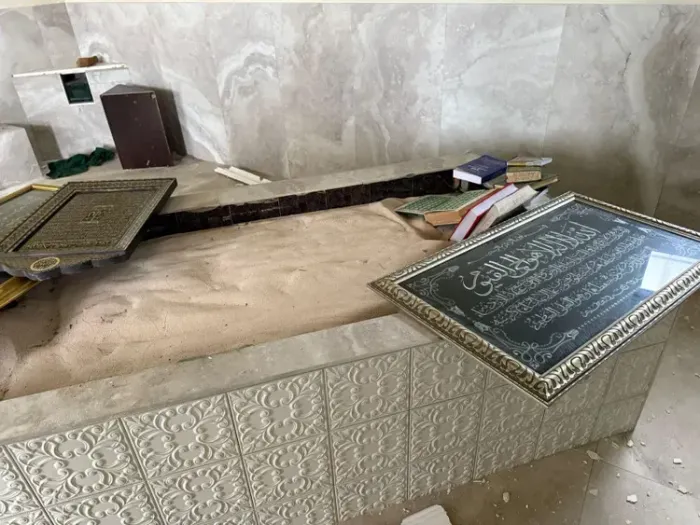
The burial site of Sayed Moegsin Bin Alawi was also damaged.
Image: Supplied
Public outrage has erupted following the vandalism of the Kramat of Sayed Moegsin Bin Alawi, a designated national heritage site at Mowbray Cemetery, on Tuesday evening.
A kramat, or mazaar, is a shrine or tomb of a revered Muslim holy person, significant in South Africa as a place of pilgrimage and respect for the Muslim community, often marking the graves of those who contributed to the early spread of Islam in the region.
The Moslem Cemetery Board condemned the actions, noting that this incident follows a recent theft of the katal, the bier used for transporting the deceased, from the same site.
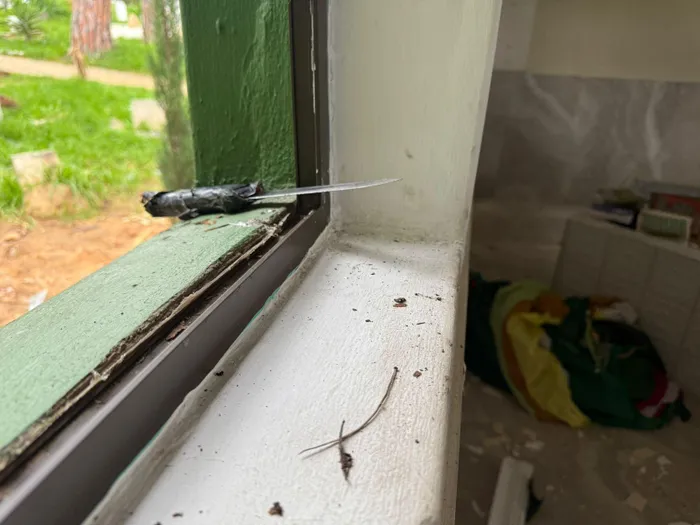
Criminals damaged and removed the burglar bars.
Image: Supplied
“The confluence of these incidents reveals an emerging pattern of targeted criminality that strikes at the core of religious reverence, heritage preservation, and communal dignity.
"It must be emphasised that these violations occurred despite the recent implementation of comprehensive and high-level security upgrades across the Mowbray Cemetery precinct,” the board said.
CCTV cameras, advanced motion-sensitive alarm systems, and additional burglar bars have not seemed to deter criminals
The damages to the Kramat include the damaging and removal of burglar bars, removal of ceiling cornices, light fittings, wiring, and all electrical fittings, removal of the grave covering, and leaving the area in disarray.
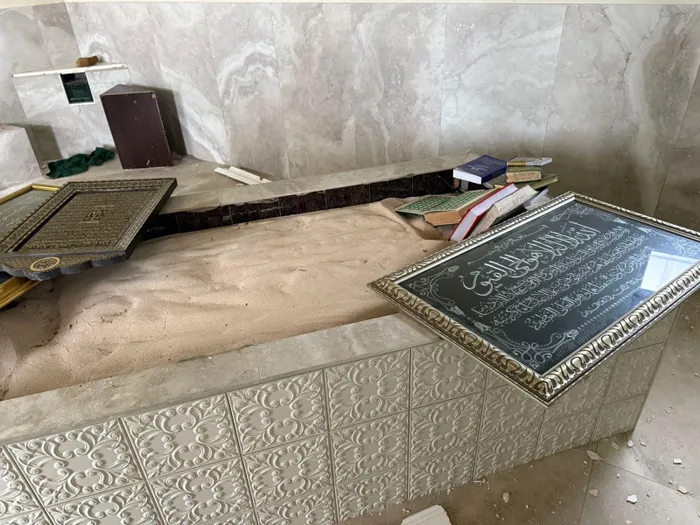
The burial site of Sayed Moegsin Bin Alawi was also damaged.
Image: Supplied
The Moslem Cemetery Board said it immediately engaged the South African Police Service (SAPS), the Muslim Judicial Council (MJC), and the Cape Mazaar Society (CMS) to ensure that this act is investigated and prosecuted with the full weight of the law.
It said such conduct constitutes a violation of basic property and criminal statutes and is prosecutable under the National Heritage Resources Act 25 of 1999, given the status of the site as a protected national heritage landmark.
Chairman of Moslem Cemetery Board and Secretary of the Burial Administration of the Muslim Judicial Council (MJC), Faizal Sayed, said this desecration represents a breach of physical security and a violation of the moral and cultural compact that underpins a civilised society.
“Sites of sacred and historical import, such as Kramats, are not passive relics of the past. They are dynamic embodiments of spiritual continuity and communal identity. The calculated intrusion upon such a sanctified space signals a deeper societal malaise, an alarming erosion of reverence for sanctity, cultural heritage, and the inviolability of death. The theft of the katal, followed by this incident, depicts a pattern of conduct that warrants rigorous criminal investigation and compels urgent civic reflection on how we, as a society, uphold the dignity of the deceased and preserve the sacred architecture of collective memory,” Sayed said.
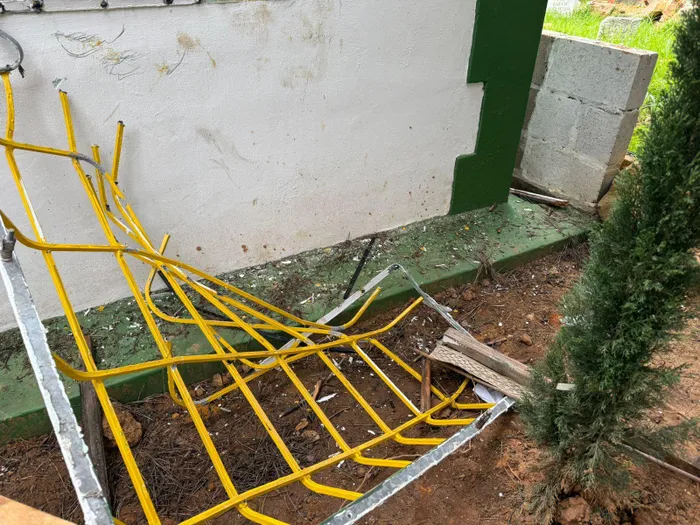
The burglar bars were removed from the windows.
Image: Supplied
The MJC said it viewed this act as a violation of sacred space and as a flagrant affront to religious and cultural sensibilities, an attack on the moral sanctity of the dead, and a disruption of public peace in direct contravention of South African laws protecting religious sites and heritage institutions.
President of the MJC, Sheikh Riad Fataar, said this incident is extremely troubling.
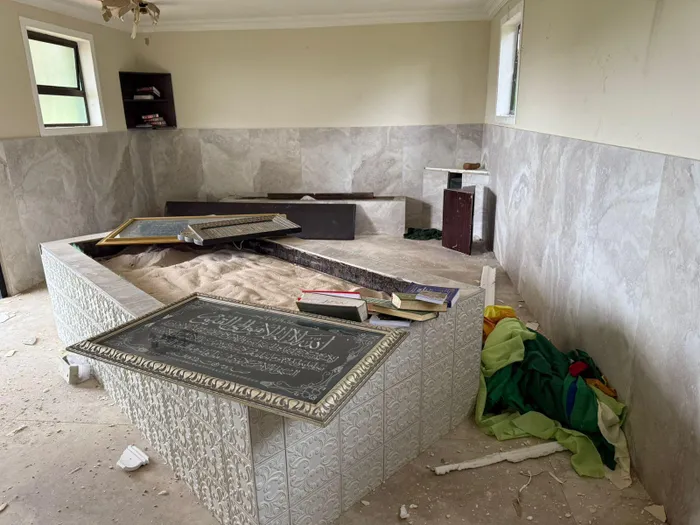
The damage to the kramat.
Image: Supplied
“This criminal act is deeply disturbing and must be understood as vandalism, theft, and the desecration of sacred heritage. The Kramat of Sayed Moegsin Bin Alawi is not only a site of Islamic significance, but a repository of the collective memory of the Muslim community of South Africa. We urge the authorities to investigate this matter with the seriousness it demands, and we call upon all communities to treat our burial sites and sacred spaces with the reverence they deserve,” Fataar said.
The Moslem Cemetery Board has called on the public, faith-based organisations, civil society bodies, and local residents to remain vigilant and consider the preservation of sacred burial spaces.
Get your news on the go, click here to join the Cape Argus News WhatsApp channel.
Cape Argus