Ernest Khoza loses court bid to challenge Outa's corruption report


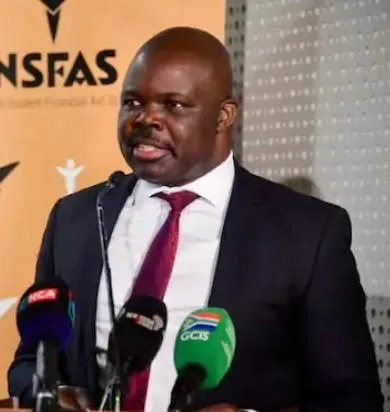
The Johannesburg High Court has dismissed an application by the National Students Financial Aid Scheme (Nsfas) former chairperson, Ernest Khoza's application for the Organisation Undoing Tax Abuse (Outa) to remove a report implicating him in corruption.
Image: Supplied
Ernest Khoza, former chairperson of the National Student Financial Aid Scheme (Nsfas), has lost his bid to challenge the Organisation Undoing Tax Abuse (Outa) over a report implicating him in corruption.
The Johannesburg High Court dismissed his application to have the report removed from Outa's website.
It was Khoza’s second attempt after he wrote to Outa, through his attorneys, demanding the removal of the report shortly after it was published last year.
The report, which was published in January 2024, exposed how Khoza and former Higher Education Minister, Blade Nzimande, defrauded Nsfas through kickbacks from service providers.
Khoza did not respond to calls and messages.
Khoza argued that Outa was no mere private party, and that the default common law position did not apply to it.
Among others, he stated his argument as: In publishing its investigation reports, Outa reaches a wide audience, and therefore acts as a quasi-media organisation, and attracts similar duties to the recognised media, in particular the duty to allow implicated parties prior notice and an opportunity to comment, prior to publication.
However, in its answering affidavit, Outa described itself as a non-profit civil action organisation supported and publicly funded by ordinary South Africans.
Its mission includes challenging and taking action against maladministration and corruption, and, where possible, holding those responsible to account.
The organisation added that as part of its work, it has investigated alleged maladministration in the administration of publicly funded bursaries and student accommodation by the Department of Education and Nsfas, the government-funded bursary and loan organization.
“Outa received recordings of a telephone conversation purportedly involving the applicant, duly investigated, and in January 2024, it published the article and impugned report,” read the papers.
Outa added that the report contains accurate quotes from the recordings, and that it is truthful and has been published in the public interest.
The court said the investigation did not determine anything, adding that it made prima facie findings of fact and provided them to the relevant authorities with recommendations on further action.
“None of the findings or recommendations contained in Outa’s report are binding on anyone, and the police and National Prosecuting Authority will decide independently whether to investigate Outa’s complaints or to prosecute anyone accused by Outa of wrongdoing,” read the judgment, which added that the organisation performs investigations and makes recommendations in its capacity as a private actor.
Reflecting on the outcome, Outa’s executive director of accountability, Advocate Stefanie Fick, said this judgment reinforces the principle that private actors, even those acting in the public interest, are not bound by the same procedural obligations as public entities.
Fick said the judgment also protects the ability of civil society organisations to expose corruption without undue interference, while preserving the common-law remedies available to individuals who feel aggrieved by such publications.
Get your news on the go, click here to join the Cape Argus News WhatsApp channel.
Cape Argus