Tragic toll: Western Cape accounts for most commercial fishing fatalities


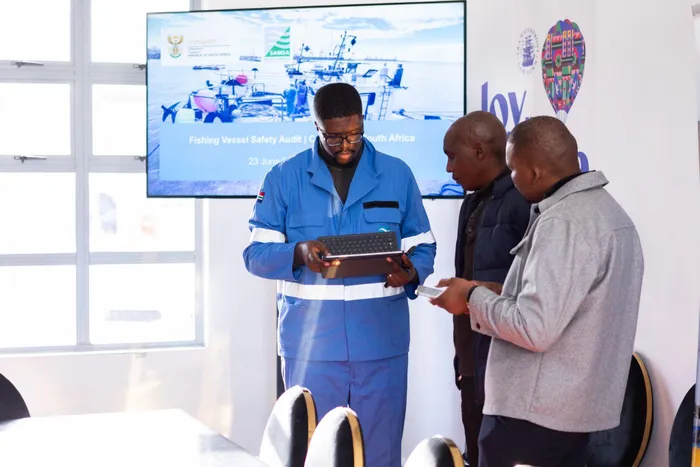
Deputy Transport Minister, Mkhuleko Hlengwa, said that earlier this year, the department directed the South African Maritime Safety Authority (SAMSA) to undertake a comprehensive, nationwide Fishing Vessel Safety Audit.
Image: X
The SA Maritime Safety Authority (SAMSA) has undertaken a nationwide audit that has reached every major fishing port in South Africa to identify, among others, the age of the fleet, which compromises the structural integrity of the vessels.
Briefing vessel owners who gathered at a media engagement at the Cape Town Waterfront Jetty on Monday to hear the keynote address from Deputy Transport Minister Mkhuleko Hlengwa, Hlengwa said that since 1996, nearly 400 commercial fishing fatalities have been recorded in South Africa, with over half of them occurring in the Western Cape.
He touched on the tragedy of the MFV Lepanto, a 63-year-old vessel, that capsized off Kommetjie, taking 11 crew members to their deaths in minutes last year.
He also noted its sister vessel, Armana, which went up in flames a few months later.
“These events shook this nation—and rightly so. These are not isolated tragedies. They are warnings. They are indictments of systems that must be fixed. And they are calls to action that we can no longer afford to ignore,” Hlengwa said.
“The audit is designed not only to evaluate compliance but to restore accountability, especially where lives are at risk. We are focusing on small vessels because the data shows they are the most vulnerable to capsizing, collision, and mechanical failure,” he said.
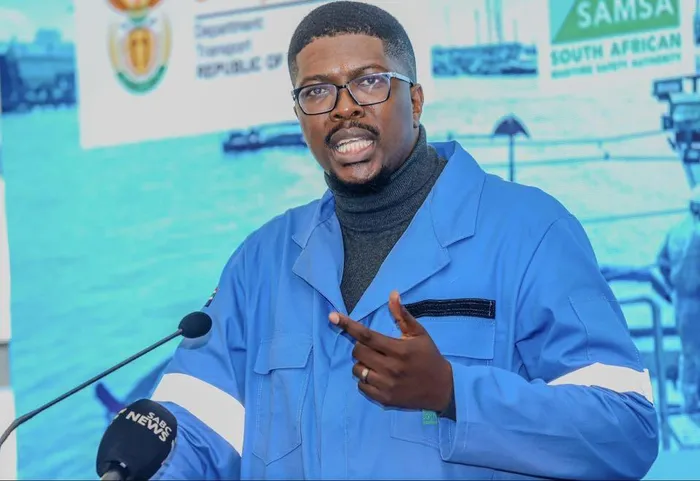
Deputy Transport Minister, Mkhuleko Hlengwa, said that earlier this year, the department directed the South African Maritime Safety Authority (SAMSA) to undertake a comprehensive, nationwide Fishing Vessel Safety Audit.
Image: SAMSA/Supplied
Principal Audit Officer for SAMSA in Gqeberha, Thandi Mehlo, said the age of the vessels causes issues of structural integrity as the “steel can only survive a limited period at sea”.
He highlighted challenges with ship repurpose redesigns, which occur without getting their approval, and also how there was a period a few years ago when not one single dry dock, which is used for vessel maintenance and repairs, was operational in the country.
“We’re sitting with a couple of these ship repair facilities that are managed by port authorities… and I have evidence to believe that these facilities have since improved, and we are up to date with the management of maintenance.”
Mehlo said they have a longer goal of a complete 100% audit of the vessels in the next three years, and that their current audit, which only looked at 10% of ships, has taught them valuable lessons that they will use going forward.
Hlengwa also said that their roadmap ahead is to:
- Complete the national audit,
- Launch a National Fishing Vessel Safety Improvement Plan,
- Consider a fishing vessels recapitalisation programme,
- Institutionalise annual training, random inspections, and gear upgrades, and
- Hold accountable those who put lives at risk—through regulation, prosecution, and consequence.
Cape Argus