How Somerset West can prevent sewer blockages: A community call to action


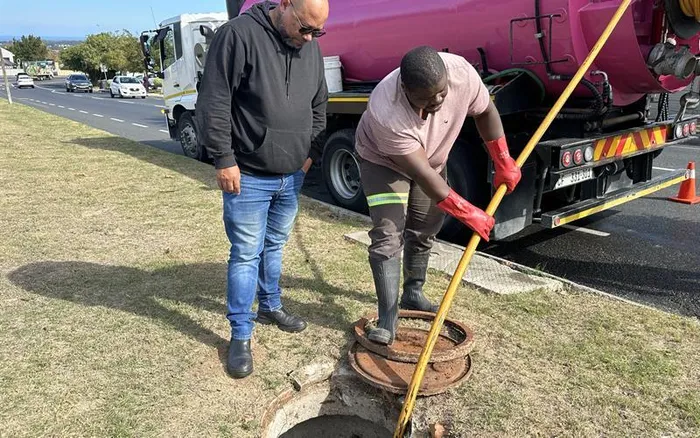
City staffers work to remove blockages from the sewer in Somerset West.
Image: Supplied
Somerset West residents have been urged to help prevent sewer blockages, following a 60% increase since July 1, 2024.
Kitchen fats and oils, sanitary products, rags and construction rubble illegally dumped in manholes are the highest contributors to sewer overflows in the area.
The City said that between July 2024 and March 2025, 280 sewer blockages were reported in Somerset West – significantly more than the 175 logged during the entire previous financial year.
A breakdown of the main contributors to the blockages includes:
- Blockages caused by foreign items (including building material, sanitary products, and even nappies), have more than doubled.
- Sand and tree roots found in the sewer system are significantly higher; while blockages due to fats, oils and grease have increased more than fourfold.
- The Westridge area accounts for 26% of the 280 sewer blockages logged in Somerset West. There were 73 incidents, of which 24 related to foreign objects and 33 to roots.
- The Somerset West Business Park recorded nine incidents, eight of which were caused by foreign objects.
"Residents and businesses are primary roleplayers in keeping Cape Town’s sewers clear of foreign objects that when disposed of incorrectly, blocks pipes," said mayco member for Water and Sanitation, Zahid Badroodien.
"Blockages result in sewer overflows on to our streets or in the environment, compromising hygiene and living conditions for communities, especially during winter.
"While these numbers for Somerset West may seem like just statistics, each blockage poses health and environmental risks which can be mitigated by a change in habits and awareness of how to responsibly dispose of waste."
What you can do to help prevent sewer blockages:
- Dispose of waste responsibly: Only flush toilet paper and human waste. Other items, like wipes, diapers and sanitary products, should be discarded in bins.
- Don’t pour fats, oils and grease down drains: Fats, oils, and grease harden in pipes, causing blockages. Rather let these cool and dispose of them in the bin.
- Use sinks correctly: Food scraps and other waste do not belong in the sink. Dispose of food waste in a bin to keep your drains clear.
During winter, increased rainfall typically leads to higher volumes of stormwater entering the sewer network, especially in areas where illegal stormwater connections exist or infrastructure is vulnerable.
This can overload the system and worsen the impact of blockages, leading to more frequent overflows into public spaces and natural water sources.
"Proactive action by residents, supported by the City, is essential to help reduce the risks ahead of the rainy season and to protect the health and safety of our communities," Badroodien said.
Cape Argus