Cape Town's municipal bills: Rising costs and proposed relief measures


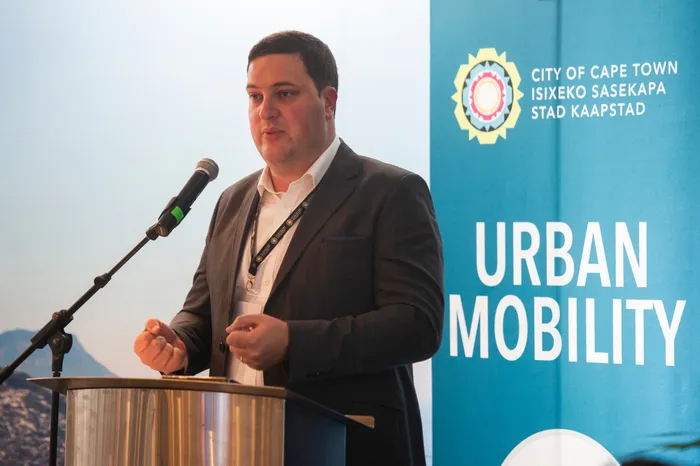
Cape Town Mayor Geordin Hill-Lewis.
Image: Armand Hough / Independent Newspapers
Following public criticism over sharp increases in monthly bills, particularly among residents in the R4 million to R7 million property range, Cape Town Mayor Geordin Hill-Lewis has announced the City is considering new measures to cushion the blow of rising municipal bills in its R39.7 billion 2025/26 draft budget.
Speaking on Cape Talk, Hill-Lewis said that while the budget prioritises relief for properties under R2.5 million, the City is modelling expanded rebates for homeowners with properties valued up to R7 million.
“The criticism that I’ve heard, and which I really wholeheartedly accept, is that not everyone in the R4m–R7m property band is wealthy, or cash-flush,” Hill-Lewis said.
“You may have bought your home a long time ago, you’ve paid it off, now you have a very valuable home, but you don’t have the income to match it.”
Relief measures under consideration include:
- Extending the current R450 000 rates-free benefit beyond the R5 million property value cap;
- Increasing the income threshold for pensioner rebates (currently set at R22 000/month);
- Reducing new City-Wide Cleaning charges for properties between R2.5 million and R7.5 million.
In a notable shift, the City cut Eskom’s 11.32% electricity price hike to 2% for most households.
This is enabled by removing the 10% electricity surcharge that previously funded other City services, now replaced by a ring-fenced cleaning tariff.
While this tariff reform led to higher bills for some mid-range properties, Hill-Lewis argued that the electricity savings should significantly offset those increases.
“Total bill increases can drop dramatically when taking electricity usage into account due to the major price relief in Cape Town,” he said.
New water and sanitation tariffs will bring lower or minimal increases for 140 000 lower-income homes.
Meanwhile, 250 000 properties under R500 000 continue to receive free basic services, the highest allocation among SA metros.
Fixed charges will now be linked to property value, rather than connection size, to ease pressure on lower-income households.
Despite these relief efforts, the draft budget has faced criticism, especially from middle-income residents who feel squeezed by tariff reforms.
The City’s effort to fund massive infrastructure investments, 63% more than Johannesburg over the next three years, has driven concerns about affordability in higher property brackets.
Meanwhile, the Good Party has submitted its formal response to the City’s draft budget, raising concerns about above-inflation tariff hikes, new fixed charges, and the last-minute amendments that threaten to undermine the integrity of the entire consultation process.
The party said the proposed increases, which will result in a double-digit increase for some households, come at a time when inflation stands at just 2.7% and salary growth remains constrained.
"Good Party is calling for the immediate extension of the public participation deadline. Substantive changes have been proposed to the draft budget since it was first tabled, and residents must be given sufficient time to review and respond. Anything less renders this consultation process meaningless," they said.
The deadline for pubic participation ends on Friday.
Cape Argus