Department says Western Cape dam levels are satisfactory
|Published


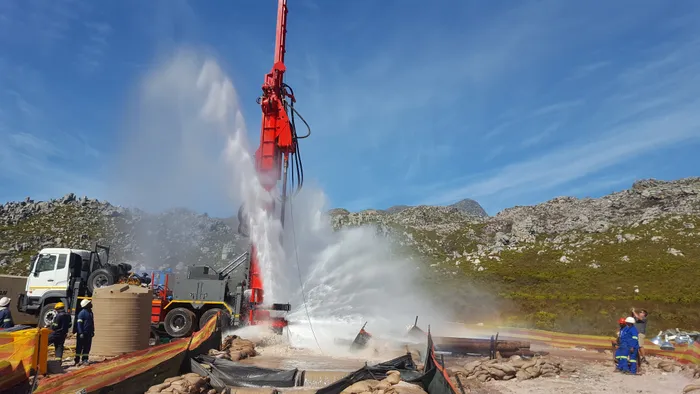
Drilling a borehole at Table Mountain Group Aquifer. Picture: City of Cape Town
Cape Town - Overall dam levels across the province are satisfactory, according to the provincial Department of Water and Sanitation (DWS).
DWS spokesperson Malusi Rayi said: “The Theewaterskloof, which is the largest dam in the province, is still hovering above 75% and this is a good yield as compared with 54.7% at the same time last year.”
Rayi said: “We are, however, concerned about the Garden Route and Central Karoo as not enough rains fell in these regions.”
Meanwhile, the capacity of dams supplying the Cape Town Metro decreased by 1% over the past week, losing the gains they had made previously after the good rainfall a couple of weeks ago.
According to Mayco member for water and waste, Xanthea Limberg, Cape Town dam levels fell to 74.4% from 75.4% the previous week.
Limberg said: “Daily water consumption for the same period increased to 776 million litres per day, compared with 740 million litres the week before.”
At the same time, Limberg said the City’s plans to bring new water online had surged ahead despite the challenges of the Covid-19 pandemic.
Limberg said: “The City’s New Water Programme (NWP) aims to bring new water online to ensure a safe, reliable supply for years to come through groundwater abstraction, desalination and water reuse, as well as optimising surface supply through clearing thirsty, invasive, alien vegetation.”
She said: “The NWP forms part of the City’s water strategy and aims to build resilience to the effects of climate change and future droughts that are expected to be more frequent and severe, and to ensure a safe, reliable water supply for generations to come.”
Limberg said, “Drilling and construction operations are well under way, and the first wellfield or borehole cluster, located in Strandfontein, is almost complete.
“The first groundwater injected into the water supply network from this scheme is expected towards the end of the third quarter of 2021,” said Limberg.
This process means the City will fill up the aquifers where groundwater has been used on an ongoing basis. Aquifers become an underground storage space that is not affected by evaporation in the way that dams are.
Related Video:
Cape Argus