Human Rights Day: Hundreds demonstrate in Cape Town against a lack of basic services
|Published


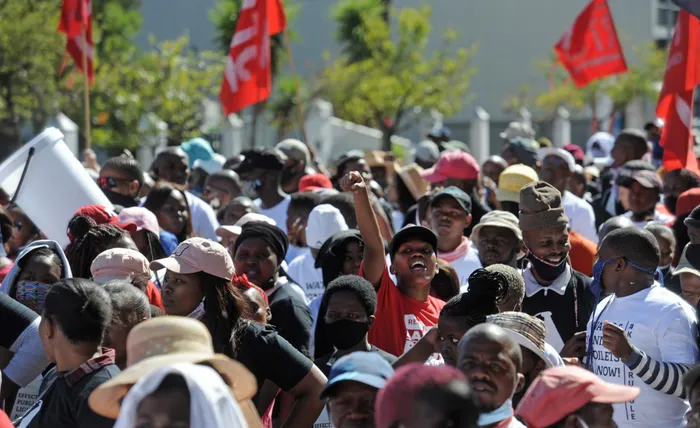
South Africa - Cape Town - 22 March 2021 - 23 Communities alongside the Social Justice Coalition, UDF and numerous other organisations, marked Human Rights Day with a march through the streets of Sea Point. Photographer: Armand Hough/African News Agency(ANA)
Cape Town - Hundreds of people on Monday marked Human Rights Day by descending on the Sea Point Promenade in defiance of Covid-19 regulations to protest a lack of services from the City of Cape Town.
The protesters came from informal settlements in Khayelitsha, Delft and Kraaifontein and said that they have been deprived of access to water and sanitation.
The Social Justice Coalition (SJC) said 10 years had gone by and informal settlements across Khayelitsha still had no access to basic services, and the Coalition was still being approached by residents across the city requesting assistance to get the City to fulfil their constitutional obligation to provide access to basic services in poor communities.
SJC director Mandisa Dantyi said it made no sense for people residing in informal settlements to celebrate Human Rights Day when they stood a chance of dying while going to toilets.
“Our government, whether at a local or national government, has no plan for informal settlements on the question of basic service delivery and how it should be addressed. We understand the argument of the City when they say these people occupy private land but we should also understand the housing crisis, add to that the economic crisis that we have found ourselves in.
“The fact that people occupy vacant land does not absolve the City from its responsibility to provide basic services. If we profess everyday that South Africa belongs to all and that we are this country that is celebrated internationally to have the most progressive Constitution, we would like for that progressive Constitution to translate into everyday experiences,” she said.
Sibane Park, Khayelitsha, activist Ellen Mponzo said a lack of basic services by the City has resulted in communities opting for inhumane alternatives. Mponzo said accessing toilets for women living in informal settlements at night was a dangerous experience.
“Last week I almost got raped while trying to access a toilet at night and I was lucky I got away, but unfortunately a lot of other women do not escape. Meanwhile, other communities walk long distances trying to access toilets and water. To us the celebration of this day bears no meaning for as long as we live in squalor with no regard for our rights,” she said.
United Democratic Front chairperson Mogammed Ismail said the City needed to urgently ensure that people’s dignity were restored.
Mayoral member for waste and water Xanthea Limberg said the City continued to provide basic water and sanitation services to informal settlements across the City.
Limberg said providing services was a challenge when, due to unlawful occupation, residents settled on land that was not suitable for the installation of such services.
“The City is also not allowed to install services on privately-owned land without permission and in these instances can only install services on the periphery, on City-owned land,” she said.
The City said it was unable to cater for these recently established, unplanned settlements as existing and recognised informal settlements were prioritised on the basis of available resources.
“Planned and budgeted projects are prioritised. Assessments of all unlawfully occupied areas are being undertaken and will continue to be undertaken across the metro. Noting that the far greatest majority of the settlements have been established on unsuitable land or land with great constraints for service delivery and land where the installation of bulk services for servicing was never planned,” the City said.
Cape Argus