Primates ‘susceptible to human infections’
|Published


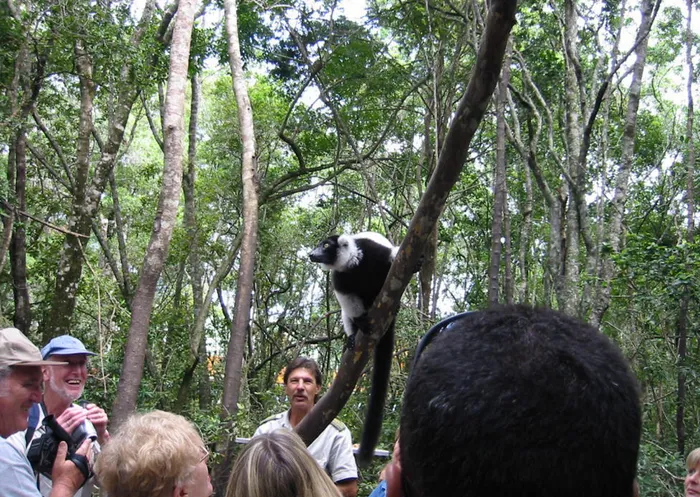
He praised primate sanctuary Monkeyland at Somerset West for its strict protocols on primate interaction and for promoting responsible ecotourism. He praised primate sanctuary Monkeyland at Somerset West for its strict protocols on primate interaction and for promoting responsible ecotourism.
Cape Town - Tourists who get too close could be signing the death warrants of wild animals, especially primates, because they are vulnerable to human infections.
Indiana University’s department of anthropology associate professor and director of the Evolutionary Physiology and Ecology Lab, Dr Michael Muehlenbein, recently visited the Garden Route and other areas as part of a global study aimed at gauging the impact of ecotourism on primates and creating guidelines to ensure the well-being of these animals.
His focus is on understanding the risks of pathogen transmission from the thousands of tourists visiting sanctuaries and other primate centres around the world.
“Nature-based tourism accounts for a growing proportion of international tourism activity… “ Muehlenbein said. “But because of their genetic relatedness with humans, other primates are particularly susceptible to human infections.”
Infections that could threaten primate populations were usually respiratory viruses and bacteria.
“But these animals can also be very sensitive to our herpes viruses, like the ones that cause cold sores, and chickenpox. Many primates have died from metapneumovirus (which transmits respiratory disease) and polio transmitted from humans.”
He believes that disease monitoring systems and guidelines should be established to protect wildlife.
It was critical to understand tourist motivations and behaviour to recognise how future tourist education could minimise risks. He praised primate sanctuary Monkeyland at Somerset West for its strict protocols on primate interaction and for promoting responsible ecotourism.
He said their study at Monkeyland used a new survey that focused on tourist motivations regarding environmental behaviours, their knowledge of environmental problems, their willingness to take risks, and their affinity for wildlife. They collected 491 survey responses during a recent visit and Muehlenbein will be back with four of the graduate students in March to collect an additional 500 responses.
“We are generally a species with intensive affinity for close interaction with monkeys and apes. The internet is full of pictures of people holding or feeding primates. Many professional primatologists are guilty of this as well, with their own websites or books full of pictures of them holding hands with chimpanzees, or allowing a monkey to crawl on them.”
Famous actors were portrayed in documentaries caring for orphaned orang-utans, setting a further bad example that close contact was acceptable, he said.
“Why do we wish to participate in such risky activities? Young primates are very cute, adults of many species can be quite neotenous, and we can readily see behaviours in these animals that mirror our own. These reasons seem to outweigh common sense sometimes.” - Garden Route Media