Ancient sundial illuminated emperor


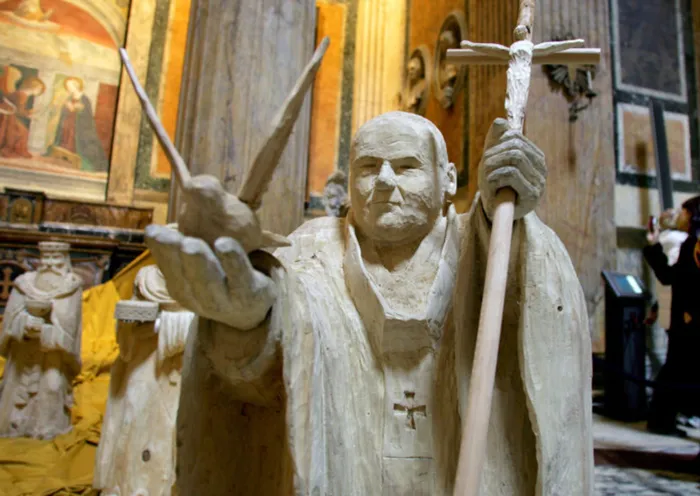
A visitor takes a picture of a wooden figure representing the late Pope John Paul displayed in Rome's Pantheon A visitor takes a picture of a wooden figure representing the late Pope John Paul displayed in Rome's Pantheon
Rome - The huge 30ft (about 9m) hole built into the dome of Rome’s Pantheon has mystified minds for centuries.
Now historians have come up with an intriguing explanation for the feature - it was built as a sundial to illuminate the emperor as he entered on important occasions.
The opening is the only source of natural light for the 2,000 year-old structure, but at the same time it also lets in rain and there are tiny holes in the floor which act as a drain.
Experts found that the hole allows a single shaft of sunlight to illuminate the interior during the March and September equinox as well as on April 21 - the date Rome is said to have been founded.
The emperor would have been bathed by the sun’s rays as he entered the building on these auspicious occasions. Professor Giulio Magli, from the Polytechnic of Milan, said: “This would have a dramatic effect on him and raise him to the status of a god.”
He explained that during the darker winter months the beam illuminates only the vaulted dome. However, at noon on the equinoxes it reaches the floor and on April 21 the beam fully illuminates the entrance at midday.
Building of the Pantheon was started in 27BC by Agrippa and his name is still visible over the entrance, although it was not finished until AD128 by the Emperor Hadrian. The word Pantheon means “to every god”. - Daily Mail