Heroin hits new highs in Cape
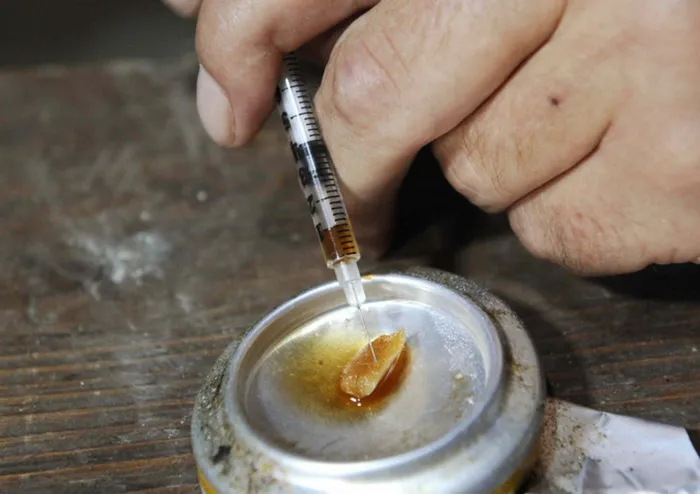
A user prepares to inject heroin. A user prepares to inject heroin.
JANIS KINNEAR
Staff Reporter
DRUG experts have sounded the alarm about the rise in heroin addiction in the Western Cape, warning that its use could overtake that of tik, putting a far heavier burden on the health-care system.
Some drug treatment facilities are already recording more patients addicted to heroin than tik.
Shafiek Davids, director of the Sultan Bahu Drug Rehabilitation Centre in Mitchells Plain, said the increase in heroin addicts treated at the centre was “absolutely alarming”.
From April 2007 to April 2008, 29 percent of patients were treated for heroin addiction. Between April 2008 and April 2009, the number shot up to 42 percent. Now, he said, more than half the patients treated at the centre were heroin addicts.
“It is a lot more dangerous and we need to prepare ourselves,” Davids warned.
The effects of heroin, he explained, were often more complicated than tik, especially the physical dependency on the drug.
Users could suffer collapsed arteries, veins and lungs, or mental illness.
Davids said that unlike tik addicts, heroin addicts required a costly medical detox before treatment could begin.
The existing sector was already overburdened.
In addition about 45 percent of heroin addicts relapsed within the first seven days of rehabilitation.
Andreas Pluddemann, senior scientist with the SA Medical Research Council’s Drug and Alcohol Abuse Unit, said heroin was a concern in the Western Cape, especially in Cape Town.
Although the council had only recorded an overall 13 percent of patients in the province treated for heroin addiction by June, centres had been reporting higher figures.
Pluddemann said that unlike other countries where the drug was commonly injected, in South Africa it was mostly smoked.
He said it could also be snorted.
Sarah Fisher, the executive director of the Substance Misuse Advocacy, Research and Training Group, said heroin use was rife in all communities, and was rising globally.
She said the Western Cape was the only province with a dedicated opiate detox ward, at Stikland Hospital.
While tik was a methamphetamine-type stimulant (MTS) which stimulated the central nervous system, heroin was a central nervous system depressant.
“Usually people who use MTS are not as likely to seek treatment voluntarily,” Fisher said.
She said the harm from heroin usually involved overdosing or committing crime.
Injecting the drug carried the added risk of contracting HIV/Aids and hepatitis C.
Cathy Karassellos, a clinical psychologist at the Cape Town Drug Counselling Centre, said although tik was still the biggest problem drug, heroin was a “close second”.
At one of one the centre’s branches, 30 percent of those seeking treatment in January and February were heroin addicts, compared to 39 percent who were tik users.