Foot and mouth to cost SA millions
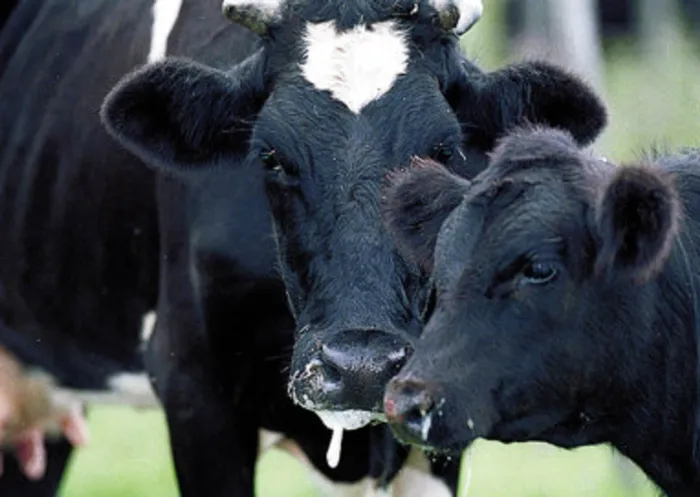
Cattle drooling from foot-and-mouth on a farm near Buenos Aires during a 2001 outbreak of the disease. Cattle drooling from foot-and-mouth on a farm near Buenos Aires during a 2001 outbreak of the disease.
BRONWYNNE JOOSTE and Sapa
ALL SOUTH African red meat exports and by-products have been banned for three months, following an outbreak of foot and mouth disease (FMD) in KwaZulu-Natal.
The government estimated that this would cost the economy around R30 million and result in the loss of 100 jobs in that province. Another R300m loss was projected on animal hides.
The Red Meat Producers Association said while the country’s meat exports were minimal compared to other countries, domestic meat producers would be affected by the outbreak.
Rural cattle and goats have been affected, but the Department of Agriculture said commercial cattle had not yet been affected. The outbreak will also affect the wool industry. At the moment no other regions are being investigated.
The Department of Agriculture stressed that there was no danger in consumers eating meat bought from local supermarkets.
At a media briefing in Parliament yesterday, Agriculture Minister Tina Joemat-Pettersson said the department had picked up “suspected” positive strains of the disease in around 300 animals in the northern parts of KZN.
“The department... picked up some suspect positive serological results for foot and mouth disease,” said Joemat-Pettersson.
“Over 600 animals have been tested and 50 percent of them were found to be positive,” she said.
The matter was reported to the World Health Organisation for Animal Health on Friday.
The Ingwavuma area, north of the Greater St Lucia Wetland, the Mkuze Game Reserve, and the area east of the Pongola Nature Reserve have been declared FMD-controlled areas. No animals or their products may be moved from these areas. All animals in these areas will be vaccinated, the department said.
“Even though no clinical symptoms for the disease have been seen to date, the department is continuing to conduct intensive investigations. The control measures will be determined by the findings of this investigation,” said Joemat-Pettersson.
The ban on exports could last for a year, but Joemat-Pettersson said the department hoped to “reverse the situation” in three months.
Although the ban could have “serious financial implications”, she said this could only be a “temporary inconvenience” to solve the problem.
Joemat-Pettersson said culling the animals was not yet on the cards.
She said exports to the EU would affect 500 tons a year to the value of R30m.
Wool exports to China, which had already been affected by Rift Valley Fever, were also a concern.
“We were supposed to host a Chinese delegation next week. We will still decide on that,” she said.
In the coming months, the department would decide whether to start exporting deboned, matured and processed products.
Department spokesman Dr Botlhe Modisane said African Buffalos were natural carriers of the disease. It is believed that some of these animals escaped from the Kruger National Park, migrated to Mozambique and then moved south into KZN.
He assured local farmers that their livestock would not be killed at this stage.
Joemat-Pettersson said meat in supermarkets was safe.
“All unsafe meat will be destroyed, there is no cause for concern.”
Gerhard Schutte, the chief executive officer of the Red Meat Producers Association, said consumers who “buy through formal chains” have a guarantee that the meat is safe to eat.