Ford Ranger’s new petrol engine is a game-changer for double cab enthusiasts


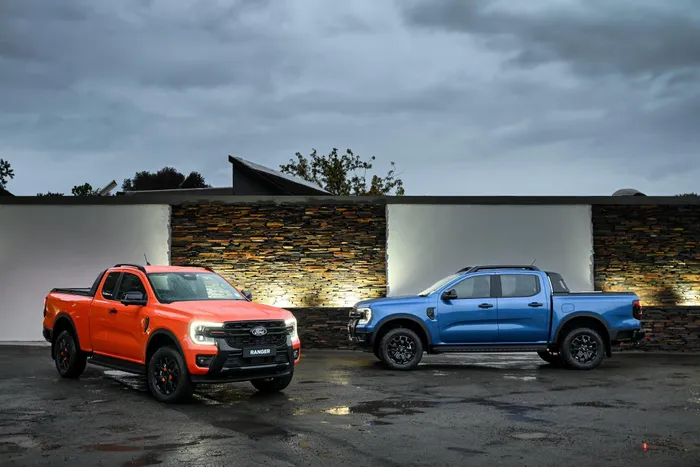
With the introduction of the 2.3-litre EcoBoost petrol engine that has replaced the Bi-Turbo 2.0-litre diesel mill, Ford is looking to attract new customers from premium SUVs that don’t necessarily want diesel power.
Image: Supplied
It’s an unusual sound pushing the start button on a Ford Ranger and hearing the purr of a petrol engine as opposed to the initial clatter of a diesel plant.
With the introduction of the 2.3-litre EcoBoost petrol engine that has replaced the Bi-Turbo 2.0-litre diesel mill, Ford is looking to attract new customers from premium SUVs that don’t necessarily want diesel power.
Keeping in mind that the new Toyota Hilux and Isuzu D-Max are about to be launched into the local market, the Blue Oval is looking to stay ahead of the curve and retain their number one position in the double cab market.
Drivetrains and derivatives
Producing 222kW and 452Nm, the EcoBoost engine is fitted into the Wildtrak and the new Sport derivative that slots in between the XLT and Wildtrak.
It’s a rear wheel drive only option in SuperCab and double cab format. However, Ford did say that if there was a demand for an all-wheel drive, that could change.
The 2.3 is only offered with Ford’s 10-speed automatic transmission and if manual is your preference, the single cab XL 4X4, double cab XL 4X2 and double cab XL 4X4 have a six-speed gearbox fitted with the 2.0-litre single turbo diesel engine with 125kW and 405Nm.
The rest of the range has the 3.0-litre V6 diesel engine producing 184kW and 600Nm or the previously mentioned 2.0-litre single turbo and then of course there’s the performance Raptor with its 3.0-litre twin-turbo petrol engine producing 292kW and 583Nm.
There’s no more Wildtrak X as a standalone but it can be ordered with the full X pack at an additional R50 000 while the 3.0-litre Tremor is the offroad focused diesel option.
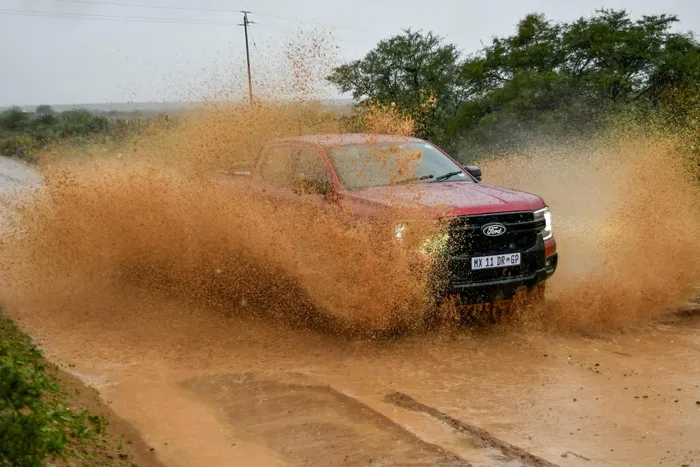
Producing 222kW and 452Nm the EcoBoost engine is fitted into the Wildtrak and the new Sport derivative that slots in between the XLT and Wildtrak.
Image: Supplied
Exterior tweaks
There are no radical exterior upgrades but rather more subtle changes that see black trim replacing the previous chrome ones, updated alloys and accents across the range and new colours in the form of Ignite Orange and Acacia Green.
Interior
The 12-inch Ford Sync 4 infotainment system and dual zone climate control is now standard across the range while the XL gets park distance control, lane keep assist and collision mitigation.
Apart from that, the Ranger still leads the interior stakes when it comes to bakkies.
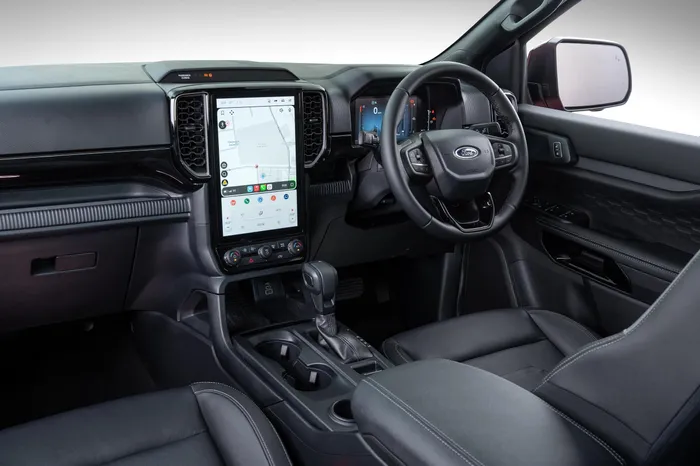
The 12-inch Ford Sync 4 infotainment system and dual zone climate control is now standard across the range.
Image: Supplied
Driving
The launch route was in and around the Oudshoorn district just as the heavens opened and closed the Swartberg Pass and washed away the Meiringspoort road which meant an alternative route that included slippery tar and muddy gravel roads.
The power delivery on the 2.3 petrol engine is significantly smoother and more linear than the previous diesel Bi-Turbo.
It obviously revs higher before changing gears and the calibration to the 10-speed auto is so subtle that you hardly notice as the cogs switch gears.
Acceleration is impressive even with some wheel spin on the wet tar and I think the biggest difference will be felt when acceleration between 80 and 120km/h.
On wet clay and muddy surfaces the limitations of rear wheel drive were evident though. Even with gentle acceleration it induces spin which meant the traction control had to be switched off to prevent it from going into limp mode.
Once it gained momentum though it was great fun to swing the back out around corners and splash through the puddles.
Because of the weather we were limited to slower speeds which produced an average fuel consumption of just under 11l/100km. Under normal circumstances I reckon it will be closer to 12l/100km which is not bad at all and is less than what you’re going to get with the V6 diesel 4x4 option.
With fuel prices, especially diesel, going through the roof and the topsy turvy geo-political situation it may not be a bad time to start looking at a petrol bakkie which makes the locally built Ranger an obvious choice.
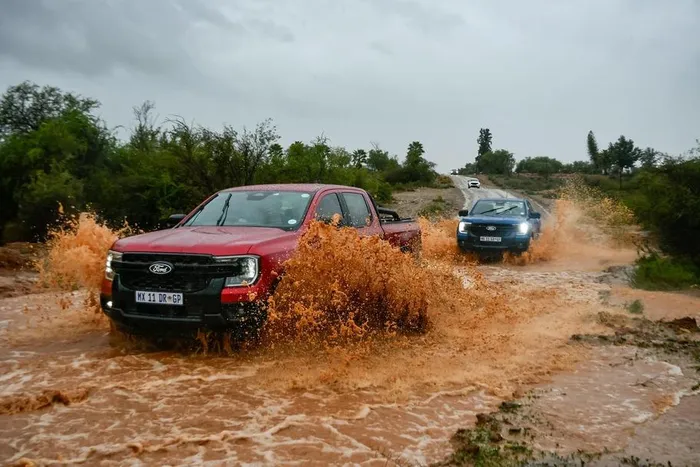
There are no radical exterior upgrades but rather more subtle changes that see black trim replacing the previous chrome ones.
Image: Supplied
Full range warranty and pricing
The Ranger is sold with a six-year/90 000km Ford Optional Service Plan, four-year/120 000km warranty, four-year/unlimited distance roadside assistance and a five-year/unlimited distance corrosion warranty.
Customers can also extend the service or maintenance plan to eight years or 165 000km, while the warranty can be extended to seven years or 200 000km.
Single cab
XL 2.0L SiT 10AT 4x2: R590 000
XL 2.0L SiT 6MT 4x4: R635 200
XL 2.0L SiT 10AT 4x4: R666 000
Super Cab
XL 2.0L SiT 10AT 4x2: R599 500
XL 2.0L SiT 10AT 4x4: R675 000
XLT 2.0L SiT 10AT 4x2: R655 000
XLT 2.0L SiT 10AT 4x4: R731 000
Sport 2.3L 10AT 4x2: R735 000
Sport 3.0L V6 10AT 4WD: R825 000
Wildtrak 3.0L V6 4WD: R865 000
Double cab
XL 2.0L SiT 6MT 4x2: R621 000
XL 2.0L SiT 10AT 4x2: R651 500
XL 2.0L SiT 6MT 4x4: R704 000
XL 2.0L SiT 10AT 4x4: R735 000
XLT 2.0L SiT 10AT 4x2: R699 500
XLT 2.0L SiT 10AT 4x4: R788 500
Sport 2.3L 10AT 4x2: R839 600
Wildtrak 2.3L 10AT 4x2: R899 000
Sport 3.0L V6 10AT 4WD: R995 000
Tremor 3.0L V6 10AT 4WD: R1 039 000
Wildtrak 3.0L V6 10AT 4WD: R1 070 000
Platinum 3.0L V6 4WD: R1 179 500
Raptor 3.0L V6 Twin-Turbo: R1 299 000