Volvo's major software update enhances the driving experience for 2.5 million vehicles


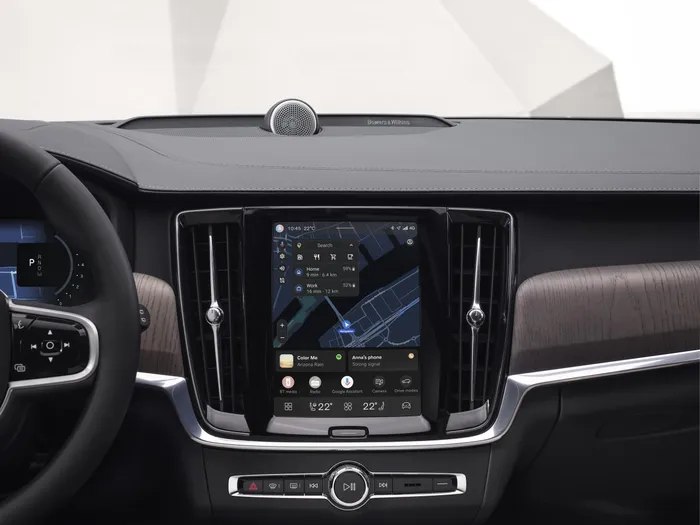
Volvo's OTA update introduces a redesigned infotainment interface, branded Volvo Car UX, and applies to models equipped with Google built-in, dating back to 2020.
Image: Supplied
Volvo Cars has begun rolling out what it describes as its largest over-the-air (OTA) software update, targeting around 2.5 million vehicles across 85 countries.
The update introduces a redesigned infotainment interface, branded Volvo Car UX, and applies to models equipped with Google built-in, dating back to 2020.
The rollout is free of charge and forms part of the company’s ongoing strategy to enhance vehicles through software updates rather than hardware changes.
Infotainment layout reduces steps
The most visible change is the redesigned central display interface, which prioritises frequently used functions and reduces the number of steps required to access them.
Core features such as navigation, media and phone controls are now accessible directly from the home screen. This enables drivers to manage multiple functions simultaneously without needing to switch between different menus.
A new contextual bar adapts depending on driving conditions and recent usage such as that at lower speeds it can surface camera functions to assist with manoeuvring in tight spaces.
Standardised Google-based system
Built on Android Automotive, the updated system maintains integration with Google services while introducing a more consistent design across the Volvo range.
This means older models such as the XC40 now receive a similar interface approach to newer vehicles like the EX90, aligning the user experience across different model years.
Plug-in hybrid controls simplified
For plug-in hybrid models, the update brings easier access to electric driving functions.
Drive modes are now accessible directly from the home screen, allowing drivers to switch to electric-only operation via the "Pure" mode with a single input.
This simplifies interaction with the hybrid system and makes it easier to prioritise electric driving in urban conditions.
AI integration
Alongside the interface update, Volvo is enabling certain vehicles without its Pilot Assist driver assistance system to add the feature via download, depending on specification.
The update also prepares compatible vehicles for future integration with Google’s Gemini AI platform, which is expected to expand voice and conversational functionality within the infotainment system.