The rise of touchscreen controls: Are they distracting drivers?


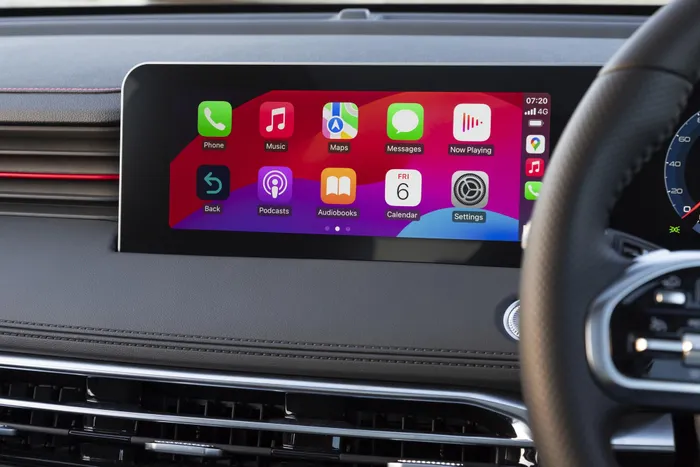
Recent findings from ADAC reveal that the shift towards touchscreen controls in vehicles is increasing driver distraction.
Image: Supplied
For those of us that frequently test cars from every manufacturer in South Africa we often bemoan the fact that key functions and controls are embedded within the infotainment systems, sometimes having to scroll through various menus to adjust even the most basic functions.
Clean and uncluttered interiors are often celebrated but having to use the screens to adjust temperatures, volume control and even side mirrors is not only annoying but also distracting and dangerous.
According to ADAC (Allgemeiner Deutscher Automobil-Club, Europe's largest automobile association), a user-friendliness evaluation as part of its Autotest vehicle assessments over the past seven years shows a measurable increase in driver distraction linked to evolving control systems.
Scores decline over time
In 2019, vehicles assessed by ADAC achieved an average score of 2.3 for ease of operation, with no model rated worse than 3.2.
By 2025, the average score had dropped to 2.7, while the lowest-rated vehicle scored 4.0.
According to ADAC, the decline aligns with the broader shift towards software-driven interfaces with modern systems increasingly relying on touchscreens, multi-level menus and controls without haptic feedback.
ADAC’s findings show that vehicles with predominantly touchscreen-based controls require longer operating times with drivers focusing more to locate functions or avoid input errors.
This added cognitive load increases distraction levels, which in turn raises the risk of accidents.
Euro NCAP pushes for physical controls
The issue is now also being addressed within the Euro NCAP safety framework.
Under updated criteria, vehicles will only qualify for full safety points if certain core functions are accessible via direct physical inputs such as buttons or switches with haptic feedback.
These include indicators, hazard lights, the hooter, windscreen wipers and the eCall emergency system. Other functions must be accessible within one or two steps in the vehicle’s menu structure.
Drivers are advised to familiarise themselves with infotainment menus before setting off, particularly after software updates, especially locating safety-related functions such as demisting controls.
Voice assistance systems may provide an alternative method of accessing certain features, where supported.
AA raises concern
Automobile Association of South Africa CEO Bobby Ramagwede said digital innovation must support, not hinder, road safety.
“Digital innovation in vehicles must improve safety. Not undermine it. We are increasingly concerned that when essential controls are buried in touch screen menus, distraction rises and accidents follow,” he said.
“South African motorists already face demanding driving conditions, so vehicle design should prioritise simple access to safety-critical functions to ensure technology supports the driver. If it complicates the driving task, designers need to go back to the drawing board.”