AA warning: South Africa’s ‘lax’ car safety standards are costing lives every day


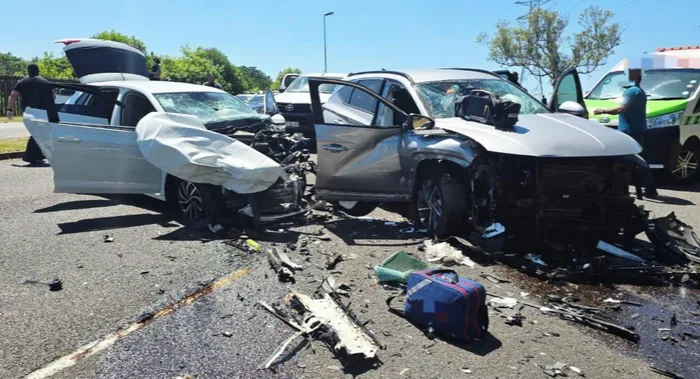
The AA says that delays in revised safety standards has real consequences.
Image: ALS Paramedics
Bobby Ramagwede, CEO of the Automobile Association of South Africa (AA), says delays in updating vehicle safety regulations and enforcing meaningful standards are contributing directly to road fatalities, including among the country’s workforce.
He revealed that revised safety standards have been awaiting implementation for years.
“The revised safety standards have been sitting on someone’s desk since 2022. Four years later, it’s still in progress,” Ramagwede said.
He says that the delay has real consequences, particularly in common crash scenarios such as side-impact collisions.
“Most accidents in South Africa are a T-boning of sorts. They’re not head-on. If you’re missing the critical component that prevents death by virtue of T-boning, then you’re okay with the headcount that you’re burying every year.”
According to Ramagwede, the broader economic consequences are also significant.
“Essentially, they are saying that they are okay with their workforce dying on the roads.”
Minimum standards not prioritising safety
Ramagwede says original equipment manufacturers (OEMs) are complying with minimum legal requirements but often not exceeding them, even when the cost of additional safety equipment is marginal.
“At a minimum, every car that is sold in this country should have electronic stability control and the full suite of airbags,” he says. “You shouldn’t have to buy up the safety. Safety should be standard in a vehicle.”
He adds that the economies of scale mean the cost of adding life-saving equipment is minimal.
“At the scale at which they’re selling these cars, introducing the full suite of airbags costs them next to nothing. They don’t need to ratchet up the price.”
Ramagwede added that manufacturers rely on existing regulations rather than proactively improving safety.
“They’re not committing a crime. They meet the minimum prescribed benefit. But they’re doing the minimum. You need to prioritise lives.”
He says that stronger policy enforcement would prevent lower-rated vehicles from entering the market in the first place.
“If we really wanted to protect the South African motorist, we’d do it at the policy level. Half the cars that you see in our national parking lot would not be on these roads.”
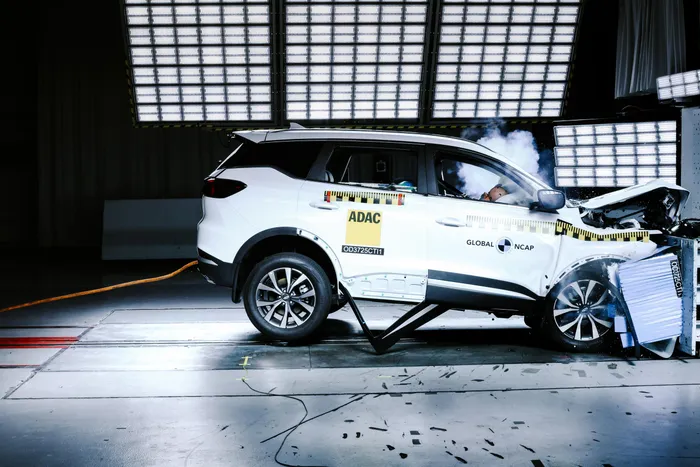
The AA says that every car sold in this country should have electronic stability control and the full suite of airbags.
Image: Supplied
Failures extend beyond vehicle design
However, Ramagwede says vehicle safety is only one part of a wider system that includes infrastructure, enforcement and driver behaviour.
“Our entire ecosystem - from the fact that these cars are allowed to be sold, to the state of our roads, the state of our policing, everything needs to change,” he said.
Visible policing and behavioural intervention are needed
Ramagwede says current enforcement strategies focus too heavily on issuing fines rather than preventing dangerous behaviour.
“Stop chasing after revenue. Start doing some policing.”
He suggests a practical intervention for drunk driving enforcement focused on immediate prevention rather than punishment.
“The guy’s over the limit right now. Park him on the side of the road, take the keys away from him and tell him that he leaves with his car when he’s under the limit.”
He says this approach would change behaviour without placing additional strain on the courts.
“What you then do is create a behavioural shift in people. They know they’re not going to get thrown in jail, but they don’t want the inconvenience of being detained.”
He adds that policing should also include education and preventative engagement.
“If someone’s driving around with broken taillights, instead of slapping them with a fine, help them understand what it means. If someone can’t see you, they’re going to rear-end you.”
Call for African-specific crash testing
Ramagwede says the absence of a continent-wide crash testing programme allows lower-rated vehicles to enter African markets more easily than in other regions.
“There’s an Indian NCAP, there’s a Euro NCAP, there’s an Australian one. Every territory has one, but Africa.”
He says a local programme would strengthen regulatory oversight and improve vehicle safety.
“When you decide you’re going to allow a car to be sold in South Africa, it must be tested locally. If your NCAP rating is less than three, it shouldn’t be homologated.”
He adds that the AA is pushing for the creation of an African crash-testing programme to address the gap.
“If the state doesn’t do the job, we’re happy to do it through an Africa NCAP. This isn’t a witch hunt. It’s to make sure the cars that come to this country are morally sound.”
Systematic reform needed
Ramagwede says even widespread adoption of five-star rated vehicles alone would not eliminate road deaths without broader systemic reform.
“Even if every single car on our road was a five-star rated vehicle, our death rate would be less, but our accident rate might not change.”
He says the focus must remain on reducing preventable fatalities.
“If you’re in an unsafe vehicle, every accident could mean death. But if I can get you out of that vehicle alive, better yet unscathed, that’s a win.”
He concluded that addressing road safety requires coordinated action across regulation, enforcement, infrastructure and vehicle standards.
“If the state did its job at the gate, I would be out of a job.”