Building futures: BMW’s people-driven vision for South Africa and global impact


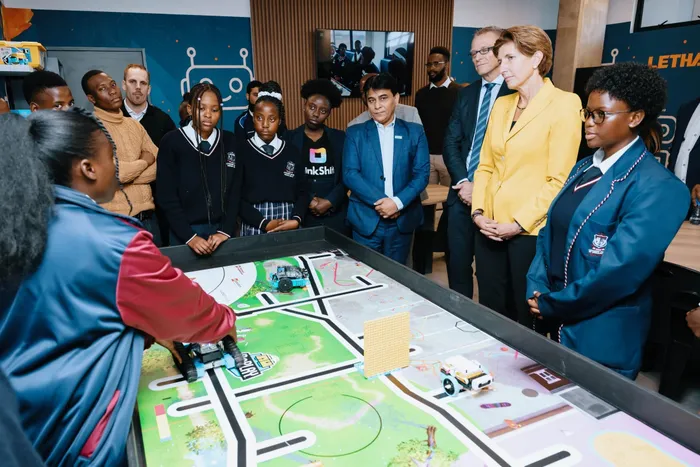
Peter van Binsbergen, CEO of BMW Group South Africa and Ilka Horstmeier, Member of the Board of Management of BMW AG for People and Real Estate and Labour Relations Director look on during the handover of the state-of-the-art facilities at Lethabong School of Specialisation (SOS), Soshanguve, in Maths, Science & ICT.
Image: Supplied
Ilka Horstmeier, the board of management member for BMW AG overseeing People, Real Estate, and Labour Relations, fondly recalls her visits to South Africa.
Having spent over three decades with the company, she has witnessed the evolution of BMW’s footprint in the country - not just as a production hub, but as a catalyst for progress.
At BMW’s Rosslyn Plant north of Pretoria, that legacy continues with the BMW X3 plug-in hybrid, a model produced exclusively in South Africa for the world.
“Over all these years,” says Horstmeier, “South Africa has evolved, and now we are at a high production rate. It’s a viable and vital part of the BMW global network.”
Why the X3 Hybrid?
The decision to allocate production of the X3 hybrid to Rosslyn was not made lightly. Every new model’s production location within BMW’s global network is the result of a careful balancing act, including market demand, logistics, cost structure, and trade conditions.
“South Africa isn’t our largest market,” Horstmeier explains, “but the plant’s export capabilities and its skilled workforce make it an ideal choice. We also look at factors like free trade agreements, tariffs, and the competencies we want to enable in a plant. It’s a complex decision, but Rosslyn’s flexibility gives us resilience.”
That flexibility has paid off. BMW South Africa recently began exporting vehicles to Canada, showcasing the brand’s ability to adapt within an ever-shifting global production environment.
Investing in people
For Horstmeier, BMW’s value lies beyond its factories or vehicles. “A company today should not only be measured by its economic success, it should also be measured by its contribution to society.”
This philosophy has become a cornerstone of BMW’s global strategy, built around four key pillars: responsible leadership, equal opportunities, education, and culture and sport. Each pillar reflects BMW’s belief that business thrives only when society does too.
Responsible leadership begins within BMW’s structures - equipping people to adapt to new technologies and preparing the workforce for the electric future.
As the company transitions from internal combustion engines to electrified mobility, training and upskilling have become central. “We’ve transformed our plants and trained people over the past years to cope with new technologies,” Horstmeier says.
“Education is not just CSR for us - it’s our core business.”
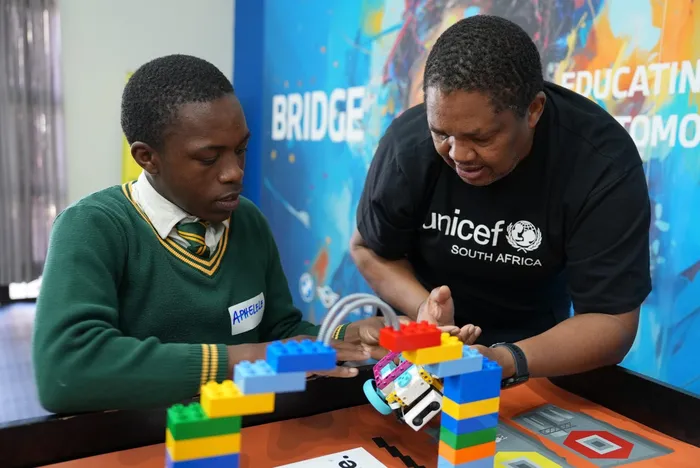
Learners at KwaZamokuhle Special School in Estcourt, KwaZulu-Natal, are stepping into the digital future thanks to the launch of a new Coding and Robotics Hub, established through the BRIDGE partnership between UNICEF and the BMW Group, in collaboration with the Department of Basic Education (DBE).
Image: Supplied
Empowering the next generation
Of all BMW’s corporate social responsibility (CSR) efforts, few have had as visible an impact as the Youth Employment Service (YES) programme.
Launched in partnership with the government, YES provides 12-month internships for young people to gain practical work experience. “Since 2022, we’ve given more than 3,000 young South Africans an opportunity.” For many, it’s a dream to work for BMW - even just for a year. It boosts their confidence, their skills, and their employability.”
Some participants go on to permanent roles at BMW, particularly in one of the company’s fastest-growing sectors - information technology.
“We’re not just a production and sales company anymore,” she says. “We run one of the biggest IT hubs in South Africa out of Menlyn in Pretoria. It’s not only local work; we’re delivering software for BMW operations across the globe.”
The IT Hub’s output, worth around R4 billion in value creation, shows how BMW’s South African operations are deeply integrated into its global innovation ecosystem.
A platform for good
BMW’s approach to CSR also relies on empowering its own people to participate. The company operates a global Social Drive platform, connecting employees with volunteering opportunities - from one-day charity events to long-term community projects.
“Sometimes our best ideas come from within,” Horstmeier explains. “Employees who get involved return to work more motivated, proud that their company enables them to make a difference.”
This philosophy of combining social impact with personal development echoes across BMW’s initiatives, from local community projects to major international collaborations.
Partnering with UNICEF
One of BMW’s most ambitious global CSR undertakings is its partnership with Unicef, launched to expand access to education in developing regions. The goal is to help 10 million children gain quality schooling by 2030, focusing particularly on STEAM subjects (science, technology, engineering, arts, and mathematics).
“Unicef has the expertise, and we have the network, and together we can create real impact,” says Horstmeier.
The partnership began in South Africa and has since expanded to 19 schools across the country, including one close to BMW’s Rosslyn plant in Soshanguve, before rolling out to Brazil, Thailand, India, and Mexico. BMW not only funds infrastructure and resources but also supports teacher training to ensure the benefits last beyond the initial investment.
“Education is the key driver for self-determined lives,” Horstmeier adds. “It’s what allows future generations to shape their own destinies.”
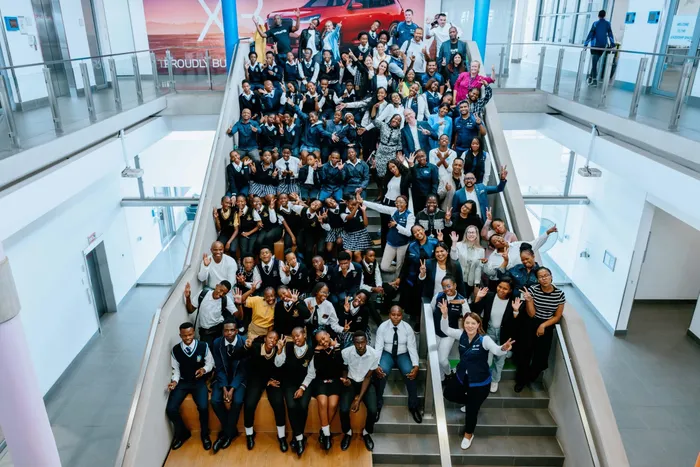
UNICEF South Africa and BMW Group South Africa launched the STEM (Science, Technology, Engineering and Mathematics) for Youth Mentorship Programme.
Image: Supplied
The art of connection
Beyond education, BMW recognises the power of art and culture to unite people. The brand’s 50-year involvement in global cultural projects continues with the 20th BMW Art Car, designed by Ethiopian-American artist Julie Mehretu.
The hybrid car that competed at Le Mans is more than a statement piece. It’s the centrepiece of a larger project called AFMAC - the African Film and Music Arts Collective - which brings filmmaking and music workshops to emerging creatives across five African countries.
The programme will culminate at the Zeitz MOCAA Museum in Cape Town next year.
“It’s far from cars,” Horstmeier laughs. “But culture, like sport, has the power to unify people - no matter their background. It brings communities together, just like a great concert or a football match.”
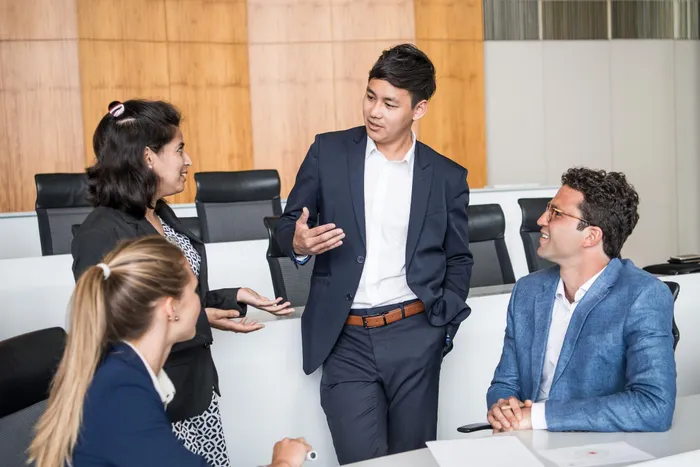
The partnership between BMW Group and ESMT Berlin Change Maker Fellowships includes full-time MBA and MSc programs alongside the Global Online MBA focusing on shaping leadership for a digital future.
Image: Supplied
A sustainable future
As BMW moves deeper into its era of electrification, Horstmeier believes the company’s human-centred approach will be what keeps it ahead. “We are reinventing ourselves,” she says. “We’re not just changing cars - we’re transforming people, processes and places.”
The Neue Klasse generation of electric vehicles embodies this philosophy. The transformation began in the middle of the COVID-19 pandemic. “When the world stopped, we decided to think beyond the crisis. That’s what makes BMW different - we plan for the future, even in the toughest times.”
From Rosslyn’s hybrid X3 to classrooms in Soshanguve, from digital careers to art that connects continents, BMW’s impact extends well beyond the road.
As Horstmeier puts it, “Economic success is only part of the story. What truly matters is how we use it to build stronger societies - because that’s what drives the future.”