How Aston Martin went from hopeful contenders to barely kicking on the F1 front
Formula One


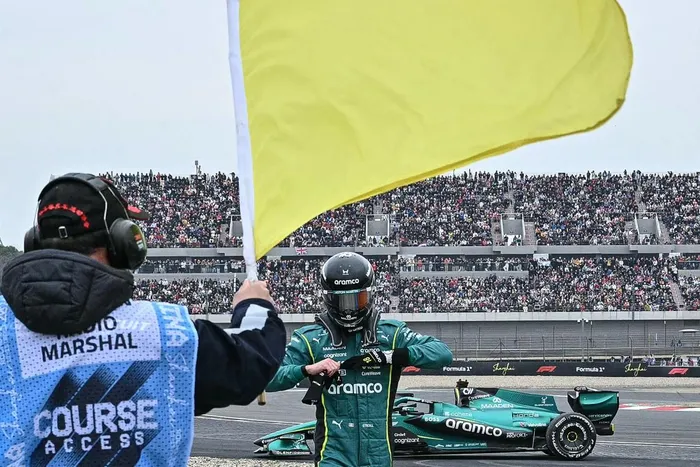
A race official waves the yellow flag as Aston Martin driver Lance Stroll leaves the track during the recent Chinese Grand Prix .
Image: AFP
Aston Martin appear to be shuffling its deck of leaders amid their horrible 2026 season start, plagued by car problems.
With Jonathan Wheatley’s exit from Audi so early on, pundits have speculated that he could soon step into a team principal role at Aston Martin F1 Team, allowing Adrian Newey to fully concentrate on what he does best: designing race-winning machinery.
Newey was initially expected to juggle both responsibilities this season, acting as both team principal and technical mastermind. However, that ambitious structure has quickly unravelled.
The British engineering genius now finds himself at the centre of a crisis rather than a championship charge, with the team’s early-season struggles exposing deep-rooted flaws in their 2026 package.
At the heart of Aston Martin’s downfall lies a crippling vibration issue, widely linked to their new partnership with Honda. What was meant to be a fresh start under new regulations has instead turned into a technical nightmare.
The interaction between the power unit and chassis has created persistent instability, affecting both performance and reliability.
The issue is not just costing lap time; it is compromising driver safety and confidence. Fernando Alonso has already reported severe discomfort in the cockpit, even losing feeling in his hands during races.
When a driver of Alonso’s calibre struggles to wrestle the car, it underlines just how serious the situation has become. More concerning, however, is the timeline for recovery. According to paddock insight, this is not a quick fix.
The vibration problem is deeply embedded in the car’s architecture, meaning Aston Martin may need to effectively redesign key elements of both the chassis and power unit. Estimates suggest meaningful improvements may only arrive midway through the season, potentially as late as the British Grand Prix.
That leaves the team in a difficult position. Do they pour resources into salvaging the current car, or shift focus to long-term gains? Either way, valuable time in a fiercely competitive championship is slipping away. The leadership uncertainty only adds to the instability.
The potential arrival of Wheatley would signal a shift toward a more traditional management structure, freeing Newey from operational pressures. While that may benefit the team in the long run, it also highlights how quickly pre-season plans have been abandoned.
What makes Aston Martin’s struggles even more striking is the level of investment and ambition that preceded this campaign. The team assembled a star-studded lineup of technical minds and leadership figures, all with the intention of challenging at the front of the grid in Formula One’s new era. Instead, they find themselves fighting just to remain competitive.
Aston Martin entered 2026 with hopes of becoming title contenders. Now, they are barely kicking, and may spend the rest of the season simply trying to build a car worthy of the grid.