Pirelli's two stops in Qatar throws a spanner in the works
Another twist in the road

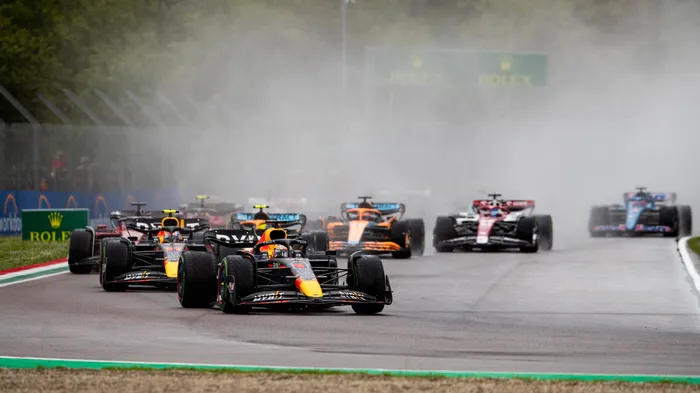
Max Verstappen is gunning for another title after rising to level points with Oscar Piastri.
Image: AFP
Pirelli confirmed a mandatory tyre limit that will force drivers into at least two pit stops at the 2025 Qatar Grand Prix, shaking up race strategies across the paddock.
The manufacturer revealed that no tyre set may exceed 25 laps of use across the weekend, citing safety and structural wear concerns following previous high-degradation races at Lusail.
“We are acting out of caution and data,” a Pirelli spokesperson stated, emphasising that the circuit’s speed and cornering loads create conditions where prolonged tyre usage could compromise integrity.
“The aim is to maintain performance without risking durability over extended stints,” the statement added, confirming that the lap cap will apply in practice, qualifying, sprint and the Grand Prix itself.
The change is significant. Last year’s race featured long strategic gambles and bold one-stop attempts, but those options have been removed entirely.
With 57 laps to complete, teams no longer have the freedom to push tyre life beyond optimal comfort. The restriction levels the field, rewards efficiency under pressure and could punish any team that miscalculates its pit windows or suffers from early Safety Cars.
The outcome? Qatar will no longer be about stretching tyres, it will be about timing, temperature control and overtaking power.
Teams will now be forced to choose between two-stop management or three-stop aggression, and both leading contenders are approaching the weekend differently.
For McLaren, the most favourable approach appears to be a Soft–Medium–Medium layout, maximising warm-up grip and early race attack. Their car has thrived in high-speed, high-load corners, making early track position vital.
If they find themselves behind Red Bull, a more aggressive Soft–Soft–Medium–Hard sequence is likely to happen, using two short opening stints to undercut strategically and force Red Bull into responding rather than controlling.
Red Bull, however, may lean the opposite way. Their tyre management advantage should allow them to run longer stints at peak consistency, making a Medium–Hard–Soft plan the most efficient path.
This gives them the endurance to hold track position and launch a late-race push with a softer compound.
If Verstappen leads early, expect a measured tempo, making McLaren chase while Red Bull remain composed. A stable Medium–Hard–Medium backup plan sits quietly behind, waiting for Safety Cars or cooling track temperatures.
Both the sprint and the Grand Prix stand to be shaped heavily by pit-lane rhythm. With tyre life capped and pace swings inevitable, Qatar will be a race of calculation more than conservation, and Pirelli’s ruling has ensured that no team can play the long game unchallenged.