Budget cuts in KwaZulu-Natal's health department threaten service delivery, strain on resources


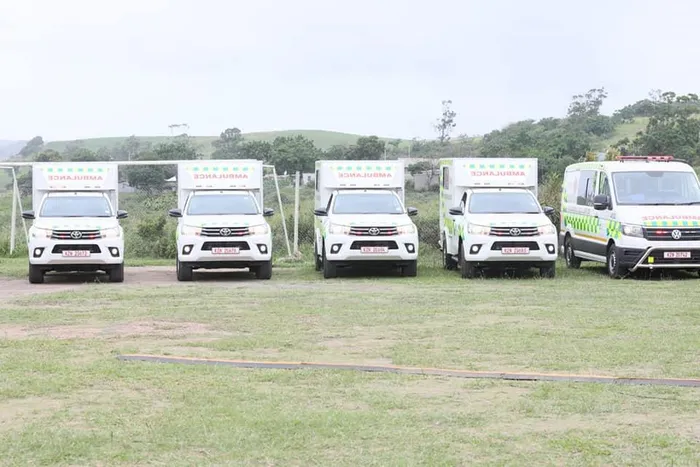
Budget cuts are impacting on the work of the KwaZulu-Natal Department of Health. Funds had to be reprioritised from its Emergency Medical Services unit to fund non-negotiable items in other parts of the department.
Image: Supplied
The KwaZulu-Natal Department of Health is battling to meet obligations, with funds being moved from key service delivery functions to fund the payment of salaries.
This is what the first draft budget submission of the Department of Health for the next year shows. The department recently briefed the members of the Health Portfolio Committee on its performance to date this financial year and its first draft budget submission for the 2026-2027 financial year.
It showed that almost every section of the health department is making a sacrifice on its budget in order to cover the costs of the existing staff that are already working for the department.
Among the programmes affected by these cuts are the emergency medical services, which include ambulance services.
The revelations about the cuts are a concern for members of the committee, who said the cuts, especially to emergency medical services, were having a destructive impact on service delivery.
The report of the first draft budget tabled by department officials stated: “The Department reprioritised R1.056 billion from Goods and Services (G&S) to Compensation of Employees (CoE) in order to cover current warm bodies.
“However, this movement could not cover the 4.3% 2026/27 cost-of-living adjustment (COLA) and 1.5% pay progression, as well as increases for housing (4.3%) and medical (6%) allowances. The estimated CoE shortfall is R1.3 billion,” it said. Detailing the cuts in other areas that are having to be made to cover employees’ remuneration, the report said in the administration area, a total amount of R306.256 million was cut and reprioritised to District Health Services.
“These were forced savings in order to partly cover current warm bodies and non-negotiable items. Items affected by these cuts were mainly advertising, forensic investigations, travel and subsistence, telephones (including cell-phone airtime and data), municipal services, fleet services, and leasing of photocopying machines.
It said the non-negotiable items, including infection control and prevention, security services, medicines, and patient catering, were protected from the cuts and allocated a sufficient budget to sustain the current level of services.”
An amount of R14.9 million was reprioritised from Emergency Medical Services subsequent to the revised budget allocation method to prioritise filled posts and non-negotiable items across all programmes, said the report.
Committee member Shontel De Boer said, “I know that compensation of employees is draining the budget and causing service delivery backlogs, specifically EMS backlogs. The reason why EMS is in such a sad state is due to most of the allocated budget being reallocated to compensation of employees.
“EMS is affected by financial constraints, especially when it comes to maintenance and upkeep of vehicles, as well as equipment maintenance and supply issues. Some ambulances don’t have ECG equipment and run short of supplies. But vehicle shortages are the biggest concern. This affects response times,” she said.
Dr Imran Keeka, DA spokesperson on Health and chairperson of the KZN Health Portfolio Committee, said it is not unusual for any department to shift funds within an allocated budget to meet pressing priorities.
“However, there are cardinal sins — such as diverting money from non-negotiable items like medicines to less critical areas. One part of the budget that cannot be interfered with is the Compensation of Employees — the wages of staff.
“It is worth noting that there will be no budget cut in the forthcoming cycle. In fact, a predicted increase of 4.6%, translating to almost R2.56 billion, must be welcomed. While grossly insufficient, it will go some way toward addressing long-standing challenges.
“However, areas of concern remain. Accruals, medico-legal expenses, the persistent failure to pay invoices within 30 days (a Treasury requirement), the practice of reallocating funds from one area to another, and ballooning irregular expenditure all remain major red flags that must be urgently addressed and must be planned better.”
Acting Head of Department Penny Msimango said all programmes are affected,
“If we look at the report, R14 million was reprioritised from EMS to fund compensation of employees. We were cautious; that was the least budget amount that was reprioritised in all eight programmes because we were conscious that we cannot take a lot of money from EMS.”