A crown without borders: Melissa Nayimuli’s bold stand for her Ugandan and Xhosa ancestry


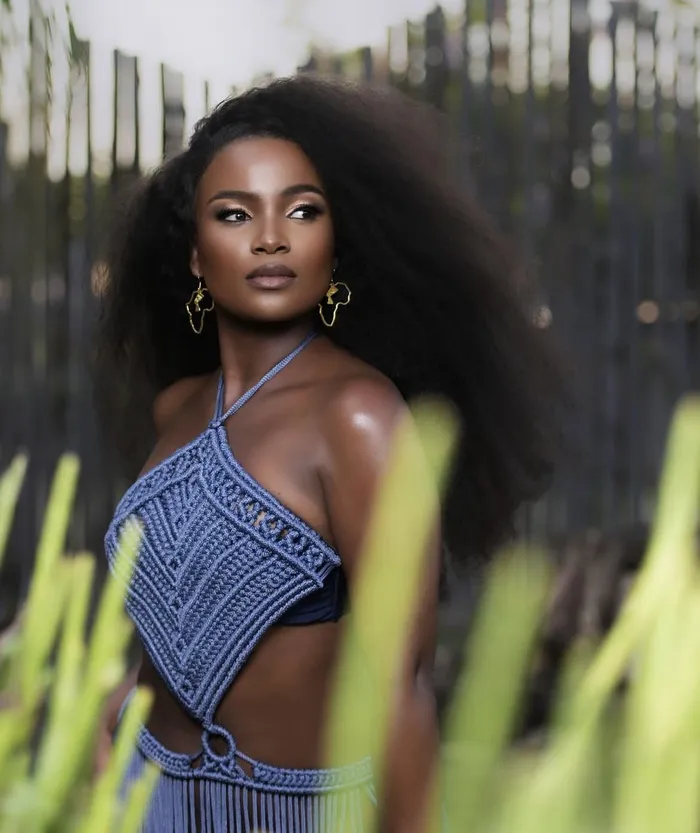
Miss Universe South Africa 2025, Melissa Nayimuli
Image: Instagram/Melissa Nayimuli
During a heartfelt conversation on the "Sessions with George" podcast, Miss Universe South Africa 2025, Melissa Nayimuli, spoke about the different parts of her identity.
She was born to a Ugandan father and a Xhosa mother from Butterworth in the Eastern Cape. Her story is about learning who she is, staying strong, and proudly embracing her multicultural background.
Nayimuli shared, “I faced a lot of bullying at school. They'd hear my name, Melissa Nayimuli, and ask, 'Where do you come from?' I would immediately code-switch into being a Xhosa woman, speaking isiXhosa like crazy, just to avoid questions about the ‘foreign’ side of my identity.
"From my teenage years, I’d try to be fully Xhosa and would even ask my mom why she gave me a Xhosa name. I showed up as Xhosa because it was widely accepted, and that’s all I wanted to be.”
Now, at 29, Nayimuli has come to embrace both sides of her heritage. “I love my heritage; I love being Ugandan, and I love being Xhosa. I am both. Trying to fit into one and not the other is definitely not who I am.”
Listening to Nayimuli, you realise how exhausting it is to feel like you have to hide parts of yourself just to belong.
Her struggle hits home because it’s the same one South Africa is having with itself, trying to decide if we’re truly part of the whole continent or if we’re still stuck behind the old walls of the past.
The "illegal" choice between two loves
It’s a story we see time and again: Chidimma Adetshina, born and bred in Soweto to a Nigerian father and Mozambican mother, found herself at the centre of a storm during the 2024 Miss South Africa pageant.
Instead of celebrating her journey, critics tore into her right to be there just because of her parents' roots.
It really pulled back the curtain on a painful truth, how quickly we can turn on our own when identity gets 'complicated' and the xenophobia that still simmers just under the surface of our national pride.
The burden of blending in
For Nayimuli, growing up meant suppressing her Ugandan heritage to avoid being labelled an "outsider". The fear of rejection was palpable. “I wanted to blend in,” she admitted. I didn’t want to stand out as different, as foreign.”
This experience mirrors a phenomenon known as racial imposter syndrome. According to research, individuals whose internal racial or cultural identity doesn’t align with societal expectations often experience self-doubt and anxiety.
Mixed-race individuals, in particular, are frequently pressured to identify monoracially, leading to a fractured sense of belonging.
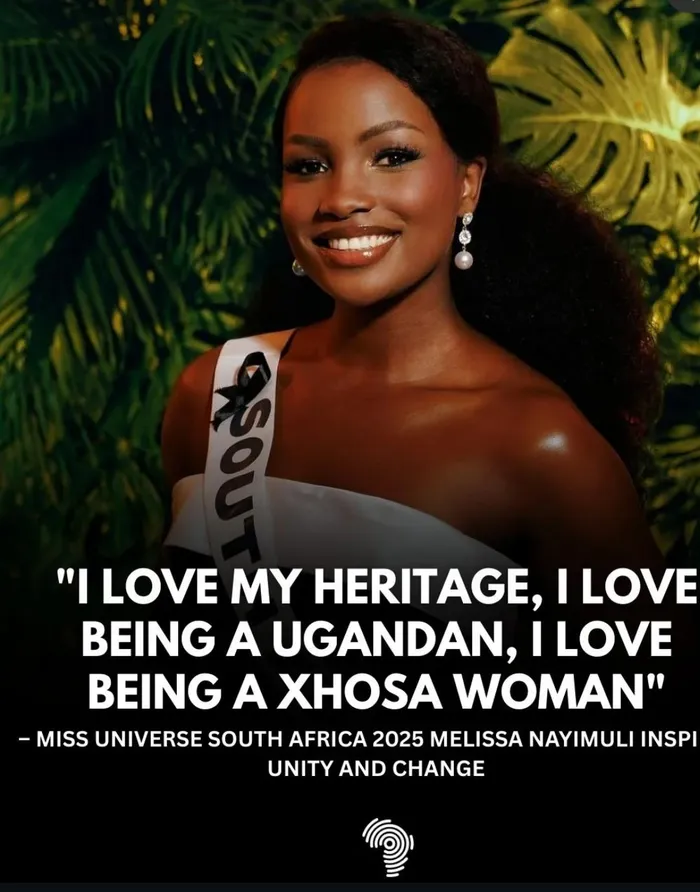
Miss Universe South Africa 2025, Melissa Nayimuli, shares her journey of embracing her multicultural identity amidst societal pressures and xenophobia.
Image: Social Media/Instagram
In South Africa, this struggle is compounded by the legacy of apartheid, which rigidly categorised people by race, leaving little room for fluid or hybrid identities.
For Nayimuli, the turning point came when she resolved to stop hiding her Ugandan roots. This decision profoundly impacted her relationship with her father, who had often felt sidelined in her pursuit of acceptance.
“It was like I had been denying a piece of him. Reclaiming my Ugandan heritage allowed me to reconnect with my father on a deeper level and honour everything he has given me," the Miss Universe South Africa 2025 has shared in previous interviews.
Her journey has also influenced her advocacy work. As Miss Universe South Africa 2025, Nayimuli is using her platform to champion African unity and inclusivity. “I want to start conversations aimed at repairing the damage caused by xenophobia, not just in South Africa but across the continent,” she said.
“We need to be kinder, more accepting, and more respectful of each other’s differences.”
Nayimuli’s story is just one thread in a larger tapestry of identity politics in South Africa. Attorney Zekhethelo Cele, who works with Lawyers for Human Rights, has written extensively about these issues.
Reflecting on the controversy surrounding Adetshina, Cele noted, “Chidimma’s story raises broader questions about national identity and the criteria used to determine who can represent a country. It also highlights the themes of resilience and the quest for belonging in an increasingly interconnected world.”
While xenophobia and afrophobia are often cited as root causes of these tensions, Cele suggests that the true drivers are deeper insecurities.
“The strong reactions come from inequality, lack of opportunities, and other social challenges,” she wrote.
Ultimately, Nayimuli and Adetshina’s journey reminds us that our many layers aren't something to be "fixed" or "chosen"; they are exactly what make us beautiful.
We’re at our strongest when we stop gatekeeping and start embracing each other, not just as South Africans, but as a family with one shared African heartbeat.