Salt stomping at bedtime: is this viral ritual the secret to deeper sleep?


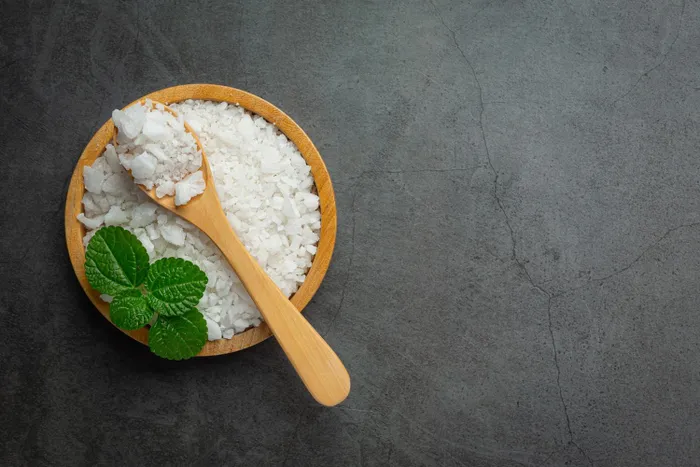
Epsom salt is being used in a new way at bedtime, with some people standing on it while doing skincare.
Image: Manific
Some of us are still out here trying everything under the sun to have a good night’s rest. Magnesium supplements, sleep sprays, chamomile tea, brown noise playlists, the bedtime routine is starting to look like a full-time job.
Now, another wellness habit is making the rounds: standing on Epsom salt while doing your skincare routine or just standing there for about 10 minutes like you’re emotionally clocking out for the day.
No doomscrolling, no rushing, just you, your feet, your big toe and the hope that your nervous system gets the message.
The practice was recently shared by content creator Tammy Weatherhead, who said she stands on a pile of Epsom salt for around 10 minutes while doing her nighttime skincare. According to her, the ritual helped improve her sleep without adding extra time to her evening routine.
The method, sometimes called “salt stomping” online, involves standing barefoot on coarse Epsom salt - also known as magnesium sulphate - while cleansing, moisturising or winding down before bed.
While there is currently no scientific evidence proving that standing directly on salt improves sleep, there are several reasons why the ritual itself may help people relax at night.
Research has consistently shown that bedtime routines and calming rituals can help signal to the brain that it is time to rest. Sleep experts often recommend repetitive wind-down habits because they encourage the nervous system to shift out of stress mode.
Epsom salt has also long been associated with relaxation and muscle recovery. Warm Epsom salt baths are commonly used to ease muscle soreness, reduce tension, and support better sleep.
Some experts believe magnesium may play a role in regulating stress and relaxation, although researchers are still debating how much magnesium is actually absorbed through the skin.
Epsom salt has also long been associated with relaxation and muscle recovery. Warm Epsom salt baths are commonly used to ease muscle soreness, reduce tension, and support better sleep.
Some experts believe magnesium may play a role in regulating stress and relaxation, although researchers are still debating how much magnesium is actually absorbed through the skin.
There is also a strong sensory grounding element to the practice. Standing barefoot on coarse salt creates constant tactile feedback through the feet, similar in principle to walking on a natural surface like sea sand or grass.
This sensory input can increase body awareness, slow mental activity, and help shift attention away from stress or overthinking.
So, if you feel like trying out this hack, grab that salt, stand on it, and let your feet do their thing while you pretend you’ve got your life together for a solid 10 minutes before bed.