24 000 lives a year lost to lightning
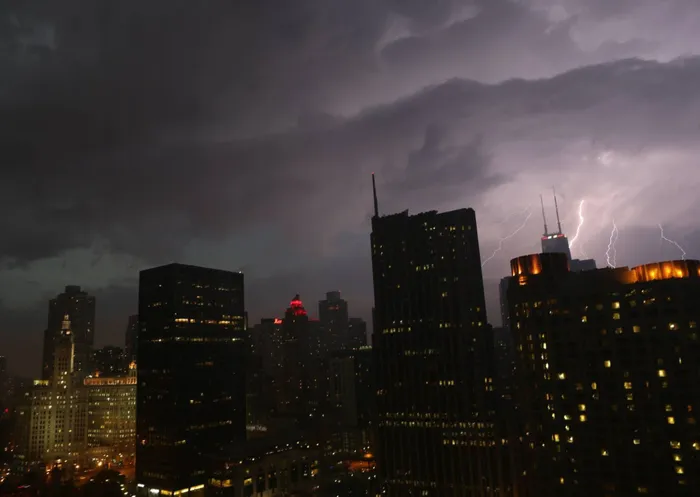
Durban - There are 24 000 lives lost every year to lightning globally, more than by any other natural cause, said Professor Roger Dickerson, an emergency physician specialist and vice-president of the Emergency Medicine Society of South Africa.
He was speaking at the 11th Congress of the World Federation of Societies of Intensive and Critical Care Medicine that was held at Durban’s Inkosi Albert Luthuli International Convention Centre at the beginning of the month.
He said there were an estimated 240 000 who survived lightning strikes and go on to live full lives, although they are faced with permanent sideeffects such as seizures and tinnitus.
“Lightning causes neurological damage and is not usually fatal unless it stops the heart when it strikes,” said Dickerson. He said the survival rate of patients was high.
“Primarily, a lightning strike is a neurological injury; it has an effect on the brain and on the ergonomic nervous system and on the peripheral nervous system,” he said.
About 60 percent of survivors have lightning-induced paralysis, from which they usually recovered spontaneously, although it could last for up to two weeks.
Dickerson said patients arrived in the emergency ward confused and hypotensive because of the lightning strike’s interference with the autonomic nervous system.
They would have the distinctive branching scarring known as Lichtenberg figures.
“We do not remove the dead tissue unless it is very clearly indicated, and we don’t do it from an early period point of view,” Dickerson said.
“Our resuscitation is based on a needs basis. We look at the patients as being exposed to massive amounts of trauma. We need to ensure they do not have associated injuries like long bone fractures or spinal injuries, and then we take care of what the lightning strikes actually do,” Dickerson said.
“We need to take care of these patients with regards to seizures. If they are presenting with chest pain, we need to investigate further. Perhaps the big focus should be on urine analysis and plasma analysis for myoglobin.”
He added that it was also important to do an electrocardiogram (ECG). “It tends to be normal within the first 24 to 48 hours, so it is necessary to repeat the ECG at a later stage,” said Dickerson.
He said if the patient was unconscious it was necessary to perform scans, although this was debatable in other cases.
Dickerson added that appropriate ear care was also vital since most patients would have ruptured the tympanic membrane, that could heal or be surgically repaired.
Elsa de Jager, of the SA Weather Service, said: “According to a research article published in the South African Medical Journal, the death rate due to lightning in South Africa varies from 1.5 to 8.8 per million inhabitants, a year.”
She said lightning was mostly associated with Cumulo-nimbus clouds, and the highest frequency of lightning occurred during the summer months in South Africa.
KwaZulu-Natal is one of the provinces with high density lightning strikes.
“Areas in the highveld and along the eastern escarpment have the highest occurrence of lightning in South Africa. Areas have been identified having in excess of 20 lightning flashes per square kilometre, per annum,” said De Jager.
Dickerson said studies had shown that men were five times more likely to be killed by lightning than women. He said the reason given was that men tended to be outside more for work and engaged in a higher level of risk-taking behaviours.
“With regards to mortality and morbidity, modern literature demonstrates there is nothing related to age or gender or whether you are struck on the trunk or arms.
“However, if you have lower burns (on the legs) and head burns or immediate cardiac arrest at the time of the strike, these are predictors of a high mortality,” Dickerson said.
“If we look at some of the literature published, about 2 000 thunderstorms occur worldwide at any point in time and there are about eight million ground strikes across the globe,” he said. - Daily News