A split-second choice: '180' tells the raw story of road rage and its consequences


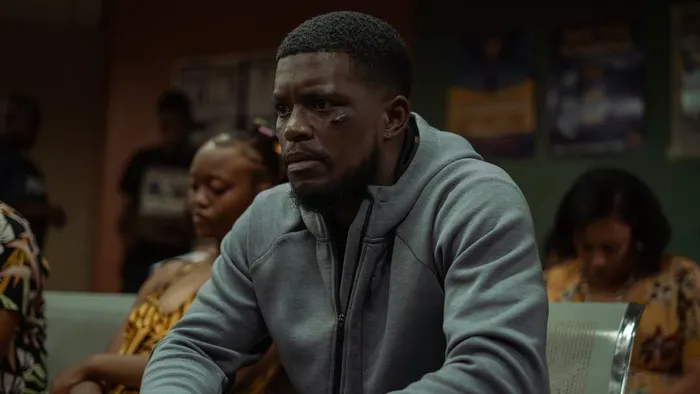
Reflecting on themes of safety, justice and the fragility of life, "180" captures the essence of everyday struggles in South Africa.
Image: X/@Ta_Hlumza
You know that feeling when you are stuck in traffic, and suddenly you start scanning every car around you just in case something goes wrong, because crime in South Africa has made even the most normal moments feel uncertain.
That is exactly the kind of anxiety "180" currently streaming on Netflix puts you in from the very first scene.
Set in Johannesburg, a city already carrying the weight of high violent crime rates, the story instantly feels familiar.
It does not matter that you are watching it from your couch because emotionally it places you right there on the N2 or the M1, stuck in traffic with that uneasy feeling that anything can happen at any moment.
This is definitely not a film for the faint-hearted.
There is a rawness to it that feels very action-heavy and unfiltered in the way it tells its story, where emotions and consequences hit fast and hard. As we would say here in South Africa when talking about proper action films, it is full-on “skop, skiet en donner” energy from start to finish.
The story centres on Zak, played by Prince Grootboom, whose life completely unravels after a violent road incident involving his son. From that moment, everything shifts, and what follows is grief, anger and a desperate search for meaning in the middle of chaos that feels very real.
Opposite him is Noxolo Dlamini, as Portia, who carries much of the emotional weight in this film. Her performance is grounded and painfully relatable as a partner trying to hold a family together while everything is falling apart.
Warren Masemola, as Lerumo, adds another layer of intensity to the story. His presence alone shifts the tone of every scene he is in, and you can feel the tension building every time he appears.
Then you have Fana Mokoena delivering what can only be described as a classic, hard-hitting performance. By this, I mean that the acting is so good that you find yourself fully convinced that what you are watching could actually be happening in real life.
One of the strongest aspects of the film is how it taps into everyday South African struggles beyond just crime. It briefly touches on bullying, which is something many households and schools are still dealing with across the country.
It also brings in medical aid frustration, which is something that hits very close to home. That fear of what happens when your medical cover suddenly becomes unreliable in a crisis is something many South Africans understand too well, and the film uses that anxiety effectively.
The road rage incident at the centre of the story also feels uncomfortably familiar because it closely mirrors real-life cases that have made headlines in South Africa.
A case in point is the argument between motorists in Emmarentia, Johannesburg, which culminated in gunfire, resulting in the death of one man and the injury of another person in the incident.
What makes moments like this so unsettling is how ordinary it all starts, just a normal drive that turns into tragedy within seconds.
While "180" is fictional, it reflects the same reality of road rage turning into irreversible consequences. It taps into a pattern South Africans are already aware of, where frustration, ego and violence collide in everyday spaces like intersections and traffic lights.
That is why the film can feel heavy to watch, because it does not sit in imagination; it sits very close to lived experience.
What "180" does well is refuse to sanitise anything. It does not dress up violence or soften the consequences. Instead, it forces you to sit with the discomfort and ask yourself how quickly a normal day can turn into something irreversible. That is where its strength lies.
The film does not try to offer answers or solutions. Instead, it reflects a society where many people are still trying to figure out safety, justice and survival all at the same time.
Overall, the film stands out because of its performances and its honesty. It feels local, it feels lived in, and it feels like something many South Africans will recognise, even if they wish they did not.
Rating: *** solid and enjoyable, though not groundbreaking.