Temple Boys: a beacon of hope for aspiring young artists in the Cape Flats


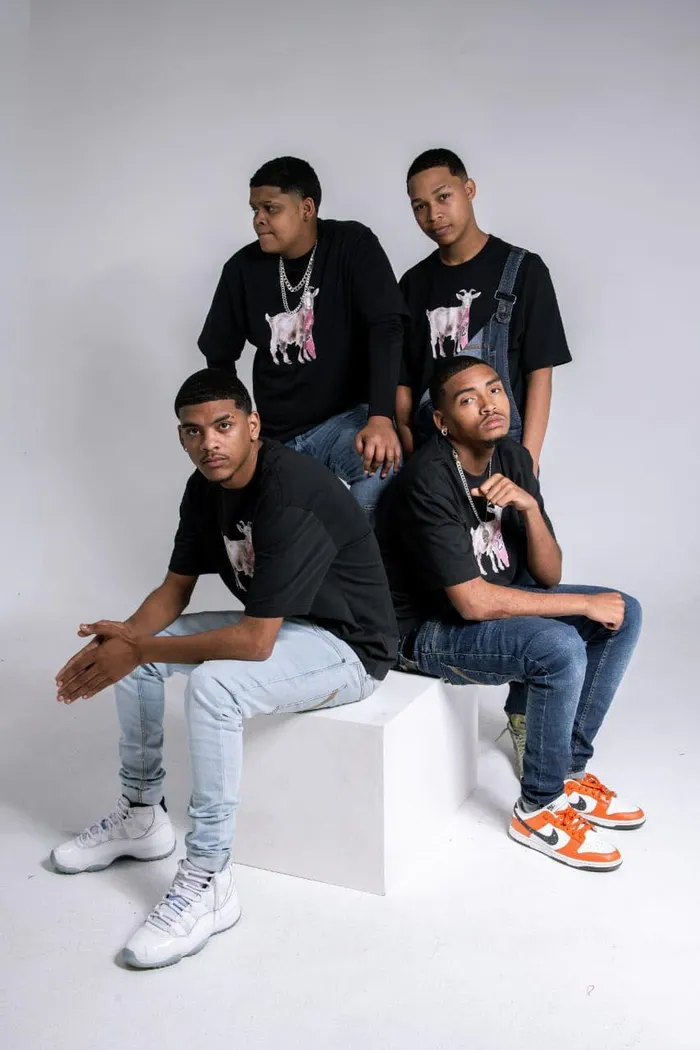
From recording music in their bedrooms to building a following that stretches across social platforms, Temple Boys represent a new kind of success story from Cape Town.
Image: Supplied
“People think that you need a lot to make it, but all we really needed was support and belief from our community while we stood in front doing the music,” said Temple Boys, summing up a journey that began long before viral videos and sold-out performances.
Temple Boys is a gqom music group from Ravensmead in Cape Town, whose rise reflects both the power of community and the persistence of young artists building something from the ground up.
What started as a group of friends experimenting with sound has grown into one of the most recognisable acts to emerge from the city’s evolving gqom scene. Their story is rooted in friendship, shared spaces and a desire to represent where they come from without dilution.
The group came together organically. Before there were stages or studio sessions, they were friends attending Ravensmead High School. Music followed naturally.
“We were friends first,” they explained. “We went to school together, and after that, we started doing music. It was never forced. It just made sense.”
As time passed, more members joined, and the collective found its rhythm. Each addition strengthened the group’s identity rather than shifting it, allowing them to move as one unit rather than as individuals chasing attention.
Their sound is difficult to box into a single category. Temple Boys described it as music you can vibe to, but that description only scratches the surface.
“If you really listen to the lyrics and understand the meaning, you will hear that it is a mixed pot of everything,” they said.
At its core is gqom, a genre deeply tied to Black Khoisan heritage, layered with Afrikaans lyrics and cultural references drawn from their environment. Even their name reflects this mix.
“Temple Boys is an Indian type of vibe that we went for,” they explained. “It all comes together as one sound and one feeling.”
This fusion has helped them carve out a lane of their own. By leaning into Afrikaans gqom, they introduced something fresh without losing the essence of the genre.
“We started Afrikaans gqom because we wanted to try something new,” they said. “It is fun music. You must enjoy it.”
That sense of enjoyment is key to their appeal, but so is authenticity. Their songs reflect lived experiences, street conversations and everyday realities familiar to many young people in Cape Town.
The Cape Town gqom scene itself continues to grow, and Temple Boys are clear that they are part of a wider movement rather than an isolated success.
“The scene is doing well,” they said. “There are a lot of upcoming artists and also big names carrying the sound.”
They see the scene as having its own flavour, one that continues to evolve while staying connected to its roots. In that space, Temple Boys have positioned themselves as contributors rather than competitors.
Like many artists from less-resourced communities, their path has not been without obstacles. Coming from what they described as a less fortunate side of the hood meant access was limited.
“We had to do things on our own,” they said. “We had to find our own manager and make our own mistakes because there was no real guidance.”
Learning through trial and error became part of their growth. Every misstep brought lessons that shaped their independence and sharpened their instincts.
That independence is reflected in how the group operates internally. From production to songwriting, much of the creative work happens within the team.
“We have everything that we need,” they explained. “Gham produces the beats. All of us come up with lyrics, and we think together.”
While collaborations are on the horizon, the focus has always been on building a solid foundation before expanding outward.
Their breakthrough moment came in stages. In 2020, the single “Slat n Spat” began turning heads, but it was “Saggies” in December 2022 that truly shifted their trajectory. The track went viral on TikTok, spreading far beyond their immediate audience.
The momentum grew when the late rapper AKA shared a video dancing to the song with his daughter, introducing Temple Boys to an even wider public. That moment marked a turning point, confirming that their sound could travel beyond local borders without losing its identity.
Since then, their growth has been steady and intentional. Last year, they released their album “Ons is Hier”, a nine-track project that further defined their sound. The album fuses traditional gqom energy with the style that they have developed over years of experimentation.
“We started recording in our bedrooms,” they said. “‘Ons is Hier’ shows how far we have come, but also where we are going.”
Their online presence mirrors that growth. With over two million followers across platforms, Temple Boys have built a direct connection with fans who feel represented by their journey. The group remains grounded in that connection.
“People from our area supported us from day one,” they said. “They did not have to do much. They just had to believe in us.”
That belief has been reinforced by new management under Oyama Dyosiba, a respected figure in the industry who has worked with artists such as Zahara and Nathi Makhayi.
Dyosiba has helped the group navigate publishing and distribution while preparing them for a bigger stage. He spoke confidently about their future. “These boys are versatile and talented,” he said. “They are about to shake the industry.”
In 2026, Temple Boys are pushing themselves creatively. Alongside more energetic releases, they are exploring a deeper emotional direction.
“We are working on something called ‘Compain’,” they explain. “It is more emotional. We want to express what we go through and speak honestly about our experiences.”
At the heart of everything is their impact on young people in Cape Town. Rather than speaking in hypotheticals, the group points to what they already see.
“Kids tell us they want to be like us,” they said. “They want to sing and do music like us.” That influence is something that they take seriously.
“We want to uplift the youth and lift people’s spirits,” they added. “Sometimes young people do not get the sign they need, so we try to be that inspiration.”
Together, they represent a generation of artists redefining what success looks like on their own terms.