Mukoni Ratshitanga offers a fresh lens on South Africa’s liberation history via Sally Motlana


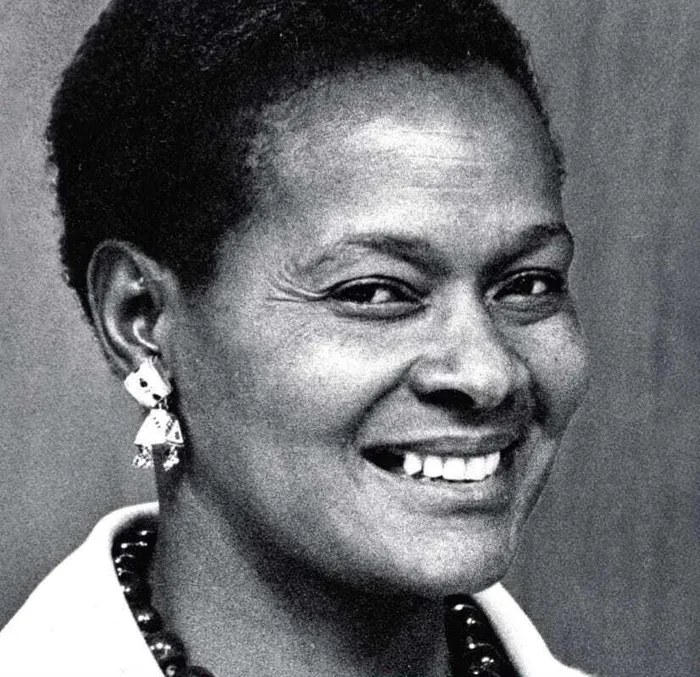
Sally Motlana stands as one of South Africa’s most respected community leaders and anti apartheid activists, known for her work in mobilising township communities and advocating for dignity and justice during some of the country’s most difficult years.
Image: Supplied
“Faith & Defiance: The Life of Sally Motlana” by Mukoni Ratshitanga offers a detailed account of one of South Africa’s significant yet often overlooked activists.
Through the life of Sally Motlana, the book revisits key moments in the country’s liberation history while examining the role of faith, community leadership and resistance during the apartheid era.
“I am generally interested in history not only for its sake but also for its implications for the present and the future,” Ratshitanga explained.
“Sally Motlana is not widely known amongst middle-aged people like myself and certainly the younger generations. That her story risks fading from our memory stands to deprive us of lessons from her contribution to the development of our society.”
Spanning nearly a century, the biography traces Motlana’s life from her early years in the village of Moremela, near Pilgrim's Rest, in what was then the Transvaal. She later moved to Johannesburg with her mother and joined her father there.
The family first lived in Vrededorp and later in Sophiatown, a community that became central to the political and cultural life of Black South Africans before its destruction under apartheid.
Motlana was educated at St Cyprian’s School, where she came under the influence of Anglican priest Trevor Huddleston. The book shows how her Christian upbringing shaped her outlook and commitment to social justice.
Ratshitanga connects this faith with her later activism and work in communities affected by poverty and discrimination.
Rather than presenting Motlana’s story strictly in chronological order, Ratshitanga structures the narrative around episodes and encounters that illuminate both her life and the broader liberation struggle.
While some readers may see this approach as vignette-driven storytelling, the author believes biography naturally moves through moments that reveal character and context.
“I am less inclined to the idea that the book is presented through vignettes rather than a traditional biography,” he said.
“But there is admittedly an extent to which, by definition, all biographies cannot avoid such moments. I sought to explore the subject’s life thematically, periodically and more broadly historically.”
The book highlights Motlana’s role as president of the Black Housewives League of South Africa, an organisation that mobilised women around issues of education, economic opportunity and political awareness.
Through the league, Motlana and her colleagues helped establish schools and community projects aimed at improving the lives of rural women and families.
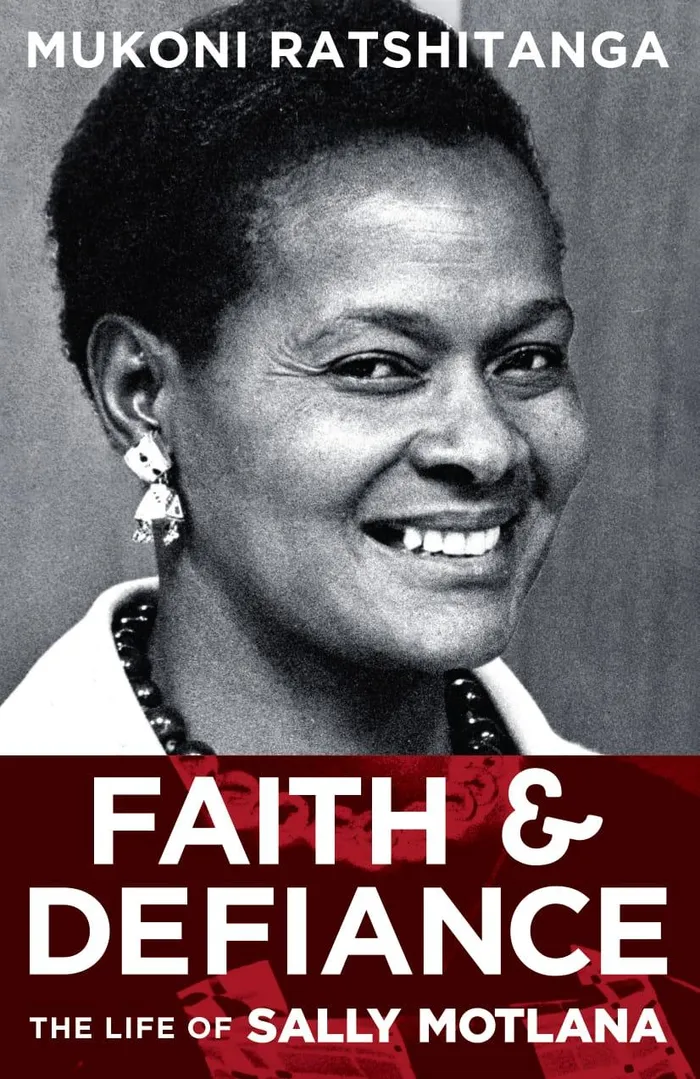
"Faith & Defiance: The Life of Sally Motlana" tells the story of Sally Motlana, a community leader and anti-apartheid activist whose life spanned nearly a century of South African history.
Image: Supplied
Ratshitanga pointed out that the organisation also played a role in shaping political thinking during the late apartheid years.
“She and her colleagues in the league helped to build schools and established income generation projects in rural areas, and as early as the late 1970s called for an inclusive negotiated process for a democratic South Africa,” he explained.
Motlana’s activism also brought her into confrontation with the apartheid state. She was detained three times between 1976 and 1978 and faced continued harassment from the security police.
Her political involvement had consequences for her family as well, with some of her children forced into exile during the struggle years.
One of the notable episodes recounted in the book involves Nelson Mandela. During the period when Mandela lived underground before his arrest in 1962, he visited Motlana at her home in Dube.
The encounter offers a glimpse into the networks of support that sustained the liberation movement during periods of repression.
Ratshitanga explained that such encounters are important because they situate individuals like Motlana within the wider movement rather than isolating them as standalone figures.
“When you set out to write about any period, you are obliged to present it in the context and logic of its time,” he said.
“For people like Sally Motlana, figures like Nelson Mandela were their leaders as much as they were their peers.”
He also noted that the prominence Mandela later gained was partly shaped by strategy within the liberation movement itself.
“The ANC consciously focused the country’s and the world’s attention on Mandela not just because of his talents but also as a strategy to centre the anti apartheid campaign around one particularly charismatic personality.”
Another episode takes place during Motlana’s detention at Jeppe Police Station in 1978, where she encountered two combatants from the Azanian People’s Liberation Army.
Moments such as these place Motlana within the wider network of resistance and highlight the variety of people involved in opposing apartheid.
Despite the political tension surrounding her life, Ratshitanga emphasised that Motlana’s activism was rooted in a broader sense of responsibility to society.
For him, her story reflects the determination of a generation that believed change required both political resistance and practical community work.
“I trust that readers will look at Sally Motlana in the context of her time and challenges and what she did to respond to the strategic question of her day,” he said.
“They will come to appreciate that she and her generation saw themselves as people with agency. They did not sit in despair but rather took up the cudgels to fight apartheid.”