Pumla Makeleni leads the charge against language exclusion at Ibuyambo Book Festival 2026


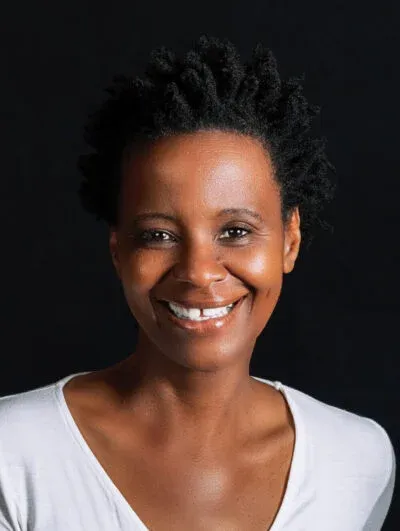
Pumla Makeleni is at the forefront of the Ibuyambo Book Festival, championing African languages and inclusive storytelling in Langa, Cape Town.
Image: Supplied
“When literacy organisations, libraries and communities come together, their impact multiplies like waves gathering to form a powerful tide.”
“When we act together, each partner, each parent, each storyteller, we create momentum that one of us could not achieve alone,” said festival founder Pumla Makeleni, setting the tone for the 2026 Ibuyambo Book Festival.
The festival returns with urgency and purpose on February 20 and 21 at Guga S'thebe in Cape Town.
Over two packed days, writers, translators, publishers, scholars, educators, creatives and young readers will gather in Langa for a programme designed to challenge the status quo and celebrate the power of African languages.
In a country with eleven official languages, only 2% of commercially published books are in indigenous African languages. The result is stark. Millions of children are expected to learn to read in languages they do not speak at home. Makeleni believes this is not only a literacy crisis but a justice issue.
“‘Our Words, Our Work, Our Freedom’ is more than a theme,” she said. “It is a call to recognise African languages as living languages of knowledge, economy and imagination. We cannot speak about equality while our stories remain sidelined.”
Hosted by Ibuyambo, the free annual festival has become a literary and cultural platform dedicated to African languages and storytelling.
This year’s edition places language at the centre of labour and livelihood, asking how writers and cultural workers can build sustainable careers in indigenous languages.
Among the headline conversations will be a dialogue featuring Professor Simphiwe Sesanti, Dr Athambile Masola and Nkosinathi Biko as they reflect on the significance of translating Biko’s work into isiXhosa.
The discussion will explore how translation can return political thought to the communities that shaped it.
Panel sessions across the weekend will confront why indigenous languages remain marginalised in publishing and distribution, and what it would take to transform the industry.
“We are imagining language futures rooted in access and community,” Makeleni said. “When we centre our own words, we shift the ground beneath the publishing landscape.”
For two days in Langa, the page turns toward inclusion, possibility and power.