Young SA actors are in good company with Siyasanga
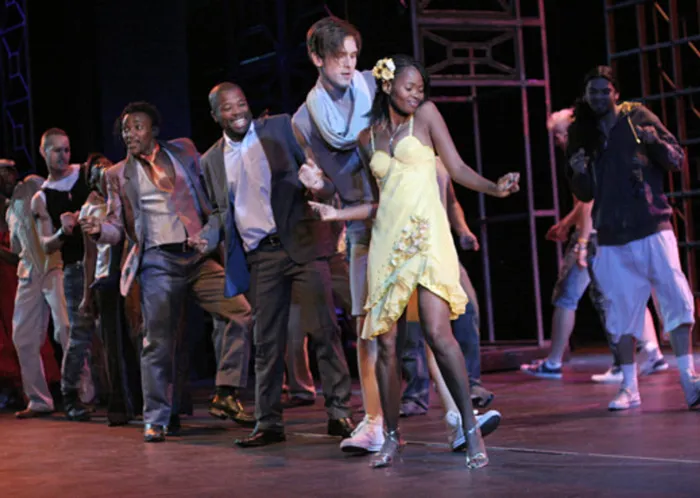
Young South African actors find it difficult to get a leg up and hone their craft by gaining experience on stage.
Six years ago, theatre veterans Fatima Dike and Roy Sargeant established The Siyasanga Theatre Company to nurture emerging thespians from all sectors of society.
Siyasanga means “we will embrace you” and for Dike, Sargeant and colleagues Alfred Rietmann and Anthea Thompson, it has taken a long time to make the company a reality.
There are many companies and collectives creating innovative theatre in Cape Town. However, for the most part they operate on a project-to-project basis. Some manage to employ a core staff but most actors are employed on an ad hoc basis.
In the apartheid-era when the performing arts councils employed (white) actors, they were in for the long haul.
Rietmann reflects: “Nowadays, if you are lucky, actors work together for six weeks – two weeks’ rehearsal and maybe a four-week run; and maybe if they are very lucky there is a festival or another run. With a theatre company you work together for a sustained amount of time. You work with others’ rhythms – the high points, the low points.”
Initially Siyisanga was based in Langa but four years ago it moved to Artscape and Dike and Sargeant began to lobby for the finances that would mean it could employ actors on contract.
The company staged adaptations of school setworks that were performed at Artscape and toured to schools. Performing setworks was part of the original vision – to bring texts by Shakespeare, Samuel Beckett and other great playwrights to life for pupils.
This has been a spectacular success. For instance, last year it staged a World Cup Romeo and Juliet with the two rival families as opposing soccer teams. The sheer delight of the young audience was obvious on the night I saw it at Artscape.
This year, Siyisanga secured funding from the National Lotteries Board and the National Arts Council and at long last was in a position to to form a company. It has hired six 20-something actors and has already performed two plays – Woza Albert and Waiting for Godot. Both have been adapted and trimmed down to an hour.
The company’s actors are diverse. Two, Lee Roodt and Zondwa Njokweni, were in Romeo and Juliet. Roodt, who grew up in Paarl, studied at the Independent Theatre Movement of SA, which was based in Observatory. He heard on he theatre grapevine that Siyisanga was looking for someone who knew Shakespeare and who could rap. Njokweni, who grew up in the Eastern Cape, studied drama at Stellenbosch University. Her agent told her about the Romeo and Juliet auditions. She got the nod as Juliet then leapt at an opportunity to audition for the company.
While at Stellenbosch, Njokweni got to know another drama student, Frans Hamman, who’d grown up in Goodwood and was a year ahead of her. Last year, while Hamman was completing his Master’s degree in directing, he heard about the auditions for the company and was also accepted.
Siyisanga is an integrated company and that is testament to Dike and Sargeant’s commitment to putting talent first. Dike – an acclaimed playwright and director – trod the protest theatre boards from the 70s. Her association with Sargeant goes back to 2001, when he directed her first play.
Dike, Sargeant, Rietmann and Thompson see themselves as facilitators for Siyisanga. The company must find its own identity, they emphasise. Soon they will be bringing in an array of theatre people to lead intensive workshops in script writing, puppetry, clowning, directing, physical theatre and theatre management. Then the company will work with an outside director on a new work and, all being well, it will finish off the year by conceptualising its own production from scratch.
Meanwhile, the group will continue performing setworks and taking them to schools.
Dike says: “The setworks are very important for us and allow us to give something back to communities. In many black schools, they don’t offer drama as a subject and it helps students to visualise the text.”
The Siyasanga actors say the question-and-answer sessions after the shows are an exciting, rewarding and often challenging opportunity to interact with their school audiences.