Agriculture crisis looms
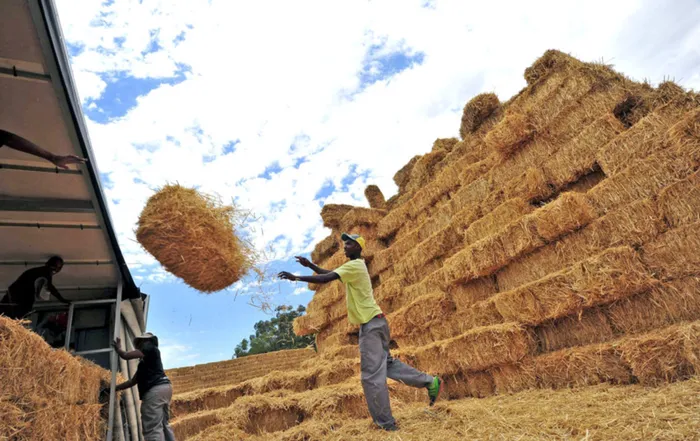
On Monday (1 February 2016), 100 tonnes of animal feed was transported to some of the farms hardest hit by the drought from a farm in Malmesbury where the feed was being prepared for delivery to Klipbrand. The feed was donated by local farmers and will be transported by SAB. Picture Henk Kruger/Cape Argus On Monday (1 February 2016), 100 tonnes of animal feed was transported to some of the farms hardest hit by the drought from a farm in Malmesbury where the feed was being prepared for delivery to Klipbrand. The feed was donated by local farmers and will be transported by SAB. Picture Henk Kruger/Cape Argus
Cape Town - The Western Cape is facing an agricultural crisis unless a cash injection of more than R59 million or much-needed winter rainfall can alleviate the effect of the drought in parts of the province.
The Department of Agriculture painted a grim picture of losses suffered by farmers, during a briefing of the provincial standing committee of Economic Opportunities, on Wednesday.
Director of sustainable resource management in the department, André Roux, said the effect of the drought on the agricultural sector included:
* 200 000 ton of wheat lost as a result of the lack of rainfall.
* 230 hectares of potato crops destroyed by heat waves in Sandveld.
* 40ha of potato and onion crops not planted in Ceres because of lack of water resources.
* Loss of R720m in the fruit industry because of smaller sizes of fruit which affected exports. l A R525m loss in the wine industry.
Roux said drought has prevailed on the West Coast and Central Karoo, and in Prins Albert, Oudtshoorn and Witzenberg.
He said preliminary estimates indicated about R59m was needed to sustain 8 385 livestock for the next five months, but therewas a shortfall of R27m.
“Our biggest concern remains whether the province will be getting enough rain or not. This is out of our hands and we can do nothing about it,” he added.
Roux said farmers needed to buy fodder because, with the lack of rainfall, grazing was limited.
He said a preliminary assessment indicated that 4 085 livestock on the West Coast and 4 300 livestock in Central Karoo needed support.
Roux said grain crop losses of between 50 and 100 percent occurred on the West Coast.
“The drought has already affected the agricultural sector and will continue to do so until the next grain harvesting period in November.
A similar impact is expected in animal, grapes and fruit production. Two-thirds of livestock units will not be fed through the department’s interventions.”
Roux said climate models were also not helpful, with some indicating 50 percent less rainfall, others predicting 50 percent more rain.
Committee members wanted clarity on why only a third of farmers were being supportedand why there were no long-term strategies and solutions to combat the drought and plans to improve the management of water resources.
Committee chairwoman Beverley Schäfer said the long-term sustainability of farms was at risk if the government did not assist in alleviating the damage caused by the drought.
Schäfer said the Western Cape had not received drought relief resources promised by the national government.
“The delay from the national government could result in a situation where it will no longer be possible to keep livestock alive,” she added.
She said the initial drought relief of R88m which they called for had been recalculated based on the prices of maize, and it has gone down to R59m.
“That money is absolutely essential because we are running at a shortfall. The provincial department is actually taking over the mandate national government should be doing.”
Schäfer said they did not want a situation where emerging and smaller farmers were at risk of having their businesses collapse.
“We can’t wait too long for the funds for national before our whole agricultural sector is at risk.”