Champion wine farms shows way

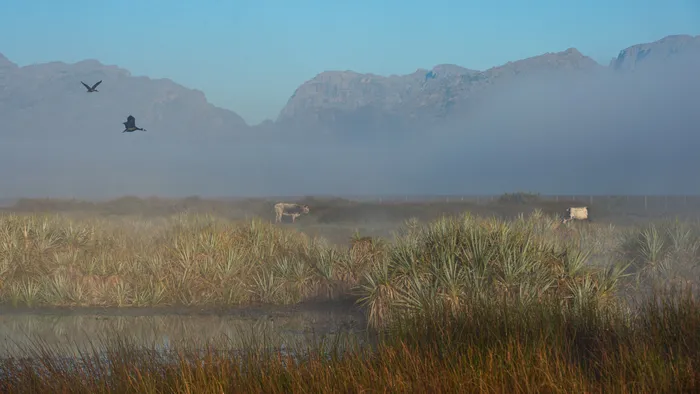
The Papenkuils wetland in the Breede River catchment between Rawsonville and Worcester shows healthy palmiet, an indigenous super plant that helps to cleanse water and prevent flooding. Picture: Merwida Wine farm
CAPE TOWN - Wetlands are the Cinderella’s of the conservation world.
More often than not, they are overlooked, neglected and abused – and yet they provide essential eco-services for water and food security, WWF South Africa said.
For World Wetlands Day marked on Wednesday, a call to action has been made to invest more financial, human and political capital to save the world’s wetlands from disappearing and to restore those that have been degraded.
The Papenkuils wetland in the Breede River catchment between Rawsonville and Worcester below the Brandvlei Dam is an example of a wetland where restoration work is taking place, WWF South Africa said.
Not so long ago, Papenkuils was home to elephants and hippos, but although these large animals are locally extinct, it remains a biodiversity hotspot. It is the largest wetland in the Breede catchment and a biodiversity hotspot with endangered Breede Alluvium Fynbos vegetation and at least seven Red Listed plant species.
Common to many wetlands around the world, among the threats to Papenkuils are pollution from agricultural run-off, over-abstraction of water, some of which is diverted to the Brandvlei Dam, human-made fires which damage the ecology of the area and development.
This is where one of WWF South Africa’s 50 Conservation Champion farms, the Merwida wine farm, is taking a leading role. Merwida has set aside 600 hectares within the wetland as a conservation area and has been working to clear invasive alien plants to allow the indigenous palmiet (Prionium serratum) to thrive. Palmiet stabilises river banks, slows floods and provides shelter and food for many species.
Merwida has also supported the planting of indigenous vegetation to create an ecological buffer between the wetland and agricultural lands. The farm’s involvement in wetland conservation has inspired the names for three of their wines after some of the unique plants found here, including a miniature waterblommetjie (Aponogeton angustifolius), which is a popular indigenous food used to make stews.
Cape Wine Master at Merwida, Lieza van der Merwe, said: “Given our roots in the Breede River Valley, the Van der Merwes of Merwida are immensely passionate about conserving the local environment, and especially the 600 hectares of pristine, natural wetlands along the Breede River, known as the Papenkuils Wetland.
“My father, Schalk and my uncle Pierre are continuing to develop Merwida in a dynamic yet sustainable manner, laying a foundation of excellence and responsibility for generations to come. We have farmed in the Breedekloof for over seven generations, and our love for the land, wildlife and most importantly, the people, can be seen through our wines, our Fairtrade community projects and our conservation efforts.”
Work on the Papenkuils wetland is part of a much larger, ongoing initiative to protect the wetland against further degradation by removing alien plants from the Central Breede river and actively restoring these critical areas.
This work is taking place in partnership with the local Water Users Association and the Western Cape Department of Agriculture and in collaboration with the landowners, who ultimately are the stewards of these waterways.
WWF’s Conservation Champions Programme manager Shelly Fuller said it was always inspiring to work with landowners who fully appreciate and respect their role as custodians of the land and water on which society depends.
“The trend now to bring their conservation commitments into their wine tasting experiences and in their communication with their customers taps into their market differentiation and the purchase power of the conscious consumers. We can each support the conservation of our natural areas by supporting farms that respect and restore nature while going about their business,” Fuller said.
Western Cape Department of Agriculture, LandCare manager in the Cape Winelands Rudolph Röscher, added: “It makes sense to build a business with nature as the foundation. Many farming enterprises have an understanding of working with nature’s unpredictability and changes. To be resilient, these businesses need to reinvest in the eco-services that they depend on – and looking after wetlands is a perfect example of this.”
Cape Times