WATCH: Awareness for the plight of the lemur


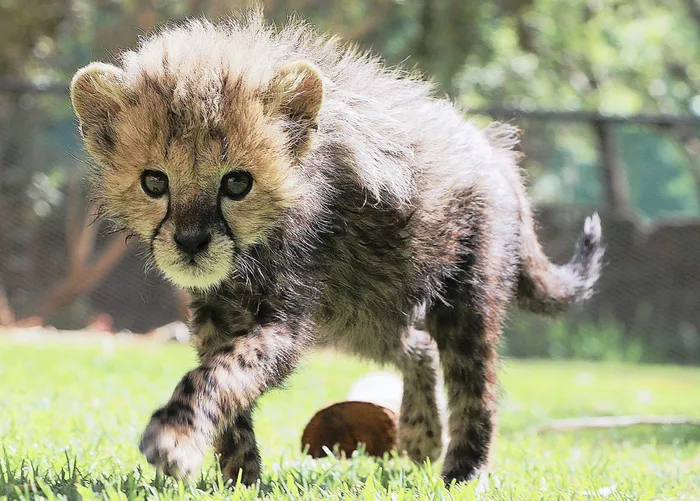
Born to the Cango Wildlife Ranch in Oudtshoorn this past month were five very healthy and vibrant cheetah cubs. The facility has the oldest and largest cheetah breeding programme in the southern hemisphere. Picture: CANGO WILDLIFE RANCH Born to the Cango Wildlife Ranch in Oudtshoorn this past month were five very healthy and vibrant cheetah cubs. The facility has the oldest and largest cheetah breeding programme in the southern hemisphere. Picture: CANGO WILDLIFE RANCH
As summer approaches, life is returning to the Karoo, and the Cango Wildlife Ranch in Oudtshoorn has welcomed a few little ones to its family.
Born last month were a gaggle of Egyptian geese, Lorikeets, two Flying Fox pups, a petit Springbok, five vibrant cheetah cubs and a wide-eyed Brown Lemur.
Lemurs are a primates found only in Madagascar and the Comoro Islands. Roughly 80% of its original habitat in Madagascar has been destroyed, as people clear forests for farm land.
Because of this habitat loss, out of the 100 different kinds of lemurs, 17 are endangered while 19 are considered
vulnerable.
All types of lemurs are protected, which makes it illegal to hunt or capture it for trade.
The lemur pup at the Cango Wildlife Ranch still clings to its mother, Daisy, and will do so for some time.
Teams at the ranch will only know the gender of the little one once it parts from mom.
In August and September respectively, a male cub and four adorable female cubs were born at the facility. The ranch has the oldest and largest cheetah-breeding programme in the southern hemisphere.
Just over 7 000 cheetahs are left across Africa and they remain at risk.
Assistant zoologist manager Craig Gouws said the animals would serve as ambassadors for its species.
“All our species we breed in this environment have a special purpose to maintain healthy bloodlines and secure the future of the species. With this lemur, we want to raise awareness about the plight of this species,” he said.
Gouws said the team wants to raise funds for the protection of the species in Madagascar.
“The wonderful thing is that each of these animals that come into our care has their own personalities. One of the cheetah cubs, Shae, likes to take her time and get used to new environments and can be a bit stand-offish,” he said.
“Sand is a loving female; she loves to sit by her caregivers and loves affection.”
The ranch is one of six facilities on the continent to have obtained accreditation from the Pan African
Association of Zoos and Aquaria.
Cango Wildlife Ranch is also one of four institutions in Africa to be members of World Association of Zoos and Aquariums.