Aids activists challenge 'unrealistic' 2030 target


Deputy President Cyril Ramaphosa and the UNAIDS Executive Director Michel Sidibé receiving a Memorandum from Treatment Action Campaign (TAC), Durban, 18/07/2016. pic Siyasanga Mbambani Deputy President Cyril Ramaphosa and the UNAIDS Executive Director Michel Sidibé receiving a Memorandum from Treatment Action Campaign (TAC), Durban, 18/07/2016. pic Siyasanga Mbambani
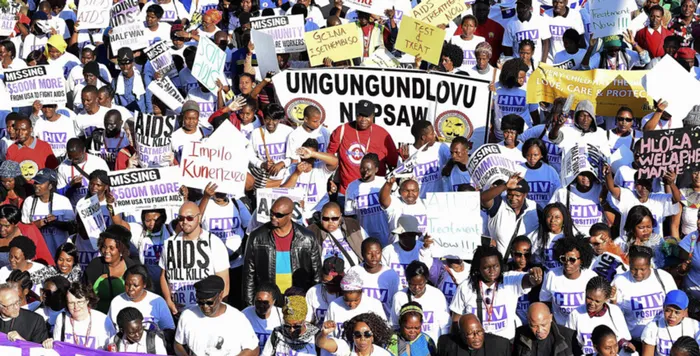
DURBAN: The streets hummed with the sound of an estimated 10 000 chanting HIV activists hailing from around the globe yesterday, demanding a revitalised plan against Aids.
“We need to wake the world up because the fight against HIV is not over. When 20 million people don't have access to medicines that could save their lives, we cannot say that the Aids epidemic is under control,” said Mark Heywood, head of social justice organisation SECTION27.
He spoke among a sea of people clad in purple and white T-shirts reading "HIV positive" as the group marched from King Dinizulu Park to the Inkosi Albert Luthuli International Convention Centre – the site of the 21st International Aids Conference, which returned to Durban for the first time since 2000.
Activists said a political decision taken a few weeks ago by UN member states to end the Aids epidemic by 2030 is disconnected from the realities of people living with HIV.
“How can we talk about an end to Aids when 20 million out of the 37 million people living with HIV around the world don't have treatment? How can we talk about an end to Aids when people are turned away from facilities with no ARVs?” said Anele Yawa, head of the Treatment Action Campaign (TAC).
Led by the TAC, activists delivered a memorandum to key political figures in the Aids response, including Deputy President Cyril Ramaphosa, UN Secretary-General Ban Ki-moon and US Ambassador Patrick Gaspard.
“We are calling on Ban to man up and provide leadership globally,” said Yawa.
Yves Yomb, from Cameroon's organisation Africa Gay Network, said that the 2030 goal was “unrealistic”.
“To achieve this, we need increased funding. Look at human rights seriously and include all those who need to be included – which is not happening now.”
Although Aids is treatable and preventable, more than a million people die globally each year. This is while funding from wealthy countries dropped substantially for the first time last year.
“Technically, we have the means to end Aids by 2030, but there is a big difference between saying and doing. We need political commitments to increase funding and to make treatment available to all,” said Antoine Henry, from French HIV advocacy group AIDES.
Pastor Milton Cele, from the KwaZulu-Natal Christian Counsel, led a prayer, calling on “God to heal this disease and for the government to supply treatment to every single person who needs it”.
Heywood, who “marched these same streets in 2000 calling for the South African government to supply treatment at a time where there was none except for the rich” said he saw a similar determination yesterday.
“The activism of 16 years ago saved 15 million lives and showed the world can care. We're here today in solidarity with the people still dying in the hope that we can save the lives of 20 million more.”