SA’s housing backlog: not a lack of funds or expertise, but a crisis of implementation discipline


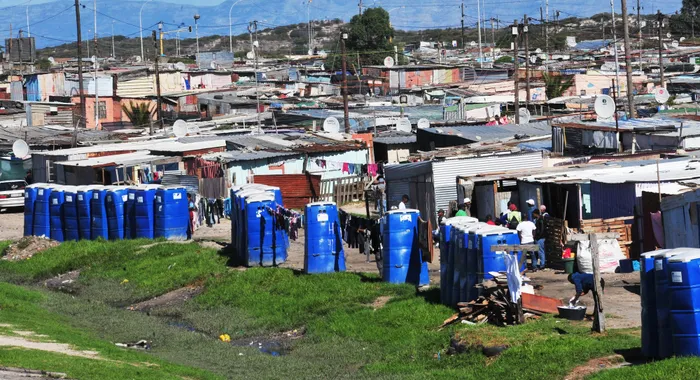
Thembi Simelane, Minister of Human Settlement said South Africa continues to face a housing backlog of approximately 2.6 million units, affecting over 12 million people.
Image: IOL
South Africa does not lack capital, technical capability, or development expertise to provide housing in the country.
This was as the national housing backlog, combined with rising demand and constrained delivery rates, calls for a model that is practical, scalable and measurable.
Structural platforms are missing
What remains missing are the structured platforms, responsive systems and implementation discipline needed to translate intent into built outcomes, says the RB Property Group.
This is why RB Property Group continues to advocate for a structured Public-Private Partnership delivery platform that brings together the right stakeholders under a common execution framework.
The property investment company says that such a platform must begin with the accelerated release of well-located, development-ready land.
“Land remains one of the most powerful instruments for enabling affordable housing and catalysing investment. When land is serviced and positioned correctly, it becomes the foundation upon which bankable projects can be built.”
Last week, national policymakers, municipalities, private housing developers, financiers and international partners convened in Sandton to confront South Africa’s housing and urban development challenges head-on.
This took place at the Local Government Property Development Summit co-hosted by the South African Local Government Association (SALGA) and the Gauteng Partnership Fund (GPF) in Sandton.
The summit sought to stimulate solutions to the housing challenge will unpack the policy, financing, regulatory and technological levers needed to shift municipalities from being gatekeepers to becoming economic enablers.
Over 12 million people affected by SA's housing backlog
Speaking at the Summit last week, Thembi Simelane, Minister of Human Settlement said South Africa continues to face a housing backlog of approximately 2.6 million units, affecting over 12 million people.
She said this reality affirms a simple but critical truth: The state cannot address this challenge alone. “Delivery at scale requires structured and sustained partnership with the private sector and other industry role players. We are notably operating within a complex and evolving environment characterised by rapid urbanisation; rising construction costs; infrastructure constraints and increasing climate-related risks,” Simelane said.
Defining moment for the housing and property development sector
RB Property Group says South Africa stands at a defining moment in the housing and property development sector.
It says the message emerging from the recent Local Government Property Development Summit was clear: the country cannot afford to continue with fragmented delivery systems, slow approvals, and uncoordinated implementation if it is serious about addressing its housing challenge at scale.
“As highlighted in recent industry reflections, this is no longer only a housing issue. It is an economic and social imperative that requires aligned action across government, municipalities, the private sector, financiers and institutions.”
The property investment company says it believes the time has come to move decisively from discussion to delivery. It says the next priority is speed.
“Approval timelines must be reduced meaningfully if South Africa is to move from incremental delivery to genuine scale. The call for approvals to be streamlined into a far shorter window reflects the urgency of the moment.”
Financing innovation
As a former banker, Rob Buthelezi, the chairman of RB Property Group, says he supports responsible lending and full compliance with banking regulations.
At the same time, he says the RB Property Group believes there is room for innovative and structured financial models that expand access to housing delivery, especially for the lower end of the market.
“One key principle is the recognition of serviced land as a real asset and a form of equity support to beneficiaries. This kind of approach can strengthen affordability, improve funding structures, and unlock broader access to housing finance without compromising financial discipline,” Buthelezi says.
Reclassifying housing more strategically within the broader infrastructure agenda
Moreover, the company asserts that there is also a compelling case for reclassifying housing more strategically within the broader infrastructure agenda. It adds that doing so can help attract institutional and global capital, lower the cost of funding, and support long-term delivery at scale.
“For South Africa to unlock large pools of capital, housing must increasingly be seen not simply as a social obligation, but as productive economic infrastructure with powerful multiplier effects.”
Housing activates local economies
Buthelezi says at the company, they see housing as more than shelter. He adds that housing activates local economies.
“It creates jobs. It stimulates construction, manufacturing, logistics, professional services, and finance. It expands municipal revenue bases. It creates dignity and long-term household assets. This is why delivery matters so deeply.”
Transformation must remain central to delivery model
The group adds that transformation must remain central to this delivery model. It says inclusive growth is not an optional add-on; it is a non-negotiable principle.
“Sustainable development must intentionally include women-owned businesses, SMMEs, and local value chains. A successful PPP model must not only build homes, but also build economic participation and shared prosperity. This theme was underscored strongly in the summit discussions and remains aligned with RB Property Group’s own development philosophy.”
Path ahead now clear
The path forward is clear, says the RB Property Group. It says the government must lead with policy direction and coordination.
“Municipalities must unlock land and enable readiness. The private sector must bring delivery capability, project packaging and execution discipline. Financial institutions must innovate in ways that support scale and affordability. When these roles are aligned, the sector can shift from fragmented effort to structured impact.”
Accelerating housing and mixed-use developments
The company says, it remains committed to partnering with public and private stakeholders to help structure, implement and accelerate housing and mixed-use developments that deliver measurable socio-economic impact.
“We believe the opportunity before South Africa is significant, but only if all stakeholders commit to action, accountability, and delivery platforms that work.”
Commenting ahead of the The Africa We Build Summit 2026 to be hosted by the Africa Finance Corporation (AFC), in partnership with the Government of Kenya later in April, Samaila Zubairu, President and CEO of AFC, says Africa is not capital-poor; it is capital-trapped.
“The opportunity now is to channel that capital into infrastructure and industry at scale-transforming resources into productivity, jobs, and long-term prosperity.”
For the first time, Africa’s leading infrastructure financiers, fund managers, investors and industry leaders will convene in Nairobi, with a bold mandate to unlock domestic capital and turn the continent’s industrial ambitions into a tangible, job-creating reality.
Independent Media Property