Are KwaZulu-Natal's healthcare workers overwhelmed by staff shortages?
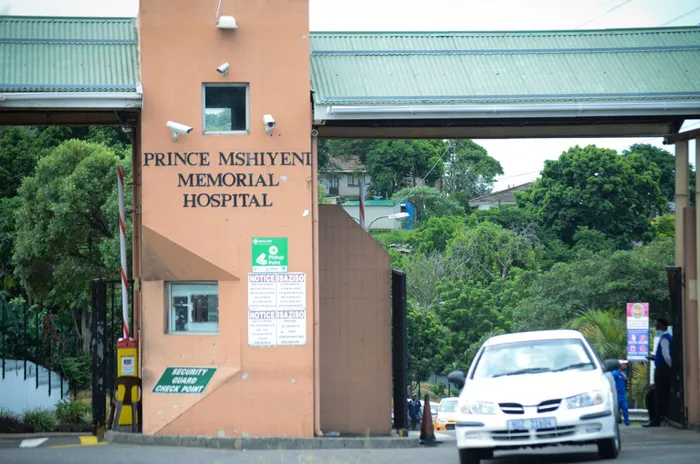
Prince Mshiyeni Memorial Hospital in the south of Durban has been described as one of the government healthcare facilities in KwaZulu-Natal that are facing a shortage of healthcare workers.
Image: Independent Media archives
Despite being overstretched because of a shortage of medical healthcare workers, other nurses are forced to start day and night shift duties by performing cleaning duties and clerical work, as some of the healthcare facilities in KwaZulu-Natal do not have staff to do it.
This was revealed by the Democratic Nursing Organisation of South Africa (Denosa)’s provincial secretary, Andile Mbeje, on Thursday, reacting to reports of severe medical staff shortages at healthcare facilities such as the Inkosi Albert Luthuli Central Hospital (IALCH) in Durban.
This was despite the provincial Finance MEC Francois Rodgers having pledged that the provincial government would prioritise frontline departments, which are health, education, and social development, when it came to budget allocation.
Mbeje said the shortage of medical staff was felt in almost all public facilities in the province and that in rural clinics, the situation was even worse.
When asked about budget cuts, national health spokesperson Foster Mohale referred the question to the provincial health department, which is yet to respond to questions sent to its spokesperson, Ncumisa Mafunda, on Thursday.
He said that while sweeping and mopping the floor, work that they were not employed and paid for, the nurses would delay attending to patients.
It was reported that the medical staff and medication shortages, due to the health department’s budget cuts, which caused the healthcare facilities to struggle to function effectively.
“In Ekuvukeni Clinic under Ladysmith, nurses who are expected to report for night shifts do the clerical work because there are no clerks.
“When there are no cleaners, nurses are forced to do the cleaning before attending to patients,” said Mbeje.
Mbeje said that according to the statistics, the province has a total of 36,000 nurses in the system, with a shortage of close to 15,000.
He said this had affected the nurse/patient ratio.
“You find that some clinics in deep rural areas are run by three nurses, which is a serious hazard to the patient and to the nurses.
“In the worst-case scenario, you find that a ward with 60 beds is attended by only three people,” said Mbeje.
Health MEC Nomagugu Simelane told unemployed doctors who were marching demanding employment on August 6 that the department would advertise 200 new healthcare worker posts in various health facilities as from August 11.
This reporter was informed that the applications were closed on Friday and this will be followed by shortlisting and interviews.
Out of those 120 nursing posts advertised, 40 were for specialised nurses and 80 for entry-level nurses.
Out of 150 doctors' posts, 100 were for medical officers and 50 for medical specialists.
Mbeje said the province had “serious” challenges of a doctor shortage.
“Once the patient is attended by a nurse, the nurse cannot do anything further before the doctor prescribes any medication or what needs to be done to the patient,” said Mbeje.
Mbeje said that as an academic hospital, IALCH, as a specialised facility, should not be subjected to staff shortage.
“It is supposed to have 100% complimentary staff since it is a special hospital.
“Due to a shortage of nurses and doctors, it delays some patients from receiving special treatment that is needed,” said Mbeje.
South African Medical Association Trade Union (SAMATU) provincial chairperson, Dr Phumelele Khumalo, said doctors were burning out not only at IALCH.
She said SAMATU started complaining, through protest marches, about the doctors’ unfavourable conditions from 2023.
“That is why we have always been so vocal when it comes to the unemployment of doctors, because there cannot be doctors who are unemployed while hospitals remain short-staffed.
“We had a long-standing issue whereby posts had been frozen for a very long time when staff members were going on retirement or death, and those people were not being replaced,” said Khumalo.
She described the issue of IALCH as unfortunate but “not unique”.
Khumalo said the doctors would rather sacrifice themselves to ensure that there was service delivery in the public institutions.
She shared her own experience working in the department of surgery at Prince Mshiyeni Hospital as a medical officer in 2019.
The hospital in the south of Durban serves the largest population in the province from Umlazi, Folwini, and KwaMakhutha.
“I would be the only surgeon on the call with just two interns, and I will have to run the casualty, emergency ward, run theatre, and all the surgical wards on my own in the night, and I will come back in the morning.
“Any emergency that happens in any of these areas, I need to take care of all of them at night.
“I would need to operate on all the patients that were not operated on during the day, and I would be doing that as one junior staff member,” said Khumalo.
She said the doctors' posts that were currently advertised would not close the huge vacancy rate that exists.
The 120 nursing posts advertised in the KwaZulu-Natal Department of Health will not make a dent in solving staff shortage in clinics and hospitals, which altogether have close to 15,000 vacant positions, said Khumalo.
Provincial health portfolio committee chairperson Dr Imran Keeka said the media reports on the IALCH could not be disputed as they reflected the lived experiences of those working there.
“In my considered view, it is accurate, as no one can deny that KZN faces a dire shortage of specialists, not only at IALCH but also at Victoria Mxenge (formerly King Edward VIII), Greys, and Ngwelezane hospitals,” said Keeka.
He said the committee has held several engagements on this matter, and that he has submitted parliamentary questions to determine how many specialists are in front-line services, as well as what resources the department requires to deliver its work and reduce waiting times.
He said addressing the healthcare challenges will take time.
Keeka said in the immediate term, the department should foster partnerships with private institutions that allow private-sector specialists to assist government healthcare centres.
“Retired specialists, many of whom are now in private practice, should also be engaged.
“I know of several who are willing to offer sessions that would go a long way in easing waiting times,” said Keeka.
He said the employment of unemployed Level 1 doctors every year prevents the appointment of specialists, “and this must be reviewed, despite annual protests at Natalia.”
“Interprovincial collaboration is also necessary, both to train specialists and to manage patients across provincial lines where capacity allows,” said Keeka.