Youth mental health takes centre stage at G20Interfaith Forum


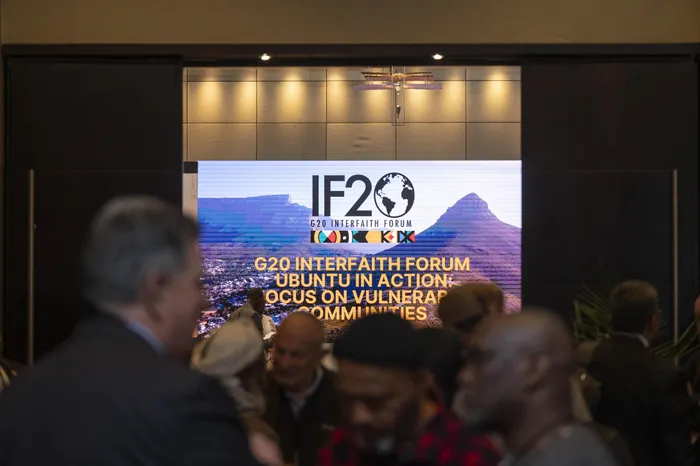
The discussions focused on analytical work and policy proposals related to key youth concerns, including employment, quality education, and mental health challenges.
Image: Armand Hough/Independent Newspapers
Youth and mental health issues were addressed at the G20 Interfaith Forum (IF20) on Tuesday, as attendees moved to smaller discussion groups.
The forum convenes religious leaders, civil society organisations, government officials, multilateral institutions, and scholars to explore collaborative solutions to global challenges.
The discussions focused on analytical work and policy proposals related to key youth concerns, including employment, quality education, and mental health challenges.
The discussion was moderated by Andrea Kaufman, director at World Vision International, and Angela Nielsen Redding, executive director at Radiance Foundation.
The moderators set the scene with Redding explaining that Radiance Foundation looked at Gallup World Poll data, a global network of quality data collection built to measure public opinion, which often asked questions about religiosity and well-being, but “they had never compared the relationship between the answers to those questions”.
“We funded a historical look at the last 12 years to look at what is the relationship between personal and societal well-being to religiosity, and in addition, we did a meta-analysis of over 65 medical studies and psycho-social studies, and what they found is that the spirituality-well-being link is clear.
“It is unequivocal. There is clearly a link between higher levels of religiosity, higher levels of religion being important to people and better well-being outcomes,” Redding said.
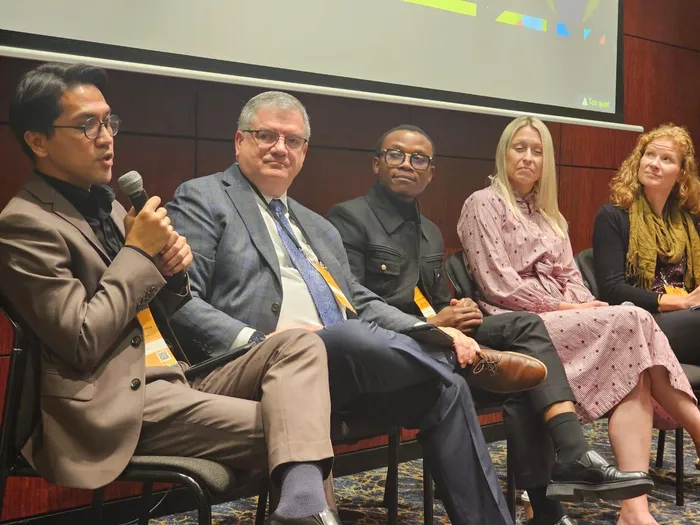
The discussion included: Rogelio P. Lelis Jr. Doug Fountain, Sandile Hlayisi, Angela Nielsen Redding and Andrea Kaufman,
Image: Theolin Tembo/Independent Newspapers
She said they found that there are a few key indicators for resilient societies, being freedom of religion and media freedom.
She said that according to the Pew Research Centre, 84% of humankind is affiliated with religion, and that number is set to increase based on basic demographics.
Redding explained that it applies to mental health, whereas people who are religious and less likely to be depressed, suffer from anxiety and other mental illnesses, isolation, and other things.
Other panellists included Sandile Hlayisi, Church of Scientology, Scientology Volunteer Ministers, Doug Fountain, Executive Director, Christian Connections for International Health, Rogelio P. Lelis Jr., Mental Health and Psychosocial Support (MHPSS) Technical Advisor -ACWAY, Iraq.
Fountain highlighted that in their network, they are focusing on mental health, and a vital thing that can be done is to advocate for youth mental health inclusion in national policy frameworks, “both in health, and anything that looks like it affects the youth”.
“You want the youth of the world to shape these programmes, and if they are not designing these programmes, then what the hell are we doing?”
Lelis Jr. also touched on accessibility and availability of access to health services for the youth. He said that there seems to be a misunderstanding in how it is tackled, and that “everyone who needs mental health support needs to go right away to a specialised service, when in fact, there are a lot of things that can be delivered on a community level”.
“We can support each other, and that includes faith and religious leaders. That is a way to diversify services because, no matter if we want to have professionals, there is just not enough (to accommodate everyone).”
Later, he added that it is important to mobilise the youth and to meet them in the spaces where they are.
“Young people are ready and capable; they just need to be given a space in order for them to learn.”
Get your news on the go, click here to join the Cape Argus News WhatsApp channel.
Cape Argus