Leadership in Africa: Building strong structures for sustainable governance


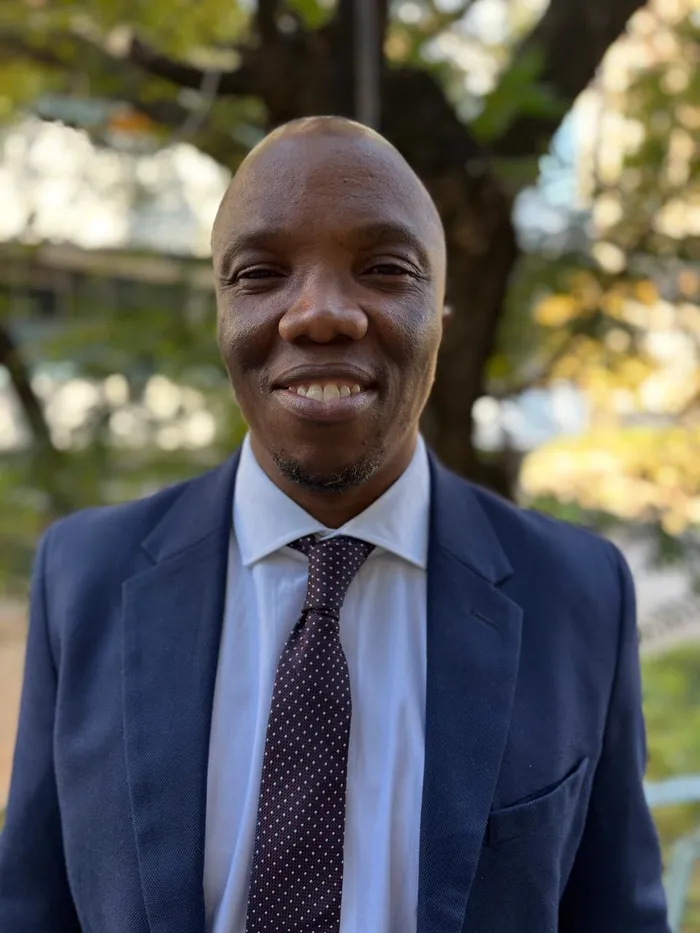
Dr. Tshepo JD Ditsele
Image: Supplied
Dr. Tshepo JD Ditsele
The African Union’s recent calls for restraint and dialogue amid the intensifying Middle East conflict illustrate how structured multilateral engagement matters.
African states, collectively, are urging de-escalation not because of one country’s leadership but because institutional diplomacy carries weight in global affairs, especially when the costs of escalation, from energy shocks to economic instability, directly affect ordinary lives. Similarly, regional infrastructure initiatives, like the planned Senegal River navigation corridor linking landlocked nations to coastlines, demonstrate that structural integration fuels sustainable development far more than charismatic speeches ever will.
Across Africa and the world, the latest convulsions in politics, economics and social life reveal a truth many of us resist: leadership does not reside in individuals, it resides in the structures that outlive them, shape their decisions, and constrain or empower nations. It’s time to rethink leadership not as a heroic trait but as a set of systems, norms and institutions that define outcomes far more than any single person ever could.
Why the old “great man” theory is failing us
For decades, political discourse, particularly here in Africa, has clung to the myth of strong men and women as the saviours of nations. Yet today, crises repeatedly expose the fragility of that assumption. Consider the ongoing constitutional ordeal in Somalia, where President Hassan Sheikh Mohamud’s attempts to centralise authority and expand executive powers are deepening political uncertainty and threatening hard-won democratic norms. The crisis highlights how individual ambitions, when unchecked by robust structures, can destabilise nations.
Across West and Central Africa, coups in Niger and Gabon remind us that the removal or installation of a leader doesn’t automatically solve the deeper institutional rot that enabled the crises in the first place.
In Niger, a military ousted the elected president, sparking regional divisions and sanctions, but what remains at the core is a weakness in governance and civil-military balance that no single “hero” can fix.
Closer to home, debates about South Africa’s leadership trajectory, whether President Cyril Ramaphosa is finally finding his feet after years of compounded crises, underline a broader point: political direction is shaped as much by institutional reform and structural stability as by individual resolve.
Capital markets: a mirror of leadership structures
The capital markets, the economic circulatory system of nations, reflect this structural reality more clearly than most arenas.
When Vice President Kassim Shettima called for deeper integration between African and Middle Eastern capital markets, he wasn’t merely talking about cooperation between two regions. He was pointing to the structural integration of financial infrastructure, regulatory alignment, and shared investment frameworks as the true levers of economic leadership.
Markets respond not to charisma but to predictability, transparency, and governance, structures that outlive any quarterly earnings report or political soundbite. Leadership in the marketplace is not about a CEO’s public image; it’s about reliable institutions that support credit, protect investments and encourage innovation.
Stoicism and the illusion of personal leadership
In both politics and economics, the archetype of the stoic leader, calm under pressure, solitary in resolve, persists in public imagination. But what practitioners of stoicism often overlook is that internal resilience without external accountability is hollow.
A “stoic” leader who refuses to adapt, consult, or decentralise power can just as easily perpetuate systemic failure as someone who crumbles under pressure. This is seen not just in governance but in corporate culture, where top-down decision-making, untampered by diverse institutional checks, heightens fragility. The contrast with nations that invest in robust legislative oversight, transparent market, and participatory governance could not be more stark.
Current events expose what really matters
Recent crises across the continent and beyond show that leadership effectiveness is measured not by individual visibility, but by the resilience of the systems that support decision-making.
Multilateral frameworks, robust institutional checks, and integrated economic and political structures determine whether nations navigate shocks successfully. From regional conflicts to infrastructure projects, it is the strength of these structures, not the charisma of any one leader, that preserves stability, enables development and protects ordinary lives from the ripple effects of political or economic disruption.
If this moment teaches us anything, it’s that effective leadership is systemic, not singular. It is governance that anticipates shocks and integrates diverse voices. It is economic frameworks that withstand volatility without collapsing into personality cults. It is institutions that outlast election cycles and let accountability prevail over adulation.
The next time we talk about “leadership,” let’s speak about benchmarks instead of biographies, processes instead of personalities, and structures instead of saviours. That’s the kind of leadership that doesn’t merely survive headlines, it reshapes societies.
*Ditsele is a lecturer in Leadership at Stellenbosch Business School Executive Development