Democracy in action: Moving beyond commemoration this Human Rights Day

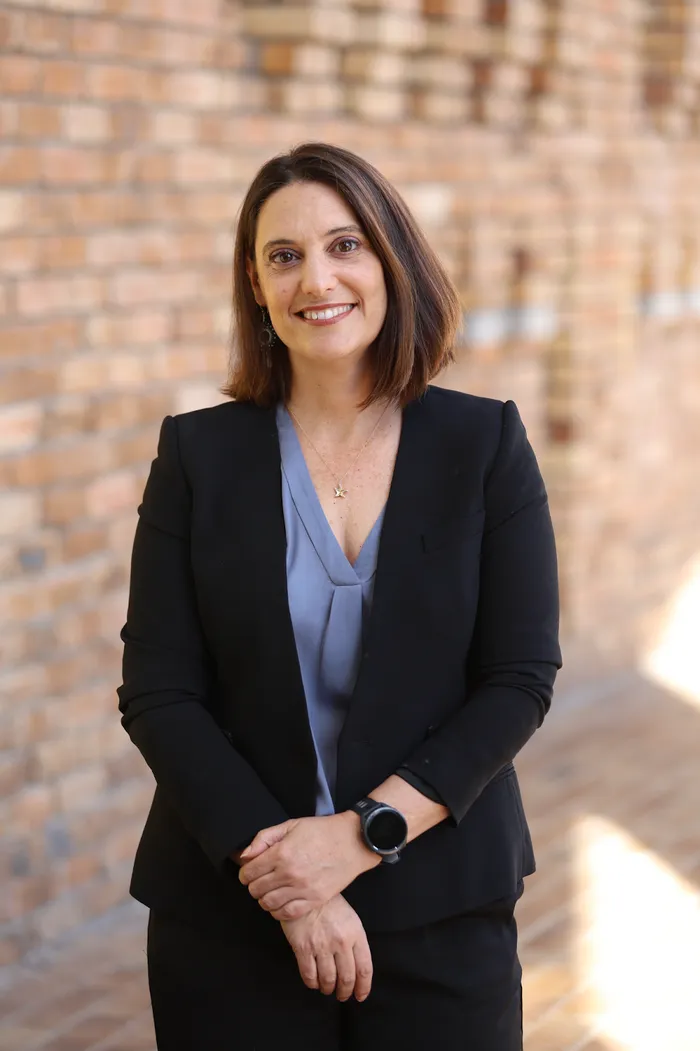
Prof Fiona Anciano.
Image: Shelley Christians/UWC
Prof Fiona Anciano
For many citizens, democracy feels distant. We vote every few years, but it is hard to see how that democratic act improves our daily lives. Around us, we see service delivery failures, corruption scandals and dysfunctional municipalities, and so often we experience democracy not as empowerment but as frustration.
With Human Rights Day approaching, we need to ask whether democracy is more than symbolic. Is it delivering dignity, equality and justice? Are children in informal settlements able to access clean water? Are women protected from gender‑based violence? Are workers able to earn a living wage? These are the questions that determine whether the vision of democracy that our Constitution embraces is fulfilling its potential.
South Africa’s Constitution is rightly celebrated as one of the most progressive in the world. It enshrines rights to equality, freedom of expression, and socio‑economic entitlements. But rights on paper do not always translate into rights in practice. We do have a substantively free and fair democratic system, as demonstrated in 2024 when the ANC accepted the loss of majority rule. Yet, persistent inequality, corruption and weak governance undermine the promise of this democracy.
Universities have an important role to play in realising democracy's potential to uplift us all. At the University of the Western Cape (UWC), initiatives such as the Politics and Urban Governance (PUG) Research Group in the Faculty of Economic and Management Sciences reflect efforts to strengthen democracy through connecting academic research with the realities facing communities.
PUG’s work spans three thematic areas: governance in informal settlements, democratic participation, and support for human rights defenders. Each theme addresses a dimension of how democracy is experienced in everyday realities, from the struggles of communities facing informal governance structures to the need for dignified access to sanitation, to the urgent need to provide a safe space for human rights defenders to rest and regroup.
Importantly, PUG is grounded on the principle that objective research must not remain confined to academia. Civil society organisations, communities, activists and academia should be central partners with government in understanding and improving the lived realities of marginalised communities.
Human Rights Day is a reminder that democracy cannot be defended solely by state institutions. It must be lived and contested in society, and it is us, the people of South Africa, who are the infrastructure of democracy. This need not be an abstract concept; it can be part of our daily work.
In PUG, we are doing this by exploring how citizens themselves can frame the policies that affect them in the cities in which they live. In February this year, we hosted a global symposium asking what role universities should play as sites of protection - how academic spaces can support human rights defenders at a time when democracy is threatened in many countries across the world. On Thursday, March 12, we are facilitating a ‘PhotoVoice’ exhibit where microenterprises in Khayelitsha will meet with local government politicians and officials, sharing pictures they have taken that demonstrate how access to water and electricity affects their businesses. Later in 2026, we will host South Africa’s first sortition-based Citizens’ Assembly on climate change. We connect residents in informal settlements to decision-makers.
What, then, should Human Rights Day mean in 2026? It should be a reminder that democracy is fragile and contested. It invites renewed consideration of freedom and equality, not only as constitutional principles but as lived experiences. It should be a time when we reflect on the fact that this is not a future generation’s responsibility, but ours now.
The Sharpeville massacre reminds us of the cost of oppression. The Constitution reminds us of the promise of liberation. But the present reminds us of the unfinished work of our democratic transition. Human Rights Day offers an opportunity to reflect on whether the government is delivering on its promises and whether civil society is supported to hold leaders to account. It is a day when we can take time to reflect on how to embed democracy in the everyday, including questioning whether rights are symbolic or substantive - whether people can access housing, healthcare, education, and do so with dignity. It is about whether communities feel connected to the systems that govern them.
This is the challenge for South Africa in 2026 - to move beyond commemoration and to ask ourselves as individuals what our place is in supporting democratic values today. Human Rights Day should be our mirror, reflecting our history, achievements, and failures. It asks us to look honestly at who we are and who we want to be. It takes courage to defend democracy, confront inequality, and insist that rights are real in the lives of all South Africans.
* Anciano is Professor and Head of the Politics and Urban Governance Research Group at UWC