OPINION | How social norms contribute to sexual corruption in South Africa


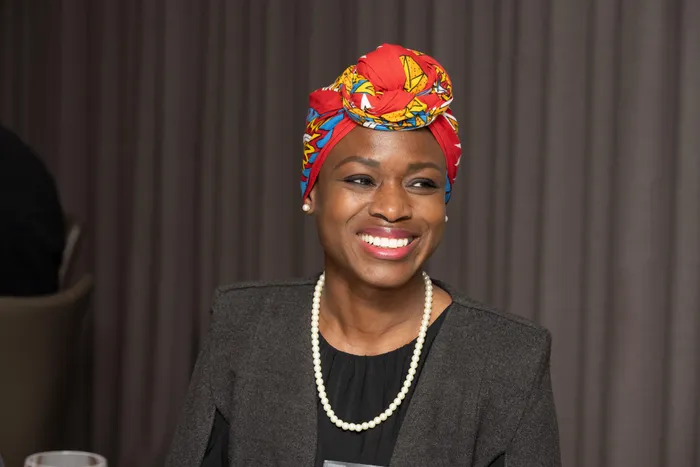
Sope Williams is a professor and leading expert in public procurement, anti-corruption and gender in the Department of Mercantile Law at Stellenbosch University.
Image: Supplied
Sope Williams
On International Women’s Day (8 March), we celebrate progress made towards gender equality, including the classification of Gender-Based Violence and Femicide as a national disaster in November 2025. However, our celebration sits beside uncomfortable truths. One of those truths is this: sexual abuse such as sexual corruption persists not only because of weak enforcement or institutional failure, but because our social norms quietly protect it.
Sexual corruption is a covert form of corruption occurring when sexual acts are demanded from women, men and gender non-conforming people in order to obtain a public (or private) service or benefit. It does not happen in a vacuum but is sustained by deeply rooted social norms about gender, power and sexuality. If we want real change, we must confront those norms.
Power, masculinity and control
In South Africa, as in many societies, there remains a powerful norm that men are entitled to lead, to control, and to dominate. Leadership positions in politics, business, education and religion are still overwhelmingly male. When power is concentrated in one group, abuse becomes easier to normalise. In male-dominated spaces, sexual corruption is often disguised as an “exchange” where access to employment, promotion or services is given in return for sexual compliance. But when men hold authority and women depend on that authority for survival, this is not a fair exchange. Compounding this is the expectation that men must be providers. The pressure to fulfil financial obligations, support extended families, and maintain status can distort decision-making and make bribery and other corrupt acts seem justifiable.
When corruption is framed as fulfilling one’s duty as a provider, enforcing anti-corruption laws becomes more complex. Masculinity itself is often measured by sexual conquest. From a young age, boys are taught that aggression and dominance prove manhood. Laws that criminalise sexual exploitation can feel, to some, like they threaten male identity itself. This is a profound barrier to progress.
Culture of deference
South African society values respect for elders and authority. While respect is important, it can also silence victims. Older men and men in positions of authority such as school principals, religious leaders, and government officials are often shielded by cultural expectations of deference. Challenging them is seen as disrespectful and reporting as a form of betrayal. In such an environment, abuses such as sexual corruption flourish. When victims are told to “respect your elders” or to “not embarrass the institution,” accountability becomes almost impossible.
Gratitude, silence and transactional relationships
Women are often socialised to be grateful, accommodating and supportive. When a powerful man “helps” a woman by offering a job or facilitating access to services she may be expected to show gratitude. Speaking out later can be framed as ingratitude, especially if she benefited in some way. This silences survivors and protects perpetrators. Gendered economic inequality makes matters worse. Women are more likely to live in poverty, to shoulder unpaid care work, and to depend on public services. In such conditions ,transactional relationships become normalised. Sexual corruption is dismissed as “just how things work.”
But in the public sector, there can be no such justification. Any sexual demand tied to the access to public goods is an abuse of power.
Male sexual entitlement and victim-blaming
Another dangerous norm is male sexual entitlement or the belief that men are owed sexual access. When entitlement becomes normalised, coercion is reframed as persuasion. At the same time, women who report sexual exploitation are often blamed. Their clothing, ambition, or perceived willingness to engage are scrutinised. Instead of asking why a man abused his authority, society asks why a woman “put herself in that position.” This inversion of responsibility keeps perpetrators safe and deters reporting. Also complicating matters is the fact that sex remains a taboo subject in many communities. Women’s sexuality, in particular, is treated as shameful and private. Victims of sexual corruption fear public humiliation more than they trust the justice system. The result is a culture of silence against sexual abuse. This silence protects institutions, protects abusers and erodes the rule of law.
South Africa has laws against corruption and sexual offences. But law enforcement cannot be divorced from social norms. If our norms validate male dominance, glorify hypermasculinity, demand female gratitude, discourage challenging authority and blame victims, then legal reform alone will not end sexual corruption.
Call for change
We need more than prosecutions or legal reform. We need cultural change. On International Women’s Day, it is not enough to celebrate women’s achievements. We must interrogate the norms that make women vulnerable. In doing so, we must:
- Challenge the idea that power gives sexual entitlement.
- Teach boys that masculinity is not proven through sexual domination.
- Create safe, accessible reporting systems.
- Protect whistle-blowers.
- Reject victim-blaming in all its forms.
- Ensure that public office is never a gateway to private exploitation.
- Ensure the highest level of ethics and accountability for public officers.
Sexual corruption is an abuse of power and the norms that sustain it must be dismantled. If we want a society built on dignity and equality, then confronting these norms is urgent work.
*Williams is a professor and leading expert in public procurement, anti-corruption and gender in the Department of Mercantile Law at Stellenbosch University.