Celebrating a century of Livingstone High School: A legacy of courage and commitment to education


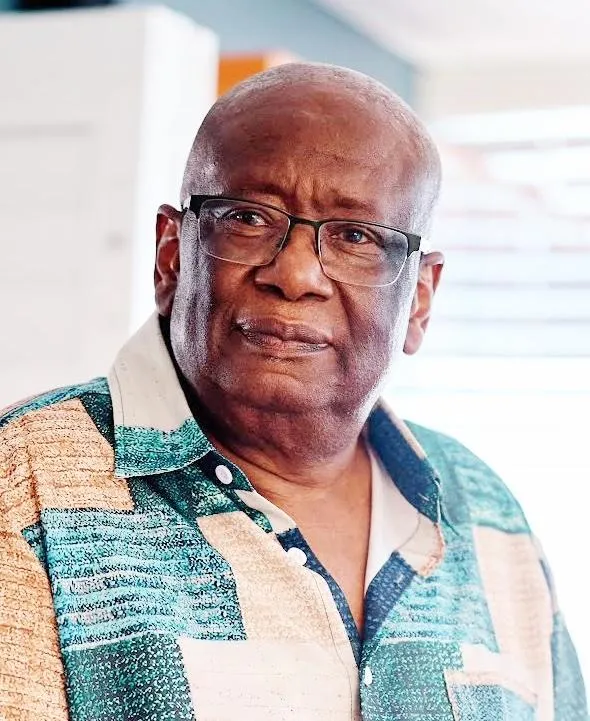
Simon Banda is a former student, teacher and principal
Image: Supplied
Simon Banda
Prior to 1926, there was no high school in Claremont for children of colour. Faith-based organisations largely provided primary schooling, while the state showed no inclination to extend quality secondary education to those it had already consigned to the margins.
It was sustained community pressure; especially the determined work of the African People’s Organisation and the Teachers’ League of South Africa, that led to the founding of Livingstone High School on 26 February 1926. The school was born out of resistance to a system that denied children of colour the education necessary for their rightful place in society. At its core, that denial was an instrument for the maintenance of White supremacy.
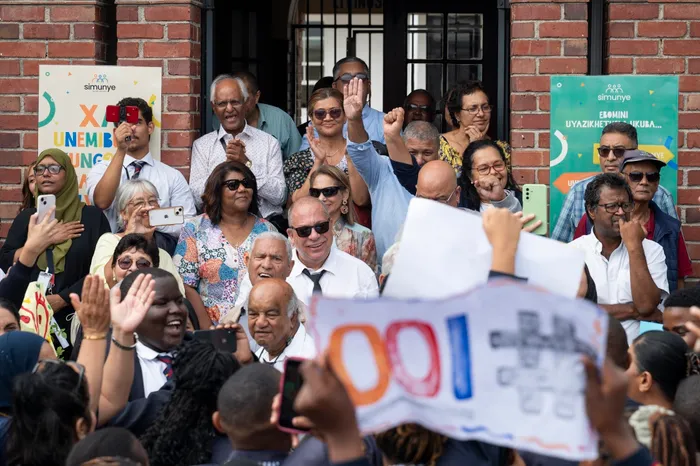
Livingstone High School's centenary celebrations brought together learners, educators and alumni.
Image: Armand Hough/ Independent Newspapers
This centenary is therefore not merely a celebration of longevity. It is a celebration of a history forged in struggle — a history that must be remembered, honoured and continued. George Orwell reminds us that “The most effective way to destroy people is to deny and obliterate their own understanding of their history.” If we, as alumni, allow this legacy to drift into the dust-covered annals of time, we deny future generations an understanding of who they are and what they are capable of becoming.
The present cannot explain itself; it has its genesis in the past. As Rachel Carson observed, “To understand the living present, and the promise of the future, it is necessary to remember the past.” My own life stands as a small testimony to the transformative power of this institution. Together with several of my siblings, I am a beneficiary of this oasis; which is Livingstone. It was here that we drank deeply and developed a thirst for meaningful education and for lives of purpose. With considerable trepidation, I later returned to Livingstone as a teacher, serving alongside educators who had once taught me; teachers who knew my faults and my moments of truancy, yet received me not as a former student but as a colleague. They nurtured my growth. In that space, I learned that vulnerability is not weakness. It is the space for learning.
Both my children matriculated from Livingstone, because those of us who taught there believed that the education offered at this school transcended the narrow prescripts of a racialised curriculum. We entrusted the future of our own children to this institution. In time I was mentored into the principalship; a moment that filled me with both humility and a profound sense of responsibility. I was called to lead a school renowned not only for academic excellence but for instilling in its students a sense of dignity and self-worth that subverted the ideology of servitude imposed upon us.
That I could serve Livingstone as learner, teacher and principal remains one of the greatest privileges of my life. It is a debt I can never repay. Today Livingstone remains faithful to its founding mission, but the landscape has changed significantly. The intellectual capacity of its learners is no less than it has ever been. However, the investment required to stay abreast of technological developments is escalating daily, as is the competition for entrance to tertiary institutions. The challenge today is not a lack of potential — it is the challenge of meeting the increasingly demanding needs of a changing environment while keeping school fees affordable for a broad cross-section of the population .And this is where the centenary confronts us — not with nostalgia, but with responsibility.
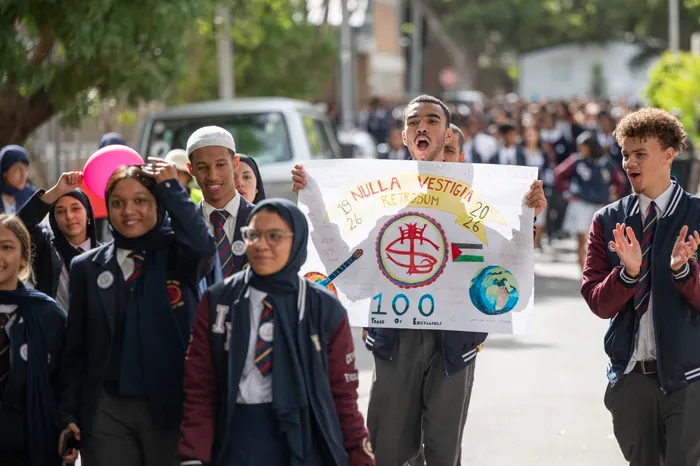
Livingstone High School pupils walked through the local community in celebration.
Image: Armand Hough/ Independent Newspapers
We, the alumni of Livingstone High School, are among its greatest untapped resources. We occupy positions across every sector of society and across the globe: education, law, medicine, engineering, business, the arts, public service and the trades. We carry within us the very competencies that can help the school to overcome its present constraints. Our contribution cannot be sentimental; it must be practical, structured and sustained.
The call to serve is clear:
- to give materially so that the school has the resources required for quality teaching andlearning;
- to give of our time through mentorship, career guidance and academic support;
- to give of our professional expertise in governance, infrastructure, technology, fundraising and strategic development;
- to create networks of opportunity for current learners;
- to become visible role models who affirm what a Livingstone education makes possible.
If the founders and teachers of the past built this institution under conditions of exclusion and deliberate deprivation, what excuse can we offer; with all the privileges that Livingstone has enabled us to attain, if we do not now rise to sustain it?
The moral logic is inescapable: we are because Livingstone was. This legacy is premised on a simple but enduring belief, that every child, regardless of social circumstance, has the right to quality education and to the dignity that flows from it. Honouring that belief requires more than celebration. It requires commitment. This centenary must therefore become a turning point: a renewal of our covenant with the school.
As we journey through life, it is what we leave behind that becomes the measure of our lives. Let part of our legacy be that we ensured that this oasis did not dry up for future generations. Livingstone is not merely a monument to a proud past. It is a living movement — anchored in history, resolute in purpose, and still illuminating the path for those who come after us. Nulla Vestigia Retrorsum! Livingstone — ADVANCE! ADVANCE!
*Banda is a former learner, teacher and principal of Livingstone High School.