OPINION | Is the army's role on Cape Flats a false sense of safety?


Professor Armand Bam is the Head of Social Impact and PGDip NPO Leadership Development at Stellenbosch Business School
Image: Supplied.
Professor Armand Bam
You know something strange is happening in a democracy when people start celebrating the impending arrival of soldiers in their own neighbourhoods. In some parts of Cape Town, the army rolling into the Cape Flats feels like protection. In other parts, it feels like déjà vu. And in the suburbs, the leafy, electric-fenced, alarm-system suburbs, it feels like decisive leadership finally doing something. “Finally,” they say. “Now something is being done.” It depends entirely on where you sleep at night.
The applause from afar
If you live in a privileged suburb, the military on the Cape Flats will look like strength. It looks like urgency. It looks like the order is being restored. It looks like someone grabbed the steering wheel of a country that feels like it’s drifting. It looks strong on television. What it does not look like is a convoy passing your child’s school. It does not look like camouflage outside your local shop. It does not look like soldiers standing where social workers never came. From a distance, force is comforting. It reassures those who are tired of headlines and tired of feeling powerless. It creates the illusion that chaos has a switch and someone finally flipped it. It also allows distance. Distance from the history. Distance from the structural roots. Distance from the fact that the communities now being “secured” were once deliberately designed to be vulnerable. From afar, the army looks like leadership. Up close, it looks like something else.
The fear that is real
Shift the camera. If you live on the Cape Flats, fear is not theoretical. It is not a policy debate. It is not a braai conversation about law and order. It is the sound of gunshots you’ve learned to distinguish by rhythm. It is knowing which streets are safe at which hours. It is raising children in a community that sometimes feels like a battlefield long before the army arrives. When you live in that reality, you don’t ask for white papers. You ask for safety. And when safety has not arrived through policing, through schooling, through jobs, through sustained state presence, you ask for the biggest force available. If that force wears military boots, so be it. For many residents, this is not ideology. It is survival. And that truth deserves respect.
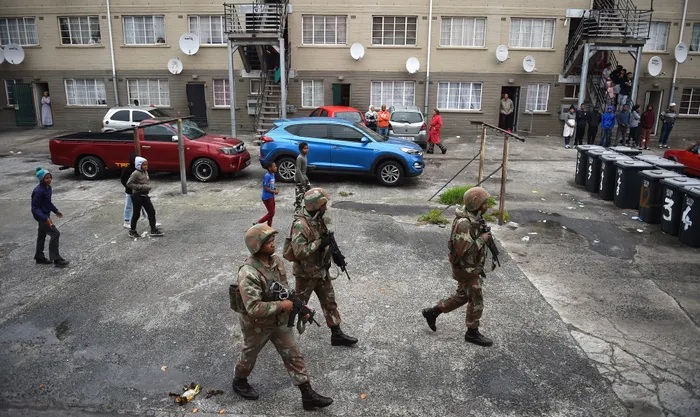
The South African National Defence Force (SANDF) is set to be deployed to combat rising gang violence, sparking debate among civic organisations and government officials.
Image: File
The question we avoid
If a community already feels like a war zone, does sending in soldiers heal the war or confirm it? I recall, as a young child on the Cape Flats during apartheid, seeing the military deployed for what the state called “containment.” That was the word. Containment. As if communities were substances. As if people were spillages that needed to be managed. Casspirs rolled in not because the youth were foreign enemies, but because they were citizens the state did not trust. The uniforms were different then. The language was different then. But the logic feels familiar. Why is military presence still imagined as a solution in communities that were once militarised to suppress them? The military is trained for combat, not community-building. It is designed to neutralise threats, not restore trust. It operates on discipline and force, not relationship and repair. A soldier can stand on a corner. A soldier cannot fix a broken school. A soldier cannot create dignified employment. A soldier cannot undo spatial planning designed to isolate and fragment. A soldier cannot treat trauma that has settled into the bones of a generation. Force can suppress symptoms. It cannot cure structural disease.
The seduction of strength
We are seduced by visible strength. Deploying the military looks decisive. It photographs well. It communicates urgency. It says, “We are serious.” But urgency is not strategy. And seriousness is not sustainability. There is something emotionally satisfying about seeing authority embodied in uniform. It feels like order is returning. It feels like someone is finally in control. But visible control is not the same as systemic repair. You can flood a street with soldiers. You cannot flood a community with opportunity overnight. You can impose order for a season. You cannot impose dignity. Strength is loud. Repair is quiet. And quiet work does not trend.
What goes missing
What disappears in this conversation is prevention. We debate how many troops. We debate how long they will stay. We debate jurisdiction and coordination. We do not debate why youth unemployment in these areas remains catastrophic. We do not debate why gang economies sometimes offer clearer mobility pathways than formal ones. We do not debate why policing is episodic while inequality is permanent. We do not debate why entire communities were designed into vulnerability in the first place. The loudest response is force. The quiet absence is long-term investment. The state appears dramatically in moments of crisis. It is strangely absent in moments of development. And communities notice.
The moral tension
There is a moral tension here that is easy to ignore. On the one hand, residents are tired of burying children. They want safety now. Not after another task team. Not after another report. Now. On the other hand, history teaches us that militarising civilian spaces rarely produces sustainable peace. Especially in communities already marked by over-policing and under-resourcing. The question is not whether violence must be confronted. It must. The question is whether confronting violence with more visible violence produces safety, or simply escalates the ‘drama’.
The hard truth for the suburbs
To those applauding from afar: be careful what you celebrate. When we normalise soldiers as the answer to social failure, we quietly redefine democracy. We move from rights to containment. From citizenship to control. Today it is the Cape Flats. Tomorrow it may be protest action elsewhere. Force has a way of expanding its mandate. And when force becomes ordinary, democracy becomes conditional.
The hard truth for the flats
And to those who say, “We have no other option,” your frustration is justified. When you have lived through decades of promises, you stop trusting words. You want something solid. Something immediate. But the state’s failure to provide safety through ordinary democratic means does not mean extraordinary measures become permanent solutions. Emergency measures must remain emergency measures. Otherwise, the emergency becomes the norm. Otherwise, a child growing up today sees a soldier on the corner and assumes this is just what neighbourhoods look like. And I cannot help but return to that memory, a young child watching the military during apartheid, absorbing silently the message that this place required containment. That we required containment Is that still the message? Because communities that feel like war zones do not need confirmation that they are at war. They need evidence that they are worth more than being managed.
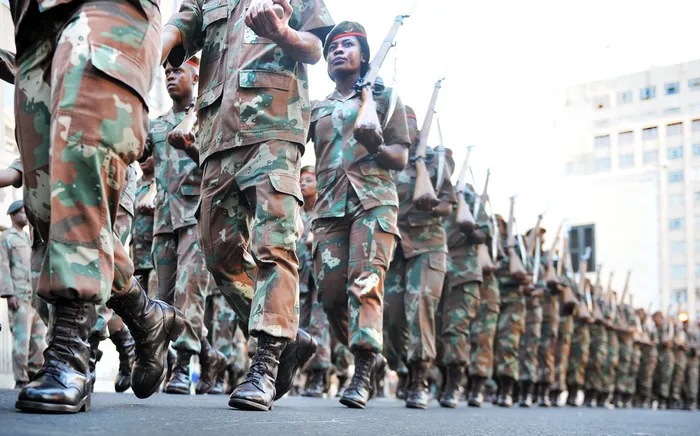
The army
Image: Phando Jikelo / Independent Newspapers
What would courage look like?
The military can create a pause. But can it create peace? A pause without structural reform is just rotation. We rotate soldiers in. We rotate trauma out. We repeat. If the Cape Flats has been shaped by decades of structural violence, then the solution cannot be exclusively physical force. Real courage would look like this: immediate security measures coupled with irreversible investment in economic inclusion, educational reform, accountable policing, urban redesign, trauma healing and youth opportunity. Security and reform. Presence and participation.
Protection and prevention.
Force without reform is theatre. Security without structural change is choreography. And choreography looks impressive until the music stops. The real question is not whether we can deploy the army. It is whether we are willing to do the slower, less visible, less glamorous work that makes the army unnecessary. Because if we are not willing to do that work, the uniforms may change. But the logic of containment remains.
*Bam is the Head of Social Impact and PGDip NPO Leadership Development at Stellenbosch Business School