Honouring Jesse Jackson: the legacy of Négritude and the Black Universal
The liturgy of the Black Universal: a Négritude of the Pulpit in memory of Jesse Jackson: the great Baobab of the Black Atlantic has fallen.


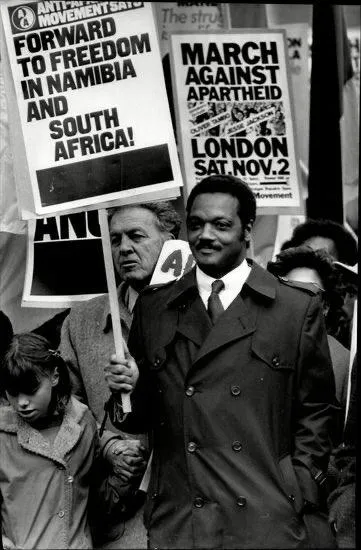
Tributes pour in for civil rights leader Jesse Jackson, who has died at 84 Tributes pour in for civil rights leader Jesse Jackson, who has died at 84
Image: Social Media
In the grammar of our ancestors, the cessation of breath is not an end but a transition into the realm of the ancestors, Badimo. Yet, as news of the Reverend Jesse Louis Jackson’s passing spreads worldwide, we must vigorously reject the sanitised obituaries of the liberal West. To remember him merely as a "Civil Rights icon" is a form of epistemicide. It flattens a multi-dimensional insurgent into a palatable historical artefact.
We must, instead, read Jackson through the theoretical lenses of Négritude and the Critique of Black Reason. We must understand him as a practitioner of a transatlantic ontology, one who recognised that the liberation of the Black subject requires a "return to the source" while engaging the "Civilisation of the Universal".
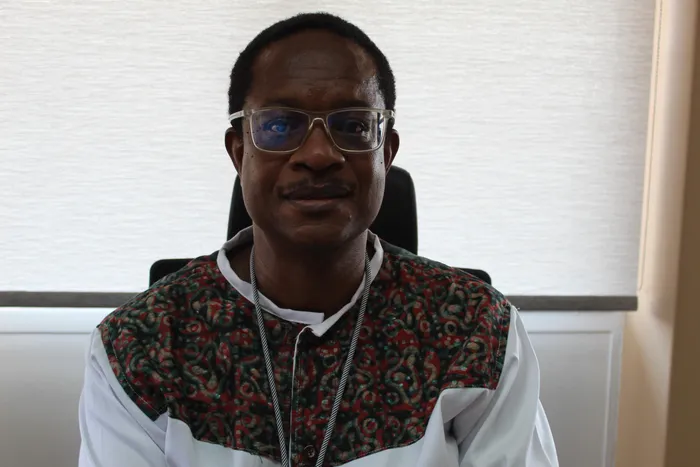
Prof Itumeleng Mothoagae
Image: Supplied
Aimé Césaire, the father of Négritude, taught us that the colonial project relies on chosification (thingification), the reduction of the human to an object, a tool, or a statistic. When Jesse Jackson arrived in South Africa in the darkest hours of 1979, and throughout the fiery campaigns of the 1980s, he confronted a regime predicated on this very thingification. Apartheid was the paroxysm of Western rationality gone mad, a necropolitical order in which the Black body was rendered fungible, disposable, and socially dead.
Into this "zone of non-being",Jackson brought the fire of Négritude. His famous litany, " I Am Somebody", must be rescued from the banality of pop culture and restored to its philosophical weight. This was not a self-help slogan. It was a Césairean scream, the "cry of the rebel" against the silence of the hold. By inciting the crowds in Soweto to chant their own existence, Jackson was engaging in a radical phenomenology of presence. He was demanding that the Black subject look into the mirror of the white gaze and refuse the reflection of the "boy", "kaffir", “negro”, or the "native". He was asserting a "being-in-the-world" that pre-existed the colonial encounter.
Leopold Senghor described Négritude as the "sum total of the cultural values of the black world", characterised by rhythm, emotion, and communal participation in the cosmos. Jackson embodied this epistemology of rhythm. His oratory, that distinct, cadence-heavy "whoop" of the Black Baptist tradition, rejected the cold, sterile logic of the apartheid bureaucrat. He did not merely argue against apartheid; he performed its antithesis. He utilised the "aesthetic of the under commons" to disrupt the rigid, Calvinist spatiality of the Pretoria regime.
Furthermore, Jackson’s life’s work illuminates what Achille Mbembe describes as the entanglement of the postcolony and the metropole. Jackson refused to let the United States pretend its hands were clean. He exposed the policy of "Constructive Engagement" for what it was: a necropolitical pact that traded Black blood for Cold War stability.
By running for the US presidency, Jackson was not seeking assimilation; he was engaging in fugitive planning. He wielded the master’s tools, the televised debate and the diplomatic envoy, to dismantle the master’s house. He forced the American empire to confront its own shadow, revealing that the Jim Crow South and the Apartheid South were merely different provinces of the same global plantation. He operationalised the Pan-Africanist ideal that our liberation is rhizomatic; that there is no freedom in Chicago if there is bondage in Cape Town.
As we stand here in South Africa, in a period often described as the "post-apartheid", we are still grappling with the after lives of the system Jackson fought. The "becoming Black of the world", the universalisation of precarity and exclusion, continues unabated.The economic apartheid that Jackson railed against remains stubbornly entrenched.
And so, we bid farewell to this Titan not in silence but with the "rhythmic word" of Négritude. He embodied the Black Universal, proving that to be fully Black is to be fully human, and that to claim humanity is to demand the fall of every wall.
He has crossed the river. He has joined the Council of Elders, taking his seat beside Sobukwe, Biko, Nelson Mandela, Winnie Madikizela Mandela, Albertina Sisulu, Walter Sisulu, Martin Luther King Jr, and many ancestors, known and unknown. The bridge builder has become the Ancestor.
Robala ka Kagiso, Tau ya Sione. Your roar still echoes in the marrow of our bones.
Prof Itumeleng Mothoagae