Professor Brian Figaji's vision for ethical leadership at CPUT


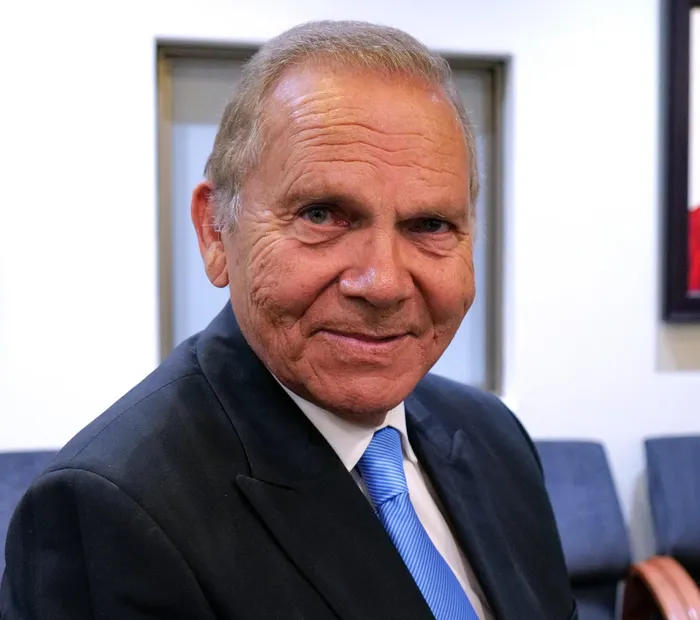
Prof Brian Figaji is a well-known businessman, academic and social activist in South Africa and has a long history with the institution having served as a Rector of the then-Peninsula Technikon before we merged and became CPUT.
Image: Ian Landsberg/ Independent Newspapers
Professor Brian Figaji
I am deeply honoured by your presence here this evening. I owe many people a great debt of gratitude for helping me to become the person that this institution saw fit to electas their Chancellor. However, there is one person that I am really missing tonight and that is my mentor and friend Dr Franklin Sonn who passed away recently.
I know that from where he is now, he is looking down on us with great pride and a sense of fulfillment. I would like to be so bold as to ask you to join me in a short moment of silence in honour of Franklin Sonn who toiled so tirelessly to build this very campus we are on tonight.
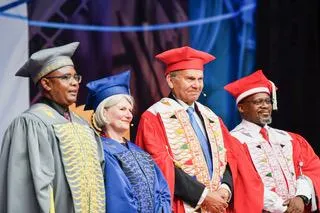
CPUT Registrar Dr Phumzile Masala, CPUT Chair Of Council Dr Laurine Platzky, Chancellor Prof Brian Figaji and CPUT VC Prof Chris Nhlapo.
Image: Supplied
With rampant gender-based violence, looting of state resources, mindless damage to state property, the lack of service delivery to the poor and the sometimes-blatant corruption we need to pause and reconsider our current value system or lackthereof. It is most disheartening when we listen to the testimony at the Madlanga Commission of enquiry and realise that some people who are charged with keeping our citizens safe are in fact assisting criminal syndicates to commit crime.
These revelations come after the devastating evidence at the Zondo Commission where senior political figures were identified as people who participated in or enabled the looting of the state. It all sounds like a bad dream that we are all hoping to awaken from in the hope that it is not true. Unfortunately, it is true and it is our current reality. However, as we contemplate these tragedies, I am reminded of the many people who have made huge sacrifices to oppose this criminality.
I have often asked myself, can we turn this around? And if we can turn all this around, how do we do this? We are a people of hope and action, the majority of South Africans are good people who want a new society, but who need the leadership and the ingredients to bring about this new society. While each one of us has a responsibility to build this new society I would like to consider what the role of an institution like CPUT could be in this context.
As you all know having a set of values is one thing but having it govern how you behave is a totally different story. Allow me to deviate by way of example. One of our more challenging values was “mutual respect” because it demanded that we, as the leaders, behave as respectfully toward staff and students as we would expect them to do towards us. My real test of this one came one day when the students were unhappy about the lack of student residence spaces (this seems to be true today still). One of the student leaders whom I think is in this hall tonight led a team that built a shack in front of the admin building overnight. As we drove in the next morning, we saw this shack with students purporting to have slept there.
Those of you who know me know that my fuse can be rather short at times but fortunately that mutual respect value kicked in, and Irealised that this situation required a measured response. During that day the seniormanagers spent many hours listening and debating with the student leadership. At theend of the day the students had made their point, and we committed to more intense information sharing about the plans for future residence accommodation. The lesson was that our values required me to behave in a certain way even though myinstinct was to do something different.
A values-based system demands that everyone’s behaviour is governed by the same set of values. No exceptions.If we are to build a values-based society with ethical leadership, then Higher education has a significant role to play in the formation of those future leaders. I would certainly want to support an institution that foregrounds its values not only for the enhancement of its own culture but as the institution’s contribution to the building of a new South African society. We need to remember this is a long-term plan that requires systematic implementation. So tonight I am asking this institution to consider being more intentional with the inculcation of values as you develop ethical leaders amongst all the students.
If we are serious about this intentionality, then we will need to consider the significant steps that implementation would require. I would imagine that the institution would need to consider the following at least:
1. Make this initiative a part of the institutional strategic plan
2. Ensure that all the institutional stakeholders support the drive
3. Make the values system widely known
4. Hold both staff and students to the same standards
5. Insist that ALL staff model ethical behaviour so that students may emulate them
6. Always ask the question: “Does this align with our values” In this process there will be a need to expose all the students to some form of knowledge exchange on what ethical leadership is about and what it demands of every individual. It is not enough to adopt a set of values that we hang on the wall and print in booklets for passive reading.
No, it requires a plan of action that may well require resourcing and drive from the very top of the organisation. It is this intentional informal/formal education on values that will enable CPUT to produce ethical engineers, ethical scientists, ethical business leaders and ethical educators that will all help to change our society for the better.
This will distinguish CPUT and identify it more uniquely as a very special institution within the South African higher education landscape. That is my challenge to us all as CPUT let us work together to create a different educational experience for our students so that they could create a better environment for every South African citizen.
I commit to be part of this journey in whatever capacity my help may be needed. Let us stand together and rebuild our country. God Bless you all. Thank you very much.
*This is an edited version of Prof Figaji's acceptance speech after he was installed as Chancellor of CPUT.