Why South Africa must take urgent action against GBV beyond ribbons and hashtags


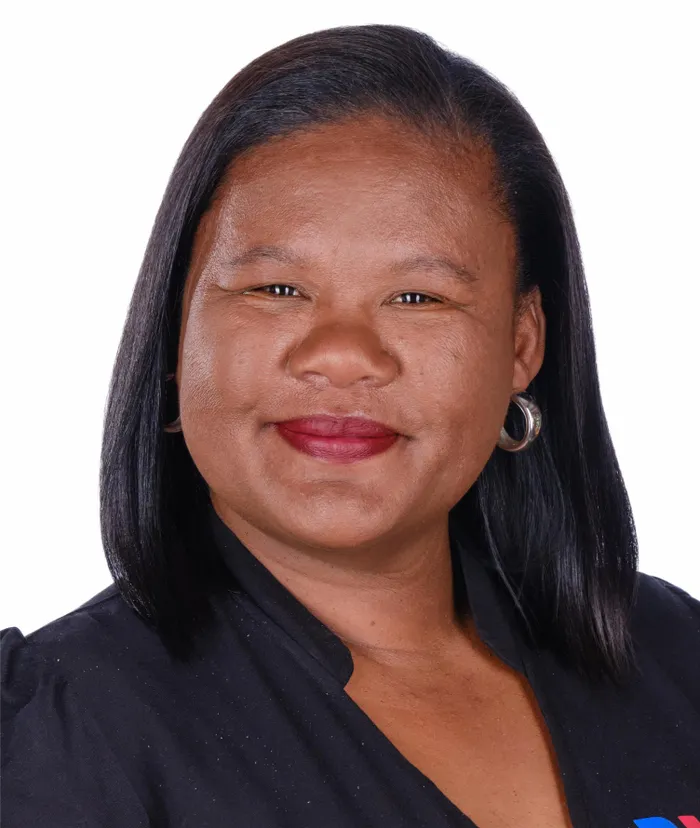
Latiefa Jacobs
Image: Supplied.
Latiefa Jacobs and Mandisa Mashaba
Every day in South Africa, another woman survives domestic violence or sexual assault, and too often the country responds with symbolic gestures instead of urgent action. Ribbons, awareness days, and hashtags have their place, but they can no longer stand in for the truth: gender-based violence (GBV) has escalated into a full-blown public health emergency. This is something we should also highlight during the 16 Days of Activism for No Violence against Women and Children recognised between 25 November and 10 December.
The statistics tell a deeply troubling story. The Centre for the Study of Violence and Reconciliation points out that between January and March 2025, the South African Police Service recorded 13,453 sexual offences, including 10,688 rapes. These numbers represent only what is reported to police and therefore serve as the baseline of a far larger, often hiddene pidemic. According to the Human Sciences Research Council’s National Gender-Based Violence Study (2022), more than 35% of South African women have experienced physical and/or sexual violence in their lifetime.
Beyond visible bruises
Journalist Yasmin Jacobs notes that the rates are even higher among women with disabilities, at approximately 40%, compared to 22% among women without disabilities. Gauteng, KwaZulu-Natal, and the Western Cape continue to record the highest concentration of GBV cases, marking them as enduring hotspots. This crisis persists year after year. Numbers alone cannot capture the lived reality. Gender-based violence leaves scars that linger far beyond visible bruises. It lives in panic attacks that strike without warning, in sleepless nights, in the heaviness survivors carry long after the violence has stopped. Everyday, women and children navigate depression, anxiety, post-traumatic stress disorder, chronic fear, and a deep sense of spiritual and emotional exhaustion. Yet our health system remains strained, leaving many without the care and support they urgently need. We often speak about the cycle of violence, but rarely about the generational cycle of trauma passed from mothers to daughters through silence, pain, and a society that has normalised suffering.
A public health crisis
A recent, painfully vivid example is the death of 16‑year‑old Deveney Nell that shocked the nation. But as the case unfolded, the conflict surrounding it exposed how fragile our public conversation about GBV truly is. Attempts by the mother of the now convicted murderer to silence activists, journalists, and community members through court orders forced civil society groups back to court simply to defend their right to speak out. It felt like an effort to bury truth and accountability at the very moment the country needed openness and honest reflection.
Such scenes reveal how easily survivor stories and advocacy can be silenced. When warnings are met with gag orders, the deeper structural failures, weak prevention, poor follow-up, and a lack of coordinated support remain hidden. Even if Deveney’s case brings individual justice, the struggle around it exposes a larger battle over memory, voice, and our willingness to confront a national crisis. Internationally, GBV is acknowledged as a public health crisis because it impacts all aspects of an individual's life—physical health, mental wellness, relationships, employment opportunities, and education—and entire communities.

Mandisa Mashaba
Image: Supplied
Don't stop at symbolism
Yet in South Africa, our response often feels scattered and under-resourced. We wear purple, hold vigils, and march—these actions matter, but they fail to address the depth and scale of the crisis. This was powerfully evident during the recent Women’s Shutdown March, when thousands stood in silence for 15 minutes to honour women lost to GBV and femicide. The silence was heavy. It reminded us that behind every statistic is a mother who will never return home, a daughter whose future was stolen, a child who witnessed the unimaginable, and a family forever altered. It was the silence of a country exhausted by violence, where safety feels like a privilege instead of a right.
And still, as a nation, we often stop at symbolism. Ribbons cannot build shelters. Awareness campaigns cannot fund trauma counselling. Marches cannot train police officers or nurses to recognise the signs of abuse. Hashtags cannot hold perpetrators accountable. If South Africa truly approached GBV as a public health emergency, the response would be radically different. Clinics and hospitals would screen routinely for GBV, just as they do for high blood pressure.
A national emergency
Survivors would receive trauma-informed mental health care - not a pamphlet and a follow-up appointment months away. Schools would teach consent and respect with the same seriousness as mathematics. Government departments would coordinate rather than contradict one another. That's why initiatives like Women for Change have pushed for a National Shutdown - a moment for all South Africans to pause, wear black, and acknowledge the crisis. Fifteen minutes may seem brief, but it is a strong call to treat GBVF as a crisis and a national disaster. For the country to respond with the urgency it warrants and to stop pretending it’s a private matter when it is a national emergency.
South Africa stands at a crossroads. Gender-based violence is not a ribbon colour, a slogan, or a once-a-year campaign. It is a daily emergency destroying households across the country, and it will continue to do so unless the government moves beyond promises and delivers action that is honest, funded, consistent, coordinated and firmly centred on the safety and dignity of survivors. Until then, purple will not symbolise hope - it will symbolise the women and girls we continue to lose, and the families left to carry their stories alone.
*Jacobs and Mashaba are affiliated with the Co-CREATE Health Hub (Co-Creative Research for Equity and Transdisciplinary Knowledge Exchange), within the Division of Health Systems and Public Health at Stellenbosch University.