Celebrating Ashley Kriel: A Legacy of Resistance and Conscientisation


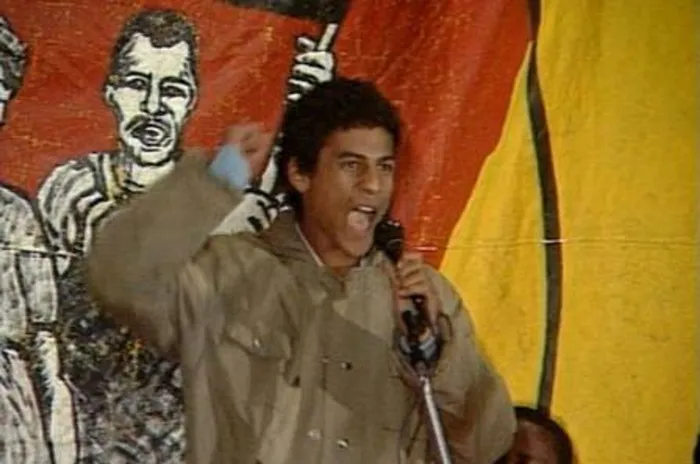
Ashley Kriel would have celebrated his 59th birthday this week.
Image: File
Ashley Kriel, born on 17 October 1966 in Bonteheuwel, emerged as a pivotal figure in the anti-apartheid movement. As Ras Hein Scheepers articulates, Kriel embodies the 'conscientisation of the oppressed into agents of their own liberation,' reflecting Paulo Freire’s belief in the power of education to awaken critical consciousness.
Within the Bonteheuwel Action Committee, Kriel proved his leadership and organisational skill. He later became a founding member of the Bonteheuwel Inter-Schools Congress (BISCO). Learners and young people realised that their lived experience of marginalisation was systemic. They studied apartheid’s tactics, confronted police brutality, and organised grassroots resistance. The Bonteheuwel Military Wing (BMW) was later founded by underground militants after Ashley went into exile.
The activism of radicals from Bonteheuwel was rooted in praxis — linking consciousness, reflection, and progressive community programmes. Ashley advanced the rationale that revolution must first be ideological before it can be practised on the streets.
His views were informed by Steve Biko’s Black Consciousness, Imam Abdullah Haron’s moral courage, and Reverend Allan Boesak’s liberation theology. His ultimate blood sacrifice was followed by that of Dulcie September, Anton Fransch, Chris Hani, Robbie Waterwitch, and Coline Williams — all of whom embodied incorruptibility and fearlessness. His evolution into the ranks of Umkhonto we Sizwe (MK) was destined: a decision to fight against a system that brutalised all who were not classified as white. As I framed it, “Ashley’s militancy was not hate — it was love radicalised through consciousness.”
Praxis and the violence of erasure
After training as an MK commander in exile, Kriel covertly returned to Cape Town in 1987 to connect MK cells with communities in resistance. He understood the dialectic of liberation — that true freedom required struggle from below and discipline from within. His praxis tied armed struggle to conscientisation — the Freirean synthesis of word and action.
On 9 July 1987, he was assassinated by Security Branch operative Jeffrey Benzien at a “safe house” in Hazendal, Athlone. The State claimed Ashley was in possession of a grenade, but a forensic investigation revealed deep gashes to his head, blood spattered across the walls and floor, and that his clothes had been changed before his body was released — an attempt to conceal torture. Benzien later demonstrated his “wet bag” torture method before the Truth and Reconciliation Commission (TRC). Although he did not use it on Ashley, the brutality of the murder and the tampered crime scene exposed the regime’s intent: to ensure Ashley was dead.
Reverend Allan Boesak orated at his graveside: “a son of the poor whose love for truth was greater than the fear of death.” The masses carried Kriel's coffin into the Anglican Church of the Resurrection as riot police attacked mourners with teargas and rubber bullets. Even in death, the State sought to silence his voice and vision — yet the people resisted and bore his body aloft through chaos and defiance.
Legacy, testimony, and the decolonisation of memory
Decades later, Michelle Assure, Ashley’s sister, continues to demand truth and reparations. Witnesses failed to appear, contradictions abounded, and truth was diluted in the theatre of performative reconciliation that granted amnesty to cold-blooded killers.
Henriette Abrahams, a former BISCO organiser, and Gorie November, a militant in the BMW and student leader in BISCO, continue to advance Ashley’s ideals through grassroots praxis. Abrahams recalled, “Ashley taught us that the liberation of the poor begins with believing that we are human.” November described him as “a bridge between the people and their own power.” Their voices preserve the legitimate narrative of Ashley Kriel’s life amid post-apartheid forgetfulness.
At the TRC, ex-BMW member Faried Ferhelst remembered Ashley saying: “Once we’ve won the battle, we must still win the struggle.” When asked to clarify, Ashley replied, “The first struggle is against the apartheid regime — that we’ll win easily. But the second is the struggle within the struggle, the struggle among ourselves.”
A universal conscience
Kriel’s legacy lives in the conscious grassroots of South Africa’s civil society and cultural heritage praxis. He represented the liberation heritage of the Cape — the erased narratives of working-class intellectuals and militants such as Fransch, September, First, and Imam Haron, who lived their theory through struggle.
To reduce him to identitarian labels like “Coloured leader” distorts his integrity. He recognised apartheid’s racial categories as colonial tools. Freedom, to him, meant recognising a shared humanity — not the dominance of one group over another. His life still speaks to the have-nots and historically dispossessed, not only in Bonteheuwel but across the world.
If alive today, Kriel's convictions would align with “Free Palestine.” His anti-imperialist moral compass would see in Gaza the same apartheid logic he fought in Cape Town — occupation, racialised control, and the stripping of human dignity. His Freirean outlook of “communion with the people” would compel solidarity with all oppressed people. As I assert, “Conscientisation is not limited to national territories — it is planetary. Once you awaken, you cannot tolerate oppression anywhere.”
Heritage into resistance
Today, Kriel's legacy thrives through the annual Ashley Kriel Youth Memorial Cypher, which engages young people in cultural and political conscientisation. The Cypher memorialises his life through hip-hop, film, spoken word, and dialogue — rooting the past in the present and branching collective memory into movements of the future. It transforms heritage into resistance — a living archive and a pedagogy of the Cape.
The absence of national discourse around Kriel reflects a broader post-apartheid amnesia. Freedom’s martyrs are honoured ceremonially, yet their humanist ideals — economic justice, social equality, and moral courage — remain sidelined. The blood in the “safe house,” the stripped and redressed body, and the vanished witnesses still demand truth, healing, and reckoning.
Forever 20
On 17 October, he would have turned 59 — but Ashley Kriel remains forever 20. He would never have sold out. He would still be pursuing justice, warning that liberation without ethics is a farce. He would remind South Africans that justice delayed is justice denied, and that neutrality in the face of oppression — whether in the Cape Flats or Palestine — is cowardice.
Kriel sought not political power, but revolutionary justice. His short life remains a masterclass in radical praxis — the ascent of awareness into liberation. His assassination failed to erase that lesson. His spirit continues to teach: the revolution begins in the mind and survives in those who remember to remember.
Unforgetting Kriel evokes a youthful uprising to rebuild ethical resistance. His story underlines that liberation is never given — it is practised daily through consciousness, courage, and community.
*Scheepers is an Afrofuturist, Creative and International Relations student.