Helen Zille's response to Gaza genocide: A critique of willful blindness


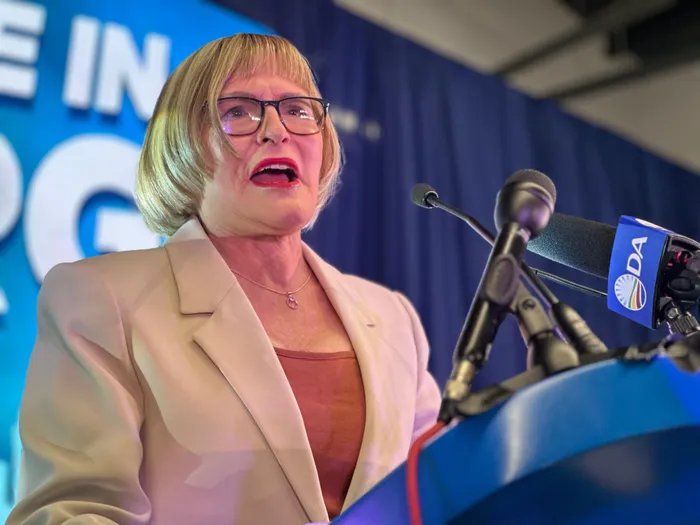
Helen Zille
Image: Supplied
On 16 September 2025, the United Nations Independent International Commission of Inquiry released its most damning conclusion yet: Israeli actions in Gaza meet the legal threshold of genocide under the Genocide Convention (A/HRC/60/CRP.3). This determination was reached through systematic investigation, documentation, and legal analysis - not through speculation.
Yet, in a recent television interview, DA leader Helen Zille responded to the report with evasion. “Genocide is a very big word,” she said, adding that she had “not been to Gaza” and therefore could not say. Instead, she reverted to the stock phrase that peace will come only when both sides “recognise each other’s right to exist.”
This response is not just inadequate; it is deeply irresponsible. International legal findings are not validated by whether politicians have personally toured a war zone. They are validated by evidence - mass civilian casualties, widespread destruction of homes, deliberate targeting of civilian infrastructure, and siege tactics that deprive a population of food, water, and medicine. The UN Commission drew precisely on such evidence, including statements by Israeli leaders, cumulative death tolls, and humanitarian indicators pointing to deliberate conditions of life incompatible with survival.
The present reality in Gaza City underlines this conclusion. Hospitals have been forced to shut down after direct Israeli strikes, entire neighbourhoods lie in ruins, and UN agencies warn of famine conditions caused by Israel’s blockade and bombardment. To wave this away because one has not “been there” is an abdication of moral responsibility.
Moreover, Zille’s pivot to the two-state solution, while laudable in principle, sidesteps the immediate crisis of accountability. A two-state future cannot be built on the rubble of war crimes left unaddressed. Peace requires not only negotiations but also justice - an acknowledgment of grave violations and consequences for perpetrators.
South Africa, with its history of apartheid and its own pursuit of justice through truth and reconciliation, should know better than to trivialize international findings of genocide. Zille’s remarks betray that legacy. In times when international law is being shredded in plain sight, leaders have a duty to speak truthfully, not hide behind platitudes.
Are Zille’s remarks not a total disgrace to our nation?
You be the judge.
Adiel Ismail
Mount View