World Clubfoot Day: South Africa's fight for equitable treatment


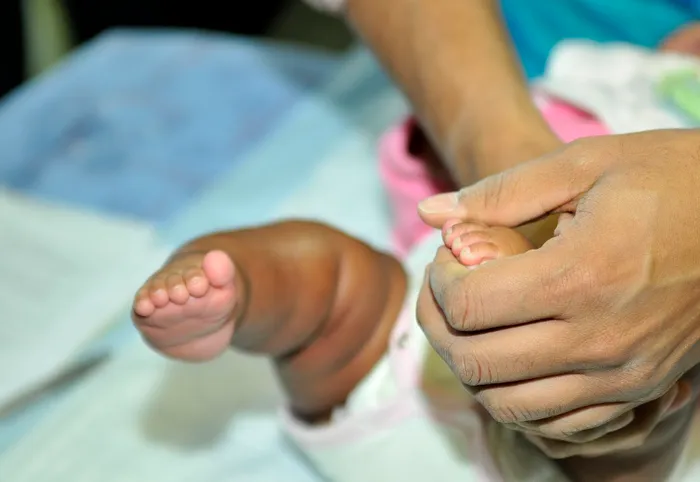
Clubfoot is one of the most treatable childhood conditions.
Image: Supplied.
As the world prepares to mark World Clubfoot Day on June 3, 2026, South Africa’s efforts to achieve equitable access to clubfoot treatment will be a central focus at the 2026 IV International Clubfoot Symposium in Iowa City.
Representing South Africa, Karen Moss, founder and CEO of STEPS, a non-profit organisation that supports families accessing treatment for clubfoot across South Africa and neighbouring countries, is set to address over 300 global medical professionals. Moss will share insights from South Africa's decade-long commitment to expanding care through clinic support, training, and systems strengthening within the public healthcare sector. Despite South Africa receiving increasing global recognition for improvements in clubfoot care, Moss stresses that "the reality on the ground is that too many children still miss the opportunity for early treatment simply because of where they are born".
"Clubfoot is one of the most treatable childhood conditions we know, yet access still depends too heavily on geography," Moss said. "At least 2,000 babies are born with clubfoot in South Africa every year, and every one of them deserves the same chance to walk, run and play, whether they are born in rural Eastern Cape or in a major city like New York".
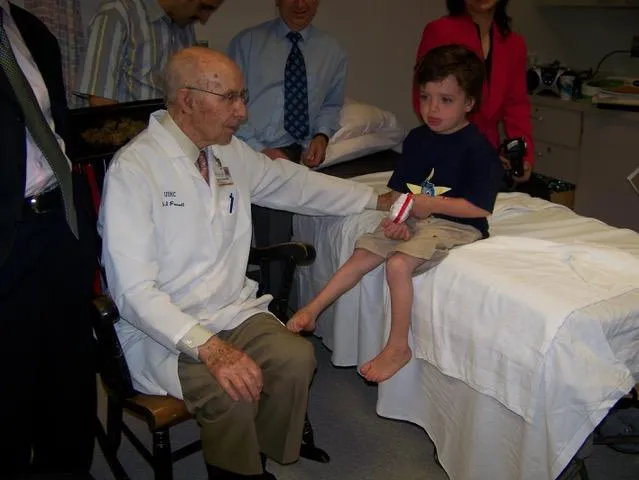
Alex Moss, then four years old, son of Karen Mara Moss with Dr Ponseti in 2007.
Image: Supplied
A Treatable Condition with Barriers
Clubfoot, medically known as talipes equinovarus, is one of the world's most common musculoskeletal birth defects, causing one or both feet to turn inward or downward in a rigid position. Without treatment, it can result in lifelong disability, pain, and severe mobility challenges. However, when treated early using the Ponseti Method—a low-cost, non-invasive approach involving gentle casting followed by bracing—children have a greater than 95% chance of full correction. Global estimates, however, suggest that more than half of children born with the condition in low- and middle-income countries never receive complete treatment.
Moss will highlight that the most critical challenge is the gap after casting, when children must transition into bracing to maintain correction. "In many communities, we find families are doing everything right... but they cannot access the braces which is what holds the correction. Without it, there is a high risk of relapse, meaning the entire treatment journey can be undone,” she explained.
Barriers such as long travel distances, escalating transport costs, and shortages of braces and trained staff prevent many families from completing treatment. Failure to complete treatment increases the likelihood of long-term disability, reduced education, limited employment opportunities, and financial strain that reinforces poverty across generations.
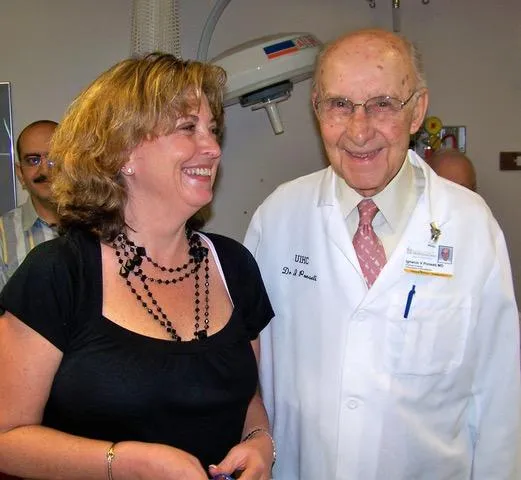
Karen Mara Moss is 2007 in IOWA with the renowed Dr Ponseti.
Image: Supplied.
A Return to Iowa
The timing of Moss’s address carries a profound personal weight. Twenty-three years ago, she traveled to Iowa seeking answers for her own son, Alex Moss, who was born with clubfoot. She is now one of Africa’s leading voices in clubfoot advocacy, speaking on the same global platform that champions the Ponseti Method. (The original press release mentions that World Clubfoot Day was named in honour of Dr. Ponseti and initiated by Karen Moss).
STEPS currently supports 48 partner clinics across all nine South African provinces, has assisted over 13,000 children directly, and has helped train more than 2,000 healthcare professionals in the Ponseti Method.
To mark World Clubfoot Day, STEPS launched the STRIDE monthly giving campaign, calling for collaboration from South Africans, corporates, and donors to help strengthen access to essential care elements, including emergency brace provision and healthcare worker training.“Every child deserves the chance to walk, skip, jump, and dance... As South Africans, we are guided by the principles of ubuntu, and the idea that we rise by lifting others,” Moss added.