South African universities raise R2.4 billion in philanthropic funding amid challenges


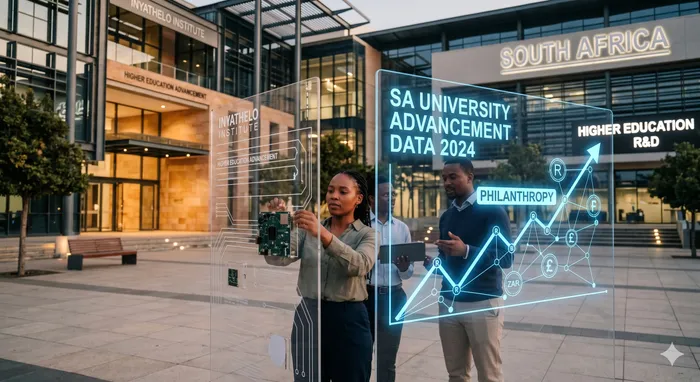
South African universities show resilience in philanthropic giving despite widening digital and structural divides.
Image: AI generated/Gemini
South African universities have experienced a massive post-pandemic surge in philanthropic funding, collectively raising a record-breaking R2.4 billion in a single academic year, according to a major new report.
The findings, published by Inyathelo: The South African Institute for Advancement in its latest Annual Survey of Philanthropy in Higher Education (ASPIHE) reports, cover the 2023 and 2024 academic years. The data reveals an extraordinary long-term trajectory for the sector, with the R2.4 billion raised in 2023 representing a near-quadrupling of the R659 million recorded when the survey began in 2013. Although philanthropic income experienced a minor consolidation to R2.32 billion in 2024, total advancement income—which includes funding from Sector Education and Training Authorities (SETAs)—still reached an impressive R2.7 billion.
However, the celebratory figures mask a deeply entrenched structural crisis. the reports warn starkly over the persistent inequalities between historically advantaged and historically disadvantaged institutions (HDIs), particularly as a rapidly accelerating digital revolution threatens to leave underfunded universities behind.
Report author Dr Michael Cosser explained that a troubling digital divide risks further marginalising HDIs, which frequently struggle to play catch-up in a highly technological society. He noted that the huge disparities in philanthropic income between wealthier universities and their disadvantaged counterparts remain a core concern. Dr Cosser emphasised that the immediate challenge lies in boosting fundraising activities at HDIs and equipping them with the resources to establish fully-fledged advancement offices capable of collecting accurate data and attracting significant private investment.
The stark reality of this funding concentration is evident in the performance metrics, with the highest amount received by a single institution has climbed from R783 million in 2023 to a staggering R856 million in 2024. Conversely, the survey highlights a direct correlation between a university's initial financial investment in professional fundraising staff and its ultimate ability to secure major donations. Those institutions that have professionalised their alumni relations and fundraising functions have seen measurable financial returns, even amidst ongoing economic volatility.
Despite the uneven distribution, the overall appetite from donors has grown substantially. The total number of active donors reached 9,106 in 2023, more than doubling the 2013 baseline of 4,355. While domestic South African sources remain the lifeblood of institutional support, international private funding continues to play a pivotal role, particularly in bankrolling major research initiatives and physical infrastructure projects across the participating campuses.
Inyathelo, which is entering its second decade of benchmarking the sector, plans to expand the survey's reach to capture a more comprehensive picture of the higher education landscape. Feryal Domingo, Inyathelo's Acting Executive Director, commended the ten participating universities for their meticulous data collection but stressed that a more inclusive approach is necessary for the future of the country.
Domingo stated that accurate data collection is not merely an administrative exercise, but a strategic necessity for creating a more equitable and resilient higher education system. She concluded that the focus must now shift towards ensuring that the entire sector can benefit from these insights to effectively bridge the historical gaps that continue to divide South African institutions.