Meet Makashule Gana: The pivotal figure in South Africa's Phala Phala inquiry


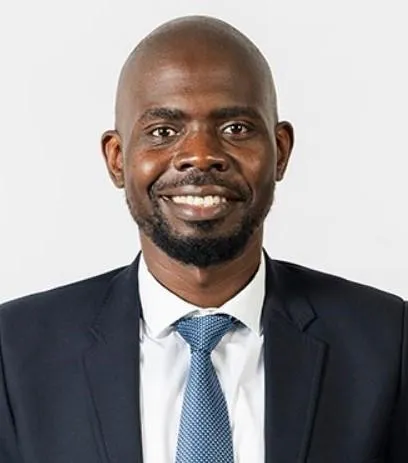
Makashule Gana MP RISE Mzansi National Assembly Whip
Image: Supplied.
Parliament's long-awaited impeachment inquiry into the Phala Phala saga has taken a significant step forward, with Rise Mzansi's Makashule Gana elected to chair the committee tasked with examining the matter.
The appointment places Gana at the centre of one of the most closely watched parliamentary processes in recent years, as lawmakers prepare to scrutinise findings linked to the controversy that has continued to shadow President Cyril Ramaphosa's administration.
On 1 June 2026, Gana's name was catapulted to the forefront of national conversation for good reason. The man now wielding one of the most consequential gavels in South Africa's democratic history is a seasoned political operator with a fascinating career spanning student activism, opposition party leadership, and a bold leap into a new political home.
Who Is Makashule Gana?
Makashule Gana is a South African politician and the chief organiser of Rise Mzansi. He previously served as a member of the Gauteng Provincial Legislature for the opposition Democratic Alliance.
Growing up in the Village of Lefara in Tzaneen, Limpopo, Gana's political interest started in the early 1990s, during a period of unrest in many homelands. He was raised in a family where his uncle was an ANC activist, from whom he learned much about the liberation movement. His first real political activism started in 2000 when he enrolled to study at what was then the University of the North, Turfloop campus.
He holds a BSc degree in Mathematics and Computer Science from the University of Limpopo and also earned a Postgraduate Diploma in Management from Wits Business School in 2012. His academic background, combining hard sciences with business management, reflects the sharp, analytical mind he has brought to politics.
Leader of DA youth
Gana's political journey is one of ideological evolution and consistent civic commitment. Gana joined the South African Students Congress (SASCO) at the University of Limpopo in 2000, before joining the DA and its Youth wing in 2002. He was elected Limpopo Provincial Chairperson of the Democratic Alliance Students Organization in 2003 and moved to Johannesburg in 2005, where he continued to be very active in the DA and DA Youth.
He was previously the leader of the DA Youth and a DA Councillor in the City of Johannesburg. Between 2014 and 2016, he was a member of the National Assembly, where he served as Shadow Minister of Human Settlements. Gana also served as the Deputy Federal Chairperson of the DA until 2015.
In 2019, Gana made a high-profile bid for the DA's top leadership. He faced John Steenhuisen for the position of Federal Chairperson on 17 November 2019, but lost to Steenhuisen. Though he did not win that race, the contest confirmed his standing as one of the DA's most prominent Black leaders, a politician capable of contesting national party leadership.
He served as a Member of the Gauteng Provincial Legislature from 15 November 2016 to 4 August 2022, when he resigned from the DA.
Rise Mzansi
Gana's departure from the DA in 2022 marked a significant turning point. In April 2023, Gana was appointed National Organiser of the social democratic political party Rise Mzansi, under the leadership of Songezo Zibi. The move surprised many political observers but reflected a broader trend of prominent Black opposition politicians seeking a new political vehicle beyond the DA.
As Head of Organising for Rise Mzansi, Gana said his party deserved media coverage despite not having an electoral footprint in Parliament or any of the legislatures. He argued that the true test for Rise Mzansi's political footprint should be whether it could formulate solutions for citizens who felt let down by the current government.
He started his political career in the student movement SASCO and early ANC structures — a detail that underscores the ideological arc he has traveled, from ANC-aligned student activism to the DA's opposition benches, and ultimately to Rise Mzansi's social democratic platform.
The election of Gana to chair the Phala Phala impeachment committee was anything but straightforward. Prior to the committee's first meeting, several political parties had indicated that negotiations for the position of chairperson were ongoing, with the decision coming down to the wire.
A coalition of opposition parties had thrown its weight behind UAT leader Bantu Mahlatsi to chair the committee after concerns were raised about the DA's preferred candidate. Representatives from the Progressive Caucus, the DA, FF Plus, Rise Mzansi, BOSA, ActionSA, and other opposition parties met to agree on a candidate for the position. Sources familiar with the discussions said parties quickly agreed that the chairperson should not come from the ANC, given the committee's oversight role.
In a surprise move, instead of putting forward the expected name of the ANC's Doris Mpapane, the ANC instead nominated Gana, with him receiving the backing of the DA, Patriotic Alliance, Inkatha Freedom Party (IFP), Freedom Front Plus, Rise Mzansi, and Al Jama-ah.
Majority Vote
Gana secured 19 votes against ATM MP Dr Wonderboy Mahlatsi, who received 12. The election took place on Monday during the committee's first meeting, convened to elect its chairperson.
Gana's nomination was seconded by DA parliamentary leader George Michalakis, signalling an alignment between the two largest parties on the committee despite earlier uncertainty over whether the DA would back a candidate supported by the ANC.
After his election, Gana struck a measured, determined tone: "I usually start off by saying thank you, chairperson, but now I have become the chairperson. I want to thank all the members and everyone who participated in this process. The work has just begun."
To understand why Gana's new role matters so profoundly, it is necessary to understand the scandal itself. The constitutional crisis began on a winter night in February 2020, when thieves broke into Ramaphosa's Phala Phala game farm in Limpopo and stole a large sum of foreign currency, reportedly around $580,000, concealed in furniture at his private residence. The President maintained that the money was a payment from a Sudanese businessman, Mustafa Mohamed Ibrahim Hazim, for the purchase of 20 buffalo.
The 89-page independent panel report, handed over to the then Speaker of the National Assembly on November 30 2022, found that Ramaphosa had a case to answer over serious violations of the Constitution for exposing himself to a conflict of interest, doing outside paid work, and contravening the Prevention of Corrupt Activities Act.
In December 2022, the Section 89 inquiry against Ramaphosa was quashed when the ANC used its majority in the House to vote against the adoption of the panel's report. The EFF and ATM challenged this decision all the way to the Constitutional Court.
The Constitutional Court delivered its much-anticipated judgment on May 8 2026, sending the Section 89 panel's report back to Parliament and paving the way for an impeachment process against President Cyril Ramaphosa to proceed. The court ruled that the Phala Phala vote in Parliament was invalid and unconstitutional.
Parliament's newly established 31-member committee will reassess the Phala Phala report and scrutinise allegations against President Cyril Ramaphosa. The committee comprises members from 16 political parties. The ANC has the largest allocation with nine seats, followed by the DA with five representatives. The MK Party has three members, while the EFF has two seats. The remaining parties — the IFP, PA, FF Plus, ActionSA, ACDP, UDM, Rise Mzansi, BOSA, ATM, Al Jama-ah, NCC and UTA — each have one representative.
The members of the committee include some of Parliament's most robust MPs, including EFF leader Julius Malema, DA chief whip Glynnis Breytenbach, DA parliamentary leader George Michalakis, MK Party leader John Hlophe, BOSA leader Mmusi Maimane, and ActionSA's Lerato Ngobeni. Managing such a diverse, politically charged committee will require considerable skill.
After his election, Gana said the committee's work will continue despite ongoing legal processes linked to the Phala Phala matter: "There are processes that are on the go with regard to the courts, but that process will not stop the work of the committee at the moment. It will happen in parallel."
Gana's selection as chair is deeply significant on multiple levels. His background transcends party lines in a way few South African politicians can claim, from ANC-aligned student structures, to the DA's senior leadership, to Rise Mzansi's social democratic project. This ideological journey makes him credible to a wide spectrum of South African political actors.
'It's a responsibility I accept with both hands' - on Phala Phala
When asked how he felt being the man with President Ramaphosa's head in his hands, Gana said: "It's a responsibility I accept with both hands. I have the task of ensuring the work proceeds without fear, favour, or prejudice in open participation by MPs and witnesses. The rules we will come up with must restore trust in Parliament."
The fact that both the ANC and the DA, unlikely political bedfellows, backed Gana's nomination speaks to the rare trust he commands across the aisle. His appointment represents Parliament's attempt to conduct one of its most sensitive constitutional processes under a chair perceived as independent and credible.
Makashule Gana is no accidental figure at the helm of the Phala Phala impeachment committee. He is the product of over two decades of political experience, hard-won across student movements, municipal councils, national Parliament, and provincial legislatures. His move to Rise Mzansi placed him outside the dominant party structures, a position that now, ironically, makes him the most trusted figure to navigate one of the most explosive political processes in post-apartheid South Africa.
Whether the committee under his stewardship will ultimately recommend President Ramaphosa's removal from office remains to be seen. What is certain is that South Africa has placed this weighty constitutional responsibility in the hands of a man who has spent his entire adult life preparing, knowingly or not, for exactly this moment.