Exploring the Okaden Chuggington Trams: A journey through Okayama City


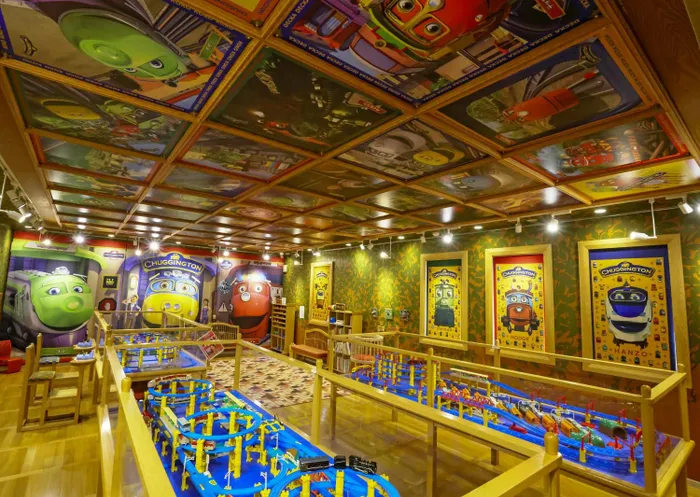
The Okaden Chuggington Museum is filled with Chuggington characters.
Image: The Washington Post
Trams in Okayama City, affectionately known as “Okaden,” began operating in 1912, initially connecting Okayama Station with Korakuen garden. Since then, the urban transportation system has been a famous local landmark beloved by Okayama citizens.
After the city was reduced to ashes in a massive air raid in June 1945, the tram service resumed just 70 days later, helping with the postwar reconstruction alongside the citizens.
The system is indispensable for transporting both local residents and tourists, even though the total length of its lines, the Higashiyama Line and the Seikibashi Line, is only 4.7 kilometers. This makes it the shortest tram system in Japan. The cars that run on these lines vary in design, ranging from retro to futuristic.
Very popular among them is the "Okaden Chuggington Trams," inspired by the British railway-themed animation series, "Chuggington." The trams first ran in 2018 with the goal of "turning the city into an amusement park." Designed by Eiji Mitooka, an industrial designer from Okayama Prefecture, the trams feature a colorful interior and exterior that recreate the world of the animation series, offering an enjoyable viewing and riding experience.
The children at Sanyu Nursery School, located along the Higashiyama Line, love the Chuggington-themed trams. They wave to them whenever they spot one during activities outside the nursery school. In October, they attended a sketching event at the invitation of Okayama Electric Tramway Co. that operates the trams, where they freely drew the red and blue Chuggington vehicles.
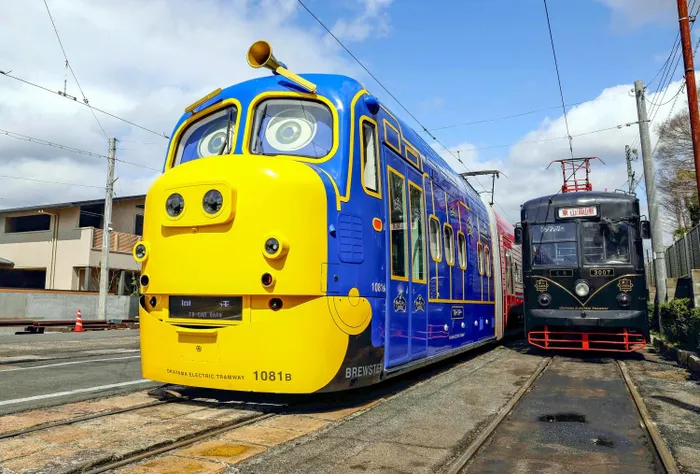
A Chuggington-themed tram car, left, alongside a retro-style car.
Image: The Washington Post
The nursery school also frequently participates in seasonal riding events, such as the "Wind Chime Tram" and the "Christmas Tram."
Nursery director Kiyomi Kan said: "These experiences are only possible in a city with a tram system. For the children here, trams are part of their everyday scenery."
In December 2024, a new employment policy announced by the company became a hot topic: the hiring of "dual-role" drivers, who, for the first time in the country, operate both trams and buses.
The decision was made by President Mitsunobu Kojima. At the time, he said, "Doing the same thing all the time gets boring. It'll be fun to drive both."
Keita Kamahara, 32, who was hired to be a dual-role driver, has an unusual background. He is a former Self-Defense Forces member and previously worked as a bus driver in Chiba Prefecture. A railway enthusiast since childhood, he applied for the position without hesitation.
"It's like a dream come true to be able to drive a tram. I've always admired them," Kamahara said.
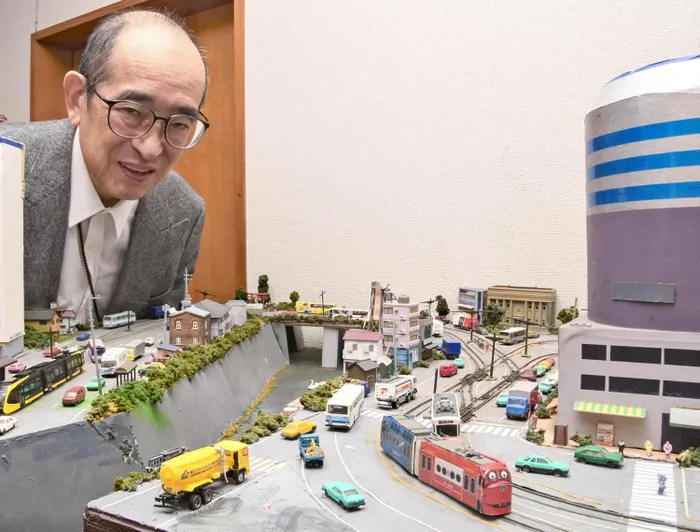
Masao Oka views a diorama featuring a tram that he built.
Image: The Washington Post
He currently drives buses and will begin training in January to obtain his tram operator’s licence.
"I'm determined to study hard. When I become a tram operator, I want to treat passengers kindly and earn their gratitude," he said.
Construction is currently underway in front of JR Okayama Station to extend the tram line about 100 meters west and bring it closer to the station. Scheduled for completion by the end of fiscal 2026, the project is expected to improve passengers' convenience.
In addition, a plan has begun in earnest to build a new track connecting the two existing lines to create a loop line.
"The loop line will make the tram system more user-friendly. It will not only benefit the area in front of Okayama Station but also increase vibrancy throughout the city," said Masao Oka, 71, chairman of the nonprofit organization Racda focusing on the future of trams and cities.
Born and raised in Okayama, Oka has a deep attachment to the tram system. He has promoted the function, appeal and history of the tram system and other forms of public transportation, through having organized the annual "Okayama Tram Festival" for the past 30 years, for example.
"The tram system is a symbol and a valuable resource of this region," Oka said.
Near the headquarters of Okayama Electric Tramway in Naka Ward, Okayama, stands the Okaden Chuggington Museum.
The museum building is the company headquarters' former office, which was renovated by Mitooka.
The first floor houses a theater room that continuously plays Chuggington animations, a playroom for children and a cafe. From this area, visitors can view the tram depot and maintenance facility. The terrace is a highly recommended spot, where visitors can relax while watching the trams travel.
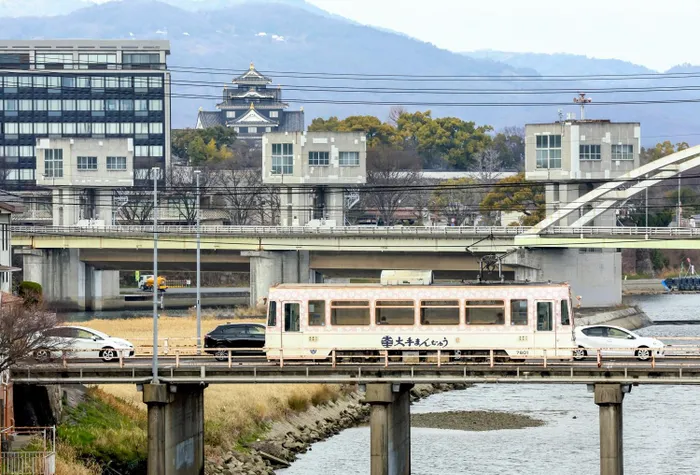
An “Okaden” tram crosses the Asahi River with Okayama Castle in the background.
Image: The Washington Post
The second floor has a room filled with illustrations of Chuggington characters. The room has a section where visitors can operate mini trains with a controller, just like a real driver. There are other attractions, such as a photo spot and a souvenir shop, where Chuggington-themed products are particularly popular.
The museum is open from 10 a.m. to 4 p.m. and closed every Tuesday. Admission is 1,000 yen for junior high school students and older and 500 yen for elementary school students and younger.
The fare for the Chuggington Tram is 3,400 yen for junior high school students and older and 1,900 yen for elementary school students and younger. An additional 100 yen is required on weekends and holidays. The ticket includes admission to the museum and a one day pass for the trams.
He currently drives buses and will begin training in January to obtain his tram operator's license.
"I'm determined to study hard. When I become a tram operator, I want to treat passengers kindly and earn their gratitude," he said.
Construction is currently underway in front of JR Okayama Station to extend the tram line about 100 meters west and bring it closer to the station. Scheduled for completion by the end of fiscal 2026, the project is expected to improve passengers' convenience.
In addition, a plan has begun in earnest to build a new track connecting the two existing lines to create a loop line.
"The loop line will make the tram system more user-friendly. It will not only benefit the area in front of Okayama Station but also increase vibrancy throughout the city," said Masao Oka, 71, chairman of the nonprofit organization Racda focusing on the future of trams and cities.
Born and raised in Okayama, Oka has a deep attachment to the tram system. He has promoted the function, appeal and history of the tram system and other forms of public transportation, through having organized the annual "Okayama Tram Festival" for the past 30 years, for example.
"The tram system is a symbol and a valuable resource of this region," Oka said.
Near the headquarters of Okayama Electric Tramway in Naka Ward, Okayama, stands the Okaden Chuggington Museum.
The museum building is the company headquarters' former office, which was renovated by Mitooka.
The first floor houses a theater room that continuously plays Chuggington animations, a playroom for children and a cafe. From this area, visitors can view the tram depot and maintenance facility. The terrace is a highly recommended spot, where visitors can relax while watching the trams travel.
The second floor has a room filled with illustrations of Chuggington characters. The room has a section where visitors can operate mini trains with a controller, just like a real driver. There are other attractions, such as a photo spot and a souvenir shop, where Chuggington-themed products are particularly popular.
The museum is open from 10 a.m. to 4 p.m. and closed every Tuesday. Admission is 1,000 yen for junior high school students and older and 500 yen for elementary school students and younger.
The fare for the Chuggington Tram is 3,400 yen for junior high school students and older and 1,900 yen for elementary school students and younger. An additional 100 yen is required on weekends and holidays. The ticket includes admission to the museum and a one day pass for the trams.
An “Okaden” tram crosses the Asahi River with Okayama Castle in the background.
Image: The Washington Post