South African Reserve Bank raises repo rate: What it means for consumers


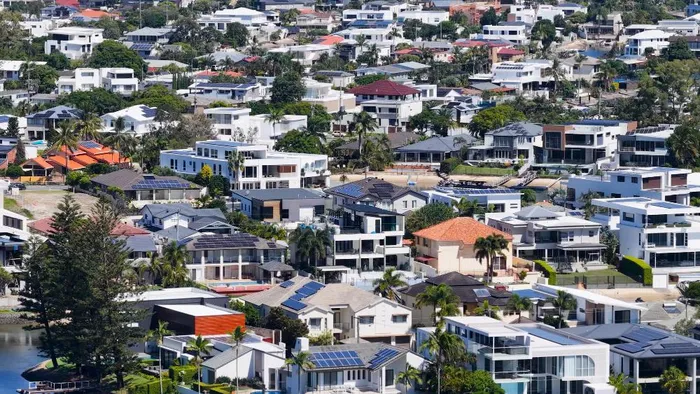
Homeloan interest rates will increase by .25% on Friday.
Image: Supplied
In a decisive move that signals a structural shift in South Africa’s monetary policy, the South African Reserve Bank’s Monetary Policy Committee has delivered a sharp preemptive strike against inflation, raising the repo rate by 25 basis points to 7.00%. Effective Friday, 29 May 2026, commercial banks will consequently push the prime lending rate to 10.50%. This highly anticipated yet deeply contested 4-2 split vote has drawn a battle line between central bank purists determined to anchor long-term price stability and critics who warn that the hike could choke a fragile, post-pandemic economic recovery.
At the heart of the central bank's aggression is its newly revised 3% inflation target framework. April’s Consumer Price Index surged to 4.0%, up from 3.1% in March, driven primarily by a massive 55% spike in global oil prices, which rocketed from around $60 to "above $100 in recent months" due to escalating tensions in the Middle East. For Reserve Bank Governor Lesetja Kganyago, the 4.0% print pushed inflation to the absolute ceiling of the bank's tolerance band.
The majority view of the committee argues that while the current price shock represents an external, first-round supply disruption, monetary policy must act proactively to prevent these input costs from filtering into wages, rents, and wider retail pricing behaviour. By moving early, the central bank is sending an unequivocal message to the market: “3% is intended to be a hard line, not a soft suggestion.”
However, the decision has exposed a stark ideological rift within South African economic circles. Prominent Northwest University Business School economist Professor Raymond Parsons has challenged the majority’s logic, arguing that the timing for a rate hike was premature and that the committee “conflated the visible ‘first round’ inflation effects with possible ‘second round’ ones later in order to justify its immediate decision.”
Parsons maintains that South Africa possesses sufficient “economic buffers and some policy space” to have paused rates while maintaining a hawkish, “higher-for-longer” rhetorical stance. This stance would have aligned the country with global peer central banks, the bulk of whom have opted for a cautious wait-and-see approach amid deep geopolitical uncertainty. Instead, the domestic economy must now absorb higher borrowing costs in what is already a “weak growth environment.”
For ordinary South African households, the immediate reality of this decision translates into a compounding affordability crisis. Chief Executive of TransUnion Africa, Lee Naik, notes that the rate hike lands on a consumer base already under immense structural strain, effectively freezing the brief momentum and cautious optimism observed at the end of 2025.
Data indicates that household financial behavior is shifting decisively toward a defensive, risk-averse posture. “When fuel, food and borrowing costs rise together, the impact is not incremental; it is compounding. That is where we see the real pressure emerge,” Naik warned. The crisis is best illustrated by the skyrocketing cost of basic survival;the average household food basket increased to R5,452.09 in April. The financial pressure facing households, Naik concludes, “is no longer emerging, it is entrenched.”
The financial arithmetic of the hike exposes the heavy penalty on consumers carrying unsecured debt. While a 25-basis-point increase adds a modest R37 a month for every R300,000 of a vehicle asset loan, the true devastation lies in credit and store card balances. With standard credit card interest rates hovering at 18%, a consumer carrying a R30,000 balance is paying roughly R5,400 a year just to stand still, making credit card debt “roughly 74% more expensive than your bond, every single month you carry it."
Wealth managers warn that falling into the minimum-payment trap on such balances will keep consumers in debt for around a decade. To bridge this immediate cash-flow deficit, experts are strongly warning desperate households against making knee-jerk, short-term withdrawals from the newly implemented two-pot retirement system. As Jurgen Eckmann, Wealth Manager at Consult by Momentum notes, “Long-term savings, such as your retirement, should be the last place consumers turn to for short-term relief.”
Yet, this tightening cycle contains a significant silver lining for a long-suffering segment of the population: South African savers. For retirees, cash-flush investors, and disciplined consumers holding emergency funds in money-market or fixed-income products, today’s rate hike operates as “a dividend on discipline.” South African savers are now earning some of the “strongest real cash returns in the emerging-market environment,” presenting an exceptional wealth-building window for those without debt burdens.
The credit-driven property sector is also recalibrating without panicking. Tony Clarke, MD of the Rawson Property Group, reminds consumers that “property is fundamentally a credit-driven asset class” where interest rates directly influence pricing. While rate-sensitive buyer segments may experience slower momentum, banking appetite remains highly competitive, with institutions aggressively fighting for quality buyers by offering full bond approvals and meaningful fee concessions. Furthermore, the modern South African buyer is proving highly sophisticated, shifting focus from pure purchase prices to long-term ownership costs, rendering alternative infrastructure like solar systems, water resilience, and energy efficiency “central economic decision-making drivers.”
Looking forward, South Africa stands at an critical economic crossroads. While Moody’s recent upward revision of the country's credit outlook offers long-term optimism regarding fiscal management and energy reforms, the immediate horizon remains heavily dependent on volatile global commodity markets.
As FNB Chief Economist Mamello Matikinca-Ngwenya points out, the upcoming second-quarter inflation expectations survey will serve as “another important catalyst for tighter monetary policy.” If inflation risks drifting permanently away from the 3% target, the public must brace for even more aggressive monetary tightening later in 2026.